




Cool homes for all: A guide to NYC’s new AC mandate for rentals
- Starting in 2030, landlords must install AC units for tenants who request them
- About 500 New Yorkers die on average each summer from extreme heat
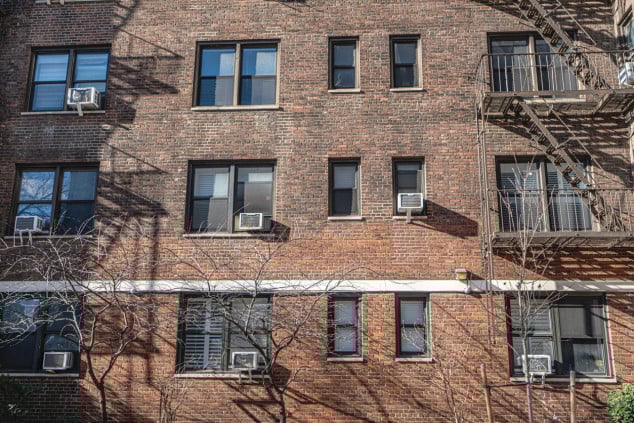
When the law takes effect, landlords will be required to install and maintain AC units and renters will pay for the cost of electricity.
iStock
Tenants who sweat through New York City summers without air conditioning will get a reprieve—but not for another four years.
Last month, the City Council passed legislation sponsored by Council Member Lincoln Restler in 2024 that requires building owners to install and maintain AC units for tenants that request them. The law applies to both market-rate and rent-stabilized units.
“All tenants deserve a safe, livable home, and as our summers get hotter, that means guaranteeing access to air conditioning,” Council Member Lincoln Restler said in a December news release.
About 90 percent of NYC households already have air conditioning, according to a 2025 city mortality report. For those that don’t, extreme heat can be deadly. Elderly residents, those with chronic health conditions, and Black New Yorkers die at higher rates from conditions linked to heat. About 500 people die on average each summer, according to the city.
“It’s the most deadly climate-driven phenomenon because it doesn’t really start and stop in noticeable ways, like floods or storms,” said Caleb Smith, policy manager at WE ACT for Environmental Justice, which represents residents in northern Manhattan.
“The chronic exposure of heat is part of what makes it so deadly and we have to be prepared for heat waves,” Smith said, especially as heat waves become more frequent. “This is one of the really foundational steps for preparing New York for a much hotter climate.”
What the AC law requires from landlords
During the summer, from June 15th through September 15th, rooms where tenants sleep must be no higher than 78 degrees when the outdoor temperature exceeds 82 degrees.
However, although landlords are required to install and maintain AC units, renters are still on the hook for the cost of electricity.
Landlords must also inspect the AC once a year at least 30 days before June 15th to make sure the AC unit can maintain the required temperature.
Enforcement won’t begin until 2030, and landlords can apply for a hardship waiver that extends that timeline in increments of two years.
Landlords respond to the new law
Ann Korchak, board president of Small Property Owners of New York, a landlord advocacy organization, described the legislation as “short on details.”
One of her chief concerns is that New York City’s oldest buildings, often made of brick or stone and poorly insulated, are difficult to keep cool.
“Window air conditioning units are the least efficient way to cool a room, but in an old rent-stabilized building there’s no room to install central air conditioning and there’s no way to bill it. A rent-stabilized owner can’t afford it,” she said.
She also expects extra strain on the electrical grid from additional AC units, and that the higher electricity costs could be hard for utility customers to shoulder.
How renters opt-in
Renters can begin opting-in by requesting air conditioning from their landlord on March 1st, 2028, according to a process that hasn’t yet been fully worked out by the Department of Housing Preservation and Development. After that, your landlord has 60 days to comply.
“It doesn't mean that everyone all at once automatically gets a new cooling device,” Smith said. He compared the roll out of the program to a law that requires the installation of child safety guards on windows. The city will provide education for landlords about energy efficient devices.
If you’re a renter who already has an effective window unit or central air, not much will change for you. Rather, the law is meant to “close the gap” for residents who haven’t been able to buy their own units or whose units don’t work properly.
Your rent could go up
Tenants in rent-stabilized units should know that your landlord could apply to raise your rent after installing a new AC unit.
According to an HPD spokesperson, tenants will be charged for each AC unit as part of a permanent rent increase. [Editor’s note: Brick has reached out to HPD for details on the AC fee and will update the article.]
The mandate will work differently for those living in New York City Housing Authority buildings. The law only requires NYCHA to create a “comprehensive cooling” plan by the beginning of January 2028 with steps to provide cooling to at least 25 percent of the units it owns or operates by June 1st, 2030.
If your landlord doesn't comply
After 2030, tenants can file complaints through 311 about their building owner’s failure to provide AC, according to an HPD spokesperson. (Installation of AC in new construction will fall under the jurisdiction of the Department of Buildings.)
When HPD receives a 311 complaint, HPD inspectors will verify if a violation exists. When measuring temperature and humidity, inspectors will measure from “three feet above the floor and at least three feet away from any exterior wall,” according to the law.
If a violation is found, landlords could be fined as much as $1,250 a day in civil penalties, with subsequent fines for repeat offenders.
You Might Also Like