



Ask Altagracia: My neighbor sells baked goods and the customers bother me. Are businesses allowed in NYC rentals?
- Customer foot traffic created by home businesses can violate building rules and habitability
- Some home businesses are permitted but nuisance activity requires a landlord to take action
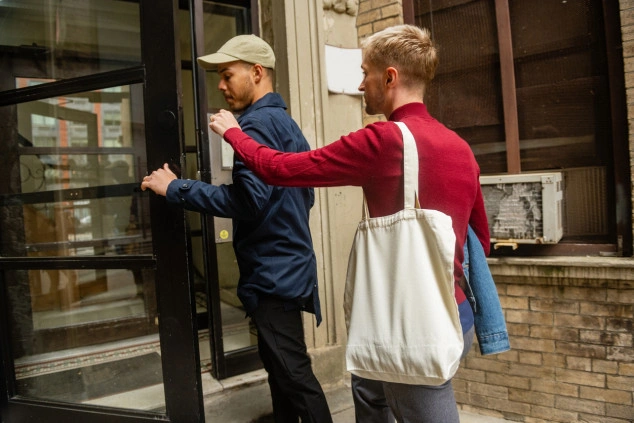
Too many people entering the building can violate the warranty of habitability.
iStock
My neighbor started a business selling home-baked goods out of their apartment. As a result, we have a lot of strangers coming by to pick up their orders and they frequently buzz my apartment by mistake. Are there any rules for operating a business from your home?
While many New Yorkers work from home, that doesn’t necessarily mean operating a customer-facing business is allowed in a rental apartment. Even so, “in most cases the landlord will not know there is commercial activity going on unless it is creating a nuisance,” said Altagracia Pierre-Outerbridge, attorney and founder of Outerbridge Law representing residential tenants, condo owners and landlords.
In your case, it sounds like the bakery business is creating a nuisance, so there are a few steps you can take.
Firstly, the certificate of occupancy (C of O) for an apartment building defines the property’s legal use. “Whether an activity is allowed often comes down to the building’s C of O,” Pierre-Outerbridge said. If the use and occupancy of the property doesn’t match the C of O, the Department of Buildings can issue violations.
In addition, if the impact of the activity is negatively affecting other tenants—as is the case with the bakery business—the landlord will have a duty to respond. “Too many people entering the building, too many deliveries, too much customer traffic—just like lack of heat or hot water, this violates the warranty of habitability,” Pierre-Outerbridge said.
Under the warranty of habitability landlords must provide safe and livable conditions in apartments and common areas.
Dealing with nuisance activity
If you are being affected by a business newly operating out of your apartment building, you can notify the building management with your concerns. You can also call the city’s 311 complaints hotline. “It is pretty powerful and can result in violations for the landlord,” Pierre-Outerbridge said.
Once aware of the situation the landlord will typically send the tenant a 10-day notice to cure, asking them to immediately stop the nuisance activity.
Following calls to 311 you can also begin a Housing Part action, known more commonly as an HP action. This is a case brought in housing court to address repairs and unsafe conditions. HP actions can sometimes be used when building conditions affect habitability.
Daycares are allowed
There are some exceptions to the rule, home businesses with foot traffic are not typically permitted in residential settings.
One notable exception is daycare facilities. Under the NYC Zoning Resolution, child-care centers are often allowed to operate even when other commercial activities are not. Depending on the size of the daycare, providers need licensing from the city’s health department and must comply with fire safety and occupancy rules.
“It is one of the exceptions that the law makes so we don’t keep having a childcare issue in this city,” Pierre-Outerbridge said.
Mediating problems with neighbors
Whether it makes sense to approach your neighbor directly about the disruption you are facing depends on your relationship.
“We often see situations where someone raises a concern about noise and the conversation scalates into an argument,” Pierre-Outerbridge said. This can make the situation worse. “We have cases where the tenant who is looking for peace is then accused of harassment,” she added.
In many cases, once a landlord receives complaints or city violations, they will require the tenant running the business to stop the activity or move it elsewhere.
Altagracia Pierre-Outerbridge, Esq. is the owner of Outerbridge Law P.C, focusing primarily on tenant representation. The firm represents all sides in landlord-tenant litigation and transactional matters such as month-to-month holdovers, nuisance cases, licensee cases, harassment claims, repair cases, tenant buyouts, succession claims, DHCR overcharges and rent reductions and more. Pierre-Outerbridge has 15 years of experience litigating in Supreme, DHCR, and Housing Court. To submit a question for this column, click here. To contact Outerbridge Law P.C. directly, call 212-364-5612 or 877-OUTERBRIDGE, or schedule a meeting today.
You Might Also Like