




ADU curious? This site helps you navigate NYC’s new accessory dwelling unit rules
- WXY’s ADU for You can help figure out if you could build an ADU on your lot
- Neighborhoods in Queens and Staten Island could add many backyard units

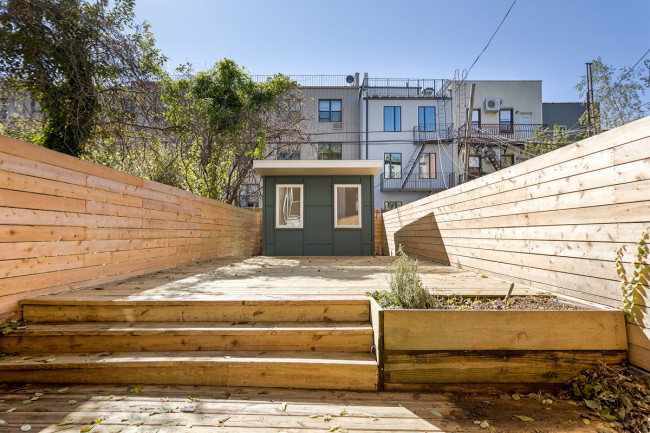
A plan library features a collection of ADU designs that comply with general code and zoning rules for backyard cottages, like this roof deck design.
HPD, courtesy Anna Morrison and Leonardo Leiva Rivera
If you’re a New York City owner with space to spare, the citywide rezoning initiative known as City of Yes for Housing Opportunity may have made it easier for you to add extra living space on your property, like a basement rental unit or a backyard cottage for your mother-in-law or adult child.
However, the city’s rules can be confusing if you’re not a zoning expert.
That’s why WXY architecture + urban design built "ADU For You" for the Department of Housing Preservation & Development. It’s an online platform that can help you figure out if an accessory dwelling unit makes sense for your property and then help you navigate the process of actually planning one out. The site went live in March.
Adam Lubinsky, a principal at WXY, said the website has two main goals. The first to help New Yorkers familiarize themselves with the ADU building requirements, providing straightforward answers to thorny questions of implementation and legality. “Our objective was to make that as simple as possible,” Lubinsky said.
The site walks owners step-by-step through their eligibility, the models that might work on their site and how much money building them could require.
The second goal is to broadly educate New Yorkers. “What is an ADU and why is it a good fit for New York City?” he said. ADUs present a “gentle growth” model instead of aggressive rezoning and high-density construction. “It's really about maintaining the character of neighborhoods and giving people an opportunity to age in place,” he said.
Here’s how the site can help you explore your options for adding an accessory dwelling unit to your property (and have a fun rotating sample ADUs over a map or adjusting sliders).


Location, location, location
The first step for users is to check the eligibility of your lot by typing in your address, under the heading, “Can I build an ADU on my property?” The tool will show you whether a garage, attic, basement, or detached cottage can be added to your property.
If you enter the address of a detached home in Queens Village or Staten Island into the searchbar, it’s more likely that multiple types of dwellings will pop up as options. A rowhouse in central Brooklyn might only allow you to add a basement or attic unit.
The site’s guidebook includes a map of where rear yard ADUs are allowed based mostly on zoning restrictions. Other considerations include flood zones and historic districts, which can restrict ADUs as well.
Wil Fisher, principal at Unit Two Development, put together a list of zip codes where a high number of ADUs are possible under the new rules. These are often less-dense neighborhoods with bigger lots.
Most of them are located in outer Queens, with Queens Village (11428), St. Albans (11429) and South Richmond Hill (11419) topping the list, although parts of Staten Island are also good contenders.
However, eligibility isn’t only based on neighborhood. ADU for You’s guidebook also explains deed restrictions and other zoning rules. There are answers to questions like “How big can my ADU be?” and “Where on my property can I have an ADU?”, accompanied by diagrams.

A library full of plans
If you discover your property qualifies for an ADU, then you can check out existing designs and how much they cost.
A pre-approved plan library features a collection of ADU designs that comply with general code and zoning rules from the Department of Buildings for backyard cottages—however any plan would still need to be reviewed for your specific property. Owners can check out options for different lot sizes, costs, materials and styles.
The city isn’t necessarily promoting these design companies, but interested owners can get in touch directly with these firms to learn more. ADU for You also has a feature that allows you to rotate a purple image of your preferred design onto a map of your lot, to see how a potential design could fit on your real property.
Queens-based Unit Two Development has had two plans for backyard ADUs pre-approved so far, a studio and a one bedroom. Since the library went live in March, Fisher said they’ve seen an uptick in interest.
“We’re getting quite a lot of calls,” Fisher said, although he expects ADUs will take some time to really take off.
“People need to see one of their neighbors doing this, they need to see one of these jobs get completed to be comfortable,” he said. The early adopters “are going to inspire quite a lot of people.”

A tool for budgeting
One of the interactive features the platform offers is a budgeting tool that lets you estimate costs and income for a particular design.
You can slide the purple sliders back and forth to change factors like your cost contribution, loan amount, and costs associated with running a rental like tenant turnover or management fees. The final result will change as you adjust interrelated costs.
“We've kind of baked in a number of things here, just so people understand that this is not the only thing they're going to wind up paying for,” Lubinsky said.
The site’s guidebook provides information on financing, including information about HPD’s Plus One Ancillary Dwelling Unit Program. The public program combines grants and capital loans to help eligible homeowners (who must occupy the property and be up to date on mortgage payments) build or legalize their ADUs.
Not just for homeowners
Individual owners aren’t the only ones interested in using these tools. Allyson Martinez, founding executive director at community-based development and environmental nonprofit Brooklyn Level Up (BKLVLUP), sees ADUs as an opportunity to prevent displacement in the three neighborhoods she calls “the Flats”—East Flatbush, Flatbush, and the Flatlands, where an estimated 6,000 ADUs could conceivably be built.
BKLVLUP’s initiatives include a community land trust, a small business incubator and an environmental justice nonprofit.
“We’re actually interested in piloting a community design version of ADUs that is affordable,” Martinez said. The idea is that community input could lead to a design that works for people in the Flats, such as seniors worried about being priced out of their homes.
BKLVLUP is also developing a toolkit to help walk people through the process and exploring a community land trust model for property management of ADUs, she said.
You Might Also Like