




Who should you hire to renovate your luxury Upper East Side co-op?
- Your team should include a qualified design firm, an architect, and an experienced general contractor (GC)
- The architect aligns the design with practical constraints of the home and building code requirements
- The general contractor ensures materials are installed correctly and the project stays true to plan
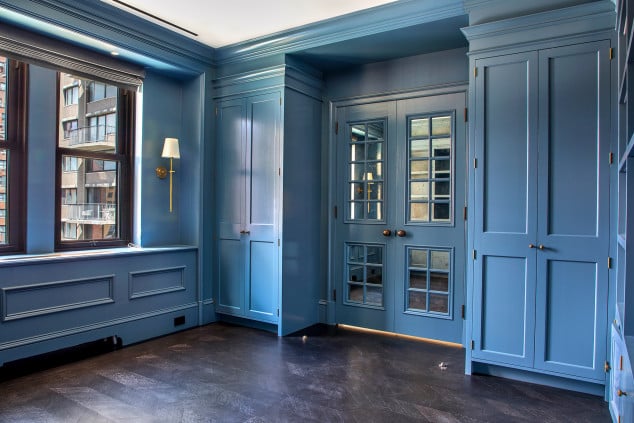
A full-unit renovation of an Upper East Side apartment by Home Evolutions Corp.
Home Evolutions Corp
For prime Upper East Side co-ops, high-end renovations are high-stakes propositions. Complicated (sometimes structural) work requires six-figure budgets, extensive customization, variable lead times, and multiple specialists—all of which must be approved by a fastidious co-op board.
That’s why who you hire to oversee your renovation project is critical. The outcome hinges on more than just talent; it requires a disciplined, systems-driven approach.
“These upscale projects require a coordinated team effort between a qualified design firm, an architect, and an experienced contractor,” said Aaron Borenstein, managing director and CEO of general contracting company Home Evolutions Corp. “For every one dollar you spend on planning, you save two dollars on construction.”
But knowing who should be at the table is just the first hurdle. It's equally important to understand when you should enlist each of those pros.
According to Ana Epremashvili, director of design at Brooklyn-based interior design firm YossiG, early collaboration is the secret to a smooth, seamless experience—avoiding the need for rework, change orders, and delays tied to approvals and sequencing.
“It is much less expensive to make and correct the wrong decision on paper than to be on site, have a big, expensive material order arrive, and realize we’ve made a mistake," she said.
It’s important that the contractor, design firm and architect price the project together. These experts then walk you through the basics of collaborative building for your UES renovation.
Assembling your renovation team
For high-end NYC real estate, a successful project is built on a "tripod" of expertise: an interior designer, an architect, and general contractor. The most fruitful projects involve a collaborative team effort among these three core pillars.
Start with the idea that they must understand the “unwritten rules” of a blue-chip building—how to stay on a property manager's good side, protect historic common-area details, and manage “noisy work” hours. The more prestigious the building, the more rigorous the scrutiny.

1. Certified interior designer: Turns vision into reality
At the center of any high-end renovation is a qualified interior designer—ideally one with deep knowledge of New York City co-ops. Unlike decorators, who focus on furnishings and finishes, certified designers are trained in space planning, building systems, and construction documentation.
A strong design firm, such as YossiG, will guide the project from concept through completion. They’ll translate your lifestyle needs into a functional layout, develop detailed drawings, and produce the formal plans—typically in coordination with the architect—required for board approval and contractor bids.
Their role doesn’t end when construction begins. Ongoing site visits and project administration ensure that the design intent is carried through. “We can draw plans until we all turn blue, but the reality is that onsite conditions and changes still require a designer’s eye,” Epremashvili added.
2. Architect: Ensures structural integrity
In sophisticated NYC co-op renovations, the architect is responsible for the technical integrity and legal compliance of the project, including Department of Building filings and approvals, ensuring every inch of the plans meets city safety codes, and producing the requisite documents for board submission.
The designer and architect often work in tandem, with the architect translating design intent into a fully compliant, buildable set of drawings.

3. General contractor: Executes with expertise
The general contractor’s role extends beyond building. This vital person is ultimately tasked with managing the day-to-day execution, sequencing, and coordination—while navigating the unique constraints of Upper East Side co-ops.
An experienced company like Home Evolutions Corp brings not only construction expertise but also an understanding of how to navigate the unique constraints of Upper East Side co-ops. These include managing strict work hours and other building rules—often within a rigid six-month completion timeline. A qualified general contractor will also ensure you maintain good standing with management and neighbors. This level of diplomacy and logistical control can make or break a project.
Positioning the general contractor in this central coordination and risk-management role ensures that what is designed is actually buildable within real-world conditions of a pre-war or landmarked structure.
To maintain financial clarity, high-end general contractors often utilize standardized payment applications (such as those by the American Institute of Architects), which break the project into a "schedule of values," allowing all parties to track physical progress against payments.
This level of transparency ensures alignment and provides the predictability that high-end clients expect.
Be sure to ask for a contractor’s COI (Certificate of Insurance) early. If they don’t already carry the high-limit umbrellas required by blue-chip co-op boards, they aren't the right fit for your building.
4. Specialty consultants: Nails the details
Depending on the scope, additional professionals may be required, including engineers for structural changes, expeditors to manage Department of Buildings filings, and millwork specialists for custom cabinetry and built-ins.
Plumbers, electricians, and HVAC providers are typically involved in gut renovations, while lighting designers and acoustic consultants can be helpful for complex designs or specific goals.
Fortunately, you don't have to worry about finding these specialists. Instead, your general contractor and designer will tap their vast network of subcontractors. This is yet another reason to vet these key point people carefully and thoroughly—they handle the complexity of the project so the client doesn't have to.

Understanding project management: Keeping everything on track
Even with a strong designer and contractor, ongoing coordination is essential. That’s where project management—ideally handled by the design firm—comes in.
“You can have a general contractor and a design firm and still have zero project management and zero alignment,” Epremashvili said.
Through regular site visits, documentation, communication, and oversight, the design team acts as a check-and-balance, preventing common nightmares—such as the wrong material getting installed. "It's important that we are there every step of the way until everything is completed," she said.
Meanwhile, the contractor manages daily operations, subcontractors, and scheduling within the building’s constraints. This systems-driven approach provides the predictability and control that high-end clients expect.
Why early collaboration matters
The importance of early and continuous collaboration among the architect, designer, and general contractor cannot be overstated.
Two common scenarios often stymie co-op renovations, according to Borenstein.
The first scenario is when owners wait to hire a designer until after the demo stage to see what the space looks like. "In this case, you will never meet the usual six-month timeline imposed by co-op boards—and be stuck paying hefty fines," he said.
The secret? Work on parallel tracks: The designer can finalize plans while the contractor prepares the necessary documents—licenses, insurance policies, affidavits—for the board package. And the Department of Buildings review can proceed while you are still selecting your backsplashes and other materials. This way, once the design is complete, you will have your DOB approval and can proceed directly to construction.
The second scenario is when design plans are completed without contractor input, resulting in projects coming in significantly over budget or requiring redesigns after drawings are complete.
But when the designer and contractor collaborate from the start, cost becomes an integrated part of the design. "We involve the general contractor at multiple touchpoints, starting with a feasibility assessment once space planning is complete,” Epremashvili explained. “I also submit the construction documents at 50 percent and 90 percent, to leave room for adjustments.”
Borenstein explained that his company uses early layouts to develop a framework that distinguishes between direct costs—walls, plumbing, electrical—and allowances for finishes such as cabinetry, lighting, and tile.
“As materials are finalized, allowances are replaced with actual costs,” he said, noting that the final plans are typically within 95 percent of a fixed price, with only a line-item contingency for unforeseen conditions.
This iterative process ensures that design, budget, and construction realities are progressing concurrently—reducing surprises and stress.
The bottom line
A successful luxury co-op renovation isn’t just about hiring talented individuals—it’s about building a cohesive team that prioritizes a controlled, well-managed process.
When your designer, architect, and contractor are communicating early, decisions are made more efficiently, budgets are more accurate, and timelines are more predictable.
"By following our collaborative process, all decisions are already made by the time construction begins," Epremashvili said. "The only things you will have to review are slight deviations, eliminating the usual stress. That really is the ultimate service we provide—curating the experience so the client only feels the progress, never the pressure."
If you are thinking of executing a high-end renovation of your own, you can reach out to YossiG via their website Inquire form or by email to [email protected] for a design-first approach. If you have the designs already figured out or if you have a question about the build process works, reach out to Home Evolutions via their website or email to [email protected].


