




The VIP cabins built for the ill-fated Brooklyn Mirage are for sale. Bring your own crane
- For $85,000 plus craning and transportation, a spaceship-style backyard office could be yours
- NYC owners who want one of the five VIP cabins likely need an architect and DOB permit
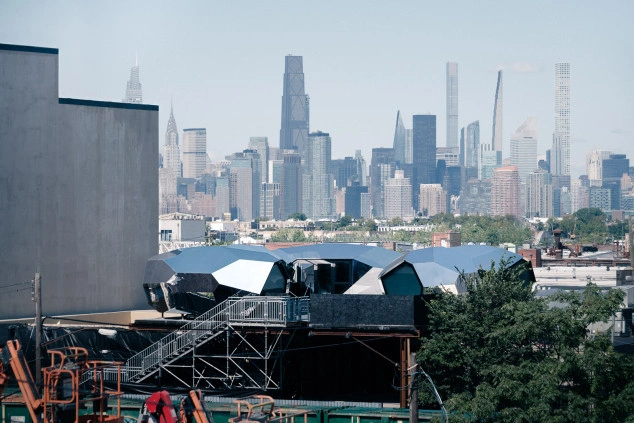
Thanks to City of Yes, you more likely to gain approval to install one of these shiny, futuristic cabins. But getting it home will present a challenge.
Dániel Dömölky for PEBL Grand by Hello Wood
The Williamsburg concert venue known as the Brooklyn Mirage may have flickered out without ever hosting a show, but now determined New York homeowners could get their own piece of the electronic dance fantasy.
The Brooklyn Mirage faced obstacles in the form of permit failures and financial struggles, and the Stewart Avenue building is now slated for demolition.
But Hello Wood, the company that created five, shiny futuristic cabins to serve as rooftop green rooms for performers like the Chainsmokers and Deadmau5 at the Brooklyn Mirage, is selling the PEBL Grand cabins.
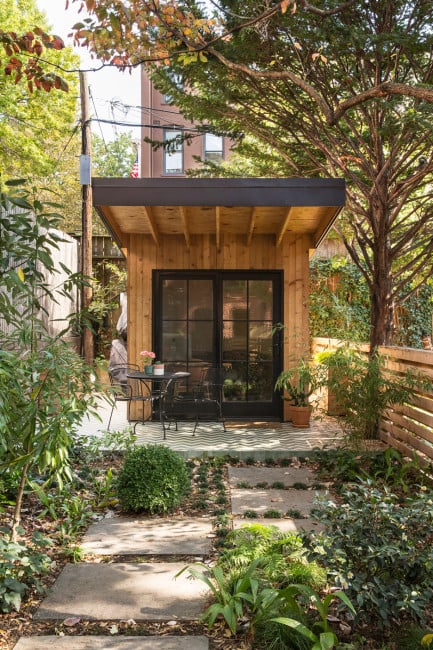
For owners who have a backyard space, a VIP cabin could be a guesthouse, home office, or yoga studio. Are you a parent in a noisy home? This could be your oasis away from your kids.
Thanks to City of Yes for Housing Opportunity, a landmark citywide rezoning that relaxed the rules on accessory dwelling units, you’re more likely to gain approval to install one of these cabins, depending on your location and how you plan to use it. But getting it home will present a challenge (more on that below).
As of March 12th, the cabins are still available, Hello Wood spokesperson Diána Trencsényi told Brick Underground.
“Due to the strong interest the project has received, we are also considering the possibility of producing PEBL Grand cabins for the U.S. market in the future,” Trencsényi said in an email to Brick.


How big are these cabins and how much are they?
The cabins are approximately 26 by 10 feet, with “lounge areas” of 54 square feet and bathrooms of 12 square feet, according to plans provided by Hello Wood.
Four of the cabins are designed as lounges with built-in sofa beds. The other has space for a bed. Each cabin includes a bathroom with a toilet and shower and a kitchenette, along with a table and seating, according to the plans.
The five cabins cost $425,000 total, or $85,000 per cabin, Trencsényi said initially. The company said it will offer a 10 percent discount for all five as a set for $382,500, plus the cost of transportation, craning, and installation. In a follow up interview, Trencsényi declined to address whether Hello Wood would provide delivery. “As we are currently in discussions with serious buyers, we would prefer not to disclose the current pricing,” she wrote.
Interested buyers can contact Hello Wood at [email protected].
How do you get the cabin home?
Would-be buyers face some significant logistical and financial hurdles in getting these cabins installed.
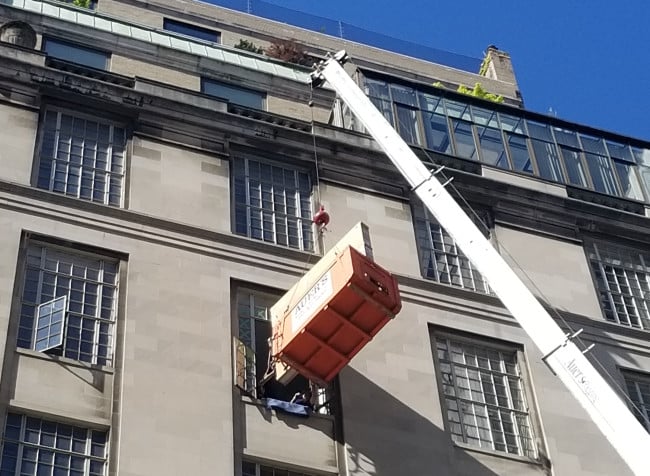
Positive Lifting, a crane and knuckleboom service based in Syosset, NY, quoted Hello Wood with an estimate of the cost of removing all five cabins.
The whopping total is $56,350, which includes $13,800 for the cost of Department of Buildings permits for the work. Typically, you need a city permit in order to block the road from traffic while a crane is operating.
That heaviest of the five pods weighs 9,300 pounds, according to the quote, roughly the same as a GMC electric Hummer pickup truck. The crane rental itself is about $35,200 for the day.
Positive Lifting said to calculate an accurate quote for a buyer, they require an address to calculate the route and permit requirements.
Do you need a permit?
Probably, although the exact requirements may depend, according to Wil Fisher, principal at Unit Two Development.
Fisher started his Queens-based company last year to help NYC owners navigate the process of building accessory dwelling units or ADUs on their properties after the passage of City of Yes changed zoning to allow them in certain areas.
The zoning code defines an ADU as a full, separate, and habitable living unit. For a unit to be habitable, it must have a kitchen and bathroom and meet stringent requirements for light, air, and exits. ADUs need to have their own access to the street, meaning you can’t build one behind a townhouse.
The building code allows prefabricated structures like these cabins, but manufactured structures still have to comply with NYC’s building codes.
“If these were designed for someone to live in full-time with a kitchen and bathroom and plumbing, that would be much more difficult than if they were a lounge space,” Fisher said.
Still, even if you just wanted to use the cabin as a place to practice yoga, work quietly or practice your drums, you probably still need a permit.
“That doesn't mean it would be easy to get this done,” Fisher said. A potential buyer should look at the zoning setback and lot size requirements associated with putting a new structure on your property. You would probably have to consult with a licensed architect too, Fisher said, and file with the Department of Buildings.
“Every site is unique,” Fisher said. Historic districts and flood-prone areas don’t allow new ADUs, for example.
“What I would say is that for folks who do have a sizable backyard that this could actually fit in, I think that’s something they should try exploring,” he said.
You Might Also Like