




Mamdani appointments to RGB board pave the way for a rent freeze
- With five new members, mayoral appointees now dominate the Rent Guidelines Board
- Tenant advocates say a pause in rent increases is ‘very likely’ when the RGB votes this summer
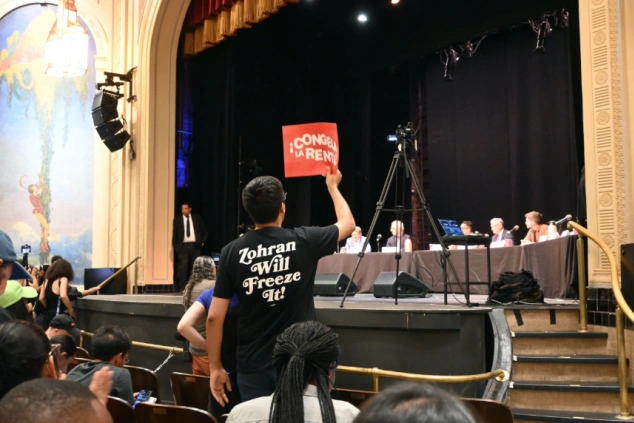
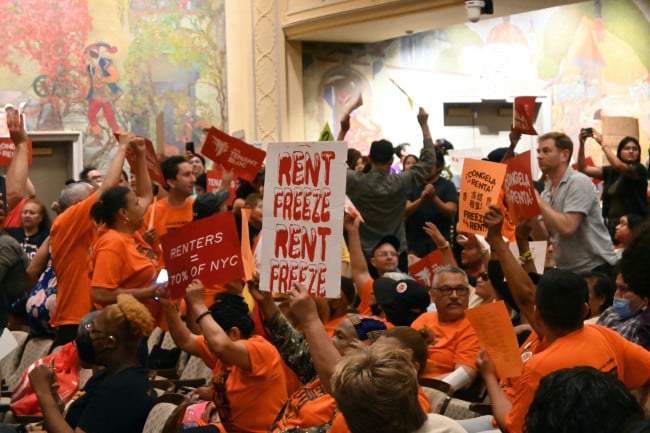
A raucous crowd jeered last year as the Rent Guidelines Board voted 5-4 in favor of increases up to 3 percent for one-year leases and up to 4.5 percent on two-year leases.
Celia Young
Last month, Mayor Zohran Mamdani got one step closer to achieving his key campaign promise of freezing rent increases for New York City’s 2.4 million residents in rent-stabilized units.
A year after Mamdani, fully dressed in a black suit, ran into the frigid water at Coney Island in a video to promote his mayoral campaign, the city’s Rent Guidelines Board is now dominated by his appointees.
That board, now with five new members, is set to vote this summer to pause rent increases for stabilized units, which make up about half of NYC rentals.
How would the RGB freeze the rent?
The RGB uses research and data on the city’s housing along with public testimony to determine how much to cap rent hikes for rent-stabilized apartments. They consider factors like the economic state of the city’s housing, cost of living trends, vacancy rates and tenants’ ability to pay rent.
The board only can determine rent caps for rent-regulated units, which make up about one million apartments in NYC, and it has no authority over rent increases in market-rate units.
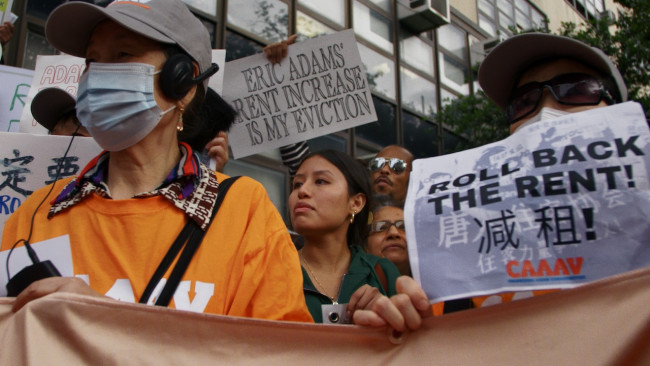
Last July, the board approved increases of up to 3 percent for one-year leases and up to 4.5 percent on two-year leases.
Any increases or freeze the board votes on this summer would go into effect for leases being renewed or vacancies that begin on or after Oct. 1st, 2026 through Sept. 30th, 2027.
The board has nine members, but since two represent tenants and two represent property owners, the five other members who represent the public tend to sway the vote.
Rent freezes aren’t a new concept: under Mayor Bill de Blasio, the board voted to freeze rent increases three times, including in 2020 amid the pandemic.
A surprise vacancy
In December, outgoing Mayor Eric Adams appointed and re-appointed four members to the board, creating a majority that could have stopped Mamdani from achieving a rent freeze during his first year in office.
Then in February a new seat opened up: Alex Armlovich resigned from the board before his term expired at the end of 2026. He wrote in a letter that he was taking a new role at Coefficient Giving to work on housing policy.
Suddenly, Adam’s appointees could be outnumbered by Mamdani’s picks. Mamdani revealed the names of five new members he picked on Feb. 18th and said he was re-appointing tenant representative Adán Soltren.
Chantella Mitchell, program director at the New York Community Trust and a former city housing official, is the board’s new chair. Sinai Sinai, Lauren Melodia, and Brandon Mancilla will serve as public representatives and Maksim Wynn will represent property owners. Adams appointees Arpit Gupta, Christina Smyth, and Sagar Sharma will stay on the board.
Is a rent freeze a done deal?
Not necessarily, but both landlords and tenant advocates believe it’s likely.
Some tenant advocates already celebrated a win after news of the appointments. Sumathy Kumar, organizer at NYS Tenant Bloc, said in a statement, “New York tenants are getting our rent freeze.”
Darius Khalil Gordon, executive director of Met Council on Housing, was slightly more cautious in his assessment.
“I don't ever give 100 percent on anything, just because I have to be pragmatic, but I am going to say there is a very, very good chance that the rent freeze is done,” he said. “If I was an everyday New Yorker, I would be very optimistic that the rent freeze is done.”
For Gordon, any outcome short of a rent freeze—except for a rent rollback—would represent a failure of Mamdani’s agenda. He urged renters to get trained to testify at the board hearings and to get in touch with their representatives well ahead of June.
Since board members are supposed to evaluate the data when they make decisions, Mamdani and the board’s new chair Mitchell haven’t said definitively that the new board will halt rent increases.
“I’m confident that, under the leadership of Chantella Mitchell as chair, the board will take a clear-eyed look at the complex housing landscape and the realities facing our city’s two million rent-stabilized tenants, and help us move closer to a fairer, more affordable New York,” Mamdani said in a news release announcing his appointments.
Landlords respond
Property owners warn that a rent freeze this summer could be devastating for rent-regulated buildings that are struggling to keep up with the cost of maintenance. The nonpartisan thinktank Citizens Budget Commission has argued this could result in a “death spiral” in which the cost of deferred repairs almost exceeds the cost of a new building.
“We really count on the RGB to be an honest broker here, and really look at the financial health of these buildings, because it doesn't just impact the property owner,” said Ann Korchak, board president of Small Property Owners of New York.
When owners are struggling, they stop being able to pay property taxes and their buildings accumulate housing violations, leading to a ripple effect for the city, Korchak said.
Kevin Burgos, CEO of the New York Apartment Association, and James Whelan, president of the Real Estate Board of New York, both say that many of the city’s buildings are in severe financial distress.
“Any objective review of the data shows that freezing rents would be destructive to pre-1974 rent-stabilized housing, which is about to face a significant property tax increase,” Burgos said in a statement. Mamdani has said he will raise property taxes by 9.5 percent if the state fails to implement an income tax on the wealthiest New Yorkers.
“We believe the law requires RGB members to evaluate all relevant data and make a decision based on facts—not political ideology. If they choose to ignore the consensus view, then they will be opening up the process to legal scrutiny,” Burgos said. “Worse, they will be responsible for the deterioration and eventual destruction of thousands of rent-stabilized buildings.”
What happens next?
In the spring, board members will collect and publish data and hear testimony from experts before they hold public hearings across all five boroughs.
This year’s schedule of meetings isn’t posted yet, but the board’s final vote usually takes place in June.
You Might Also Like