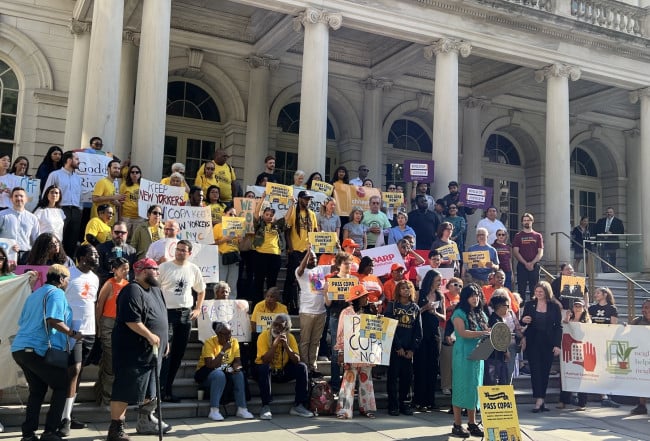




City Council passes COPA, paving the way for land trusts and non-profits to get first dibs on failing buildings
- The law allows nonprofits to make the first offer on distressed buildings for sale
- Mamdani is expected to sign the legislation, which takes effect after one year
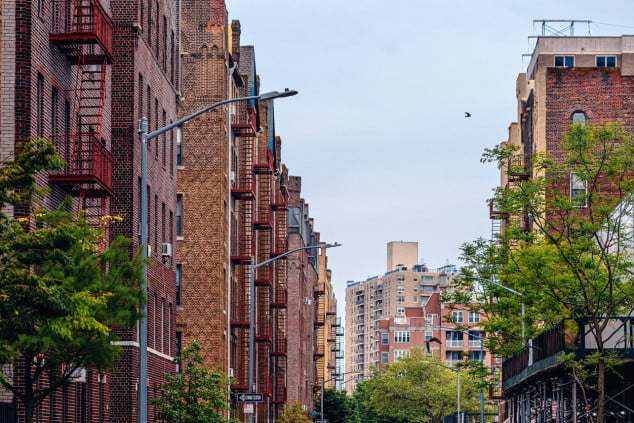
The original version of the Community Opportunity to Purchase Act was first proposed in 2022.
iStock
After six years of fighting for New York City legislation to give community land trusts and nonprofits the first shot at buying failing apartment buildings, tenant advocates finally scored a victory Thursday.
The City Council voted 38 to 9 to pass the Community Opportunity to Purchase Act, or COPA, on Thursday afternoon. The original version of COPA was first proposed in 2022. Former Mayor Eric Adams vetoed another iteration of the bill after it passed the City Council last year.
“This has gone through three mayors, it’s been introduced four times, it’s had three hearings, it’s been passed, it’s been vetoed and it had a very intense, bad-faith effort to stop it,” said City Council member Sandy Nurse, the bill’s sponsor and a Brooklyn Democrat. “I believe this thing is solid.”
Before casting her affirmative vote, Council Speaker Julie Menin, who opted not to override Adams’s veto last year, praised Nurse and her own team for their work on the bill. Menin said that lawmakers had worked with the Real Estate Board of New York, the powerful real estate trade organization, and other stakeholders to narrow the number of buildings that fall under the bill’s purview. Initially, it applied to 10,000 buildings, but now only 2,100 meet COPA’s revised criteria, she said.
COPA’s remaining detractors on the City Council mostly cited property rights in their arguments against it. Council member Frank Morano, a Staten Island Republican, called the bill unconstitutional.
“Even setting aside the constitutional questions, this is terrible housing policy. It adds uncertainty to property transactions to a city already struggling to attract investment and build housing,” he said.
Unlike Adams, Mayor Zohran Mamdani not only supported a narrowed version of the bill, but made it a focus of his Block by Block housing plan.
What does COPA do?
The law allows nonprofit groups vetted by the Department of Housing Preservation and Development to make the first offer on a distressed building that’s up for sale. That would apply to buildings with more than four units with a certain number of violations, ones included under HPD’s alternative enforcement program or buildings subject to foreclosure.
COPA gives those organizations, which could include community land trusts or private developers with a nonprofit partner, 20 days to send a letter of interest to the seller, then another 70 days to submit an initial offer. They also have the right of first refusal if the owner receives another offer.
Advocates have estimated the bill would apply to about 300 buildings a year, representing apartments for thousands of residents. With the legislation, these struggling buildings are more likely to be targets for speculation or displace poorer residents, the coalition supporting the bill argued.
“This has the potential to be really game changing for tens of thousands of New Yorkers who will be able to use this right,” said Elena Rodriguez, staff attorney at New Economy Project.
“It’s a bill that has real teeth. There’s a right of first refusal in this policy, there's a private right of action in this policy, there’s HPD enforcement in this policy,” Rodriguez said.
What’s new in the latest version of COPA?
COPA has undergone a few tweaks since its hearing before the council’s housing committee in September. Buildings with 100 or more units that had affordability protections expiring in the next two years were originally included in Nurse’s bill. In the latest version, they no longer are.
In Nurse’s original bill introduced earlier this year, HPD had the discretion through rule-making to expand the types of distressed buildings that are eligible for COPA. That language was struck from the bill, so that the agency will instead make any recommendations for expansion in their yearly reports.
Another change added a statute of limitations for when community land trusts or other vetted organizations can sue for COPA violations. Now qualified entities have two years from the date that the deed is publicly registered to bring a lawsuit—if a sale took place as a result of a violation.
Real estate industry reaction
Ann Korchak, president of the Small Property Owners of New York, called COPA a “devious policy” being held up as a “magic solution” in a statement Wednesday.
“When a privately owned property is faced with economic distress, the owner should not be forced to give right of first refusal to city-sanctioned nonprofit housing providers,” Korchak said, arguing it would scare away other buyers with the means to immediately purchase a failing property.
“It also gives an unfair advantage to the city and nonprofits, which would be free to make purchase offers without the burdensome restrictions faced by conventional buyers,” Korchak said.
What’s next?
There’s a year until COPA goes into effect, during which HPD will go through a rule making process.
Rodriguez said New Economy Project will educate the public on COPA during that period. “There will be a full court press informational campaign,” she said.
In the long term, renters whose struggling buildings get sold could end up living in affordable apartments or even owning them through co-op conversions.
“It represents a moment in New York where the tenant movement is winning against real estate,” Rodriguez said of COPA’s passage. “We’re letting speculators know, letting private equity know, letting house flippers know that we want to take our buildings back and put them into community hands.”
You Might Also Like