




Community Opportunity to Purchase Act has a good chance of passing under Mamdani
- After Mayor Adams’s veto, a revised version of COPA could pass this year
- The revised bill has 27 sponsors in the City Council and the mayor’s support
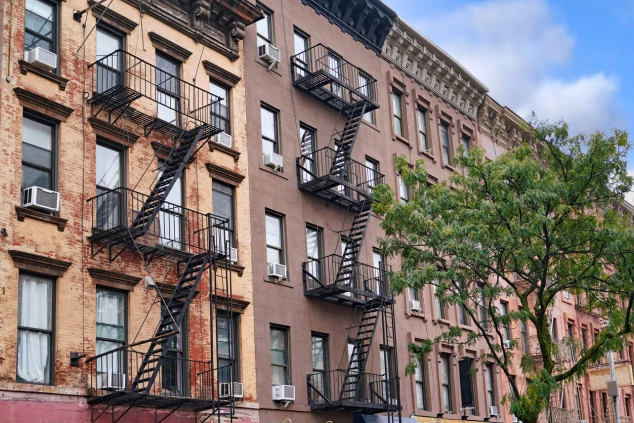
COPA would give certain nonprofits and community land trusts vetted by the city the opportunity to make a first offer to buy a distressed multifamily building.
iStock
Last month, New York City Council Member Sandy Nurse revived legislation that would allow certain nonprofits and community land trusts a first shot at buying struggling multifamily properties—and this time, the mayor is in favor of the bill.
The Community Opportunity to Purchase Act would give certain nonprofits and community land trusts vetted by the city the opportunity to make a first offer on a distressed multifamily building that’s up for sale.
Former Mayor Eric Adams vetoed a previous version of the bill after it passed the City Council late last year, but Mayor Zohran Mamdani has already signaled his support of COPA this time around.
COPA is different from a bill proposed on the state level known as the Tenant Opportunity to Purchase Act, which gives tenants themselves the right of first refusal.
In his 112-page "Block By Block” housing plan, Mamdani’s administration promised to work with Nurse to pass the re-introduced bill.
“COPA provides an extra layer of protection for tenants of distressed properties, who may be at particular risk for displacement or further declining conditions if their buildings were to be purchased by speculative buyers,” the plan said.
The bill already has a majority with 27 co-sponsors. It will become eligible for a vote after a hearing in the City Council Committee on Housing and Buildings.
“I am grateful for my colleagues who have rallied behind this bill, which will help preserve at-risk affordable housing, prevent displacement of working-class families, and stop the destructive speculative cycles destabilizing our communities,” Nurse said in a statement.
A spokesperson for Speaker Julie Menin told Brick she “looks forward to reviewing the bill as it moves through the legislative process.”
How the law would work
The bill gives particular nonprofits—or private developers with nonprofit partners—the chance to make the first offer on a distressed property when an owner puts it up for sale.
After the building goes on sale, an organization vetted by the Department of Housing Preservation and Development has 20 days to send a letter of interest to the seller, then another 70 days to submit an initial offer. They also have the right of first refusal if the owner receives another offer.
This version of COPA applies to a smaller number of buildings, and like the bill’s previous iteration, the timeline only kicks in when an owner decides to sell.
Generally, the law applies to distressed buildings with at least four units that are not owner occupied. Distressed could mean there are at least three daily violations on average over a year, or that the building is part of HPD’s alternative enforcement program or subject to an in-rem foreclosure action.
COPA also applies to buildings with 100 or fewer units that have affordability protections expiring in the next two years. A previous version of COPA included 421a buildings, but the current bill does not.
Will Spisak, a senior policy strategist at New Economy Project, which supports the bill, said that COPA would apply to an estimated 300 buildings each year, a relatively small number considering the tens of thousands of buildings that are sold in NYC every year.
But those 300 buildings could become perpetually affordable units for 50,000 families, Spisak said. “From a market perspective it's really small. But from a household perspective it can be really significant,” he said.
The legislation’s logic is based on the idea that distressed properties are targets for real estate speculation that leads to higher rents. “Tying displacement to distress is a way we’re able to identify where preservation is most important and most needed,” Spisak said.
COPA’s detractors
This new version of the bill applies to a narrower set of buildings, a change which has tempered opposition from the Real Estate Board of New York, which initially praised Adams for vetoing the legislative package that included the bill.
In a more recent statement, REBNY President James Whelen said nonprofit housing providers have a role to play in addressing New York’s housing crisis.
“Previous versions of COPA, however, would have included large swaths of buildings that were not distressed and contained other measures that would have worsened the city’s on-going housing crisis. We will continue to work with the City Council to advance solutions that will protect tenants, encourage much needed investment, and address the city’s housing supply crisis,” Whelan said.
However, Small Property Owners of New York, a landlord group, still opposes the revised bill. Board President Ann Korchak said she fears COPA would disrupt the housing market and create a burden for small sellers, even when limited to distressed properties.
“The city already has tools to deal with these kinds of buildings—7A, in rem foreclosure. The city clearly knows what type of building it's looking to capture and at this point, I question why you even need COPA,” she said. “Based on the fact that they already have these tools, why disrupt the whole market?”
Korchak also opposes the bill on ideological grounds, calling it “un-American” to interfere with owners’ property rights.
One of the bill’s staunchest opponents on the council was Council Member Darlene Mealy, who wrote in a December op-ed in City and State that she feared the bill would infringe on the rights of Black landlords in her Brooklyn district. Her office did not respond to Brick’s request for comment.
You Might Also Like