




Is your rent-stabilized apartment too hot in winter? This tenant group wants to know
- Tenants for Healthy Homes survey also asks renters about exposed pipes and clanging noises
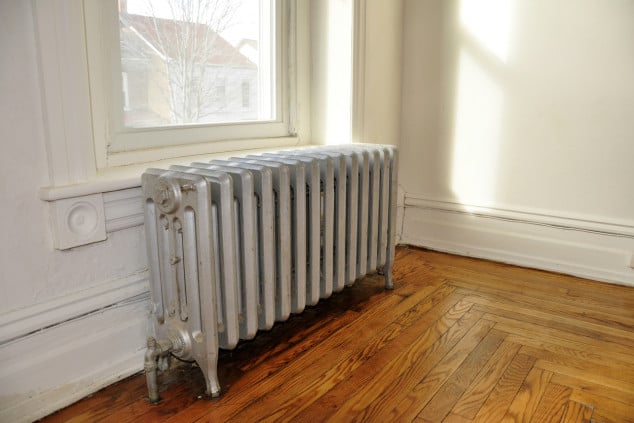
Arielle Swernoff of Tenants for Healthy Homes said some tenants haven’t received the upgrades they’re entitled to under the law, including the ability to adjust temperatures for their individual units.
iStock
For some New Yorkers, winter’s freezing temperatures create a counterintuitive seasonal problem: Apartments that are so uncomfortably hot you’re forced to open your windows to let in cold air.
That’s especially true in older buildings that use steam heat, where it can be complicated to ensure all apartments have an even temperature. A 2019 survey from the Urban Green Council found 70 percent of tenants in steam-heated buildings reported being too hot in the winter.
Local Law 97, NYC’s climate emissions law, requires owners of larger rent-stabilized buildings to address that problem, along with other winter heating challenges like exposed hot pipes and loud clanging or hissing sounds.
Tenants for Healthy Homes, an advocacy group, is asking rent-stabilized tenants to fill out a survey on complaints about overheating in the winter, clanging radiators, and uninsulated steam pipes. The tenant group plans to share the responses with Mayor Zohran Mamdani and the City Council.
Why do a survey?
Arielle Swernoff, director of Tenants for Healthy Homes, said that the group’s canvassing has indicated that some tenants in rent-stabilized apartments haven’t received the upgrades they’re entitled to under the law, including the ability to adjust temperatures for their individual units.
“Tenants are not seeing these benefits. We're not seeing the pollution reduction, but we're not seeing the comfort and habitability benefits either,” she said.
Buildings subject to Local Law 97 were required to file a compliance report at the end of 2025. According to Ryan J. Degan, deputy press secretary at the NYC Department of Buildings, the department is mailing notices to non-compliant buildings that haven’t submitted a report letting owners know about the penalties they face. Penalties can vary, depending on the type and size of the building.
Swernoff said because the law only requires compliance reporting from landlords, the survey is intended to gather responses from tenants directly, in case the upgrades weren’t actually made or were done insufficiently.
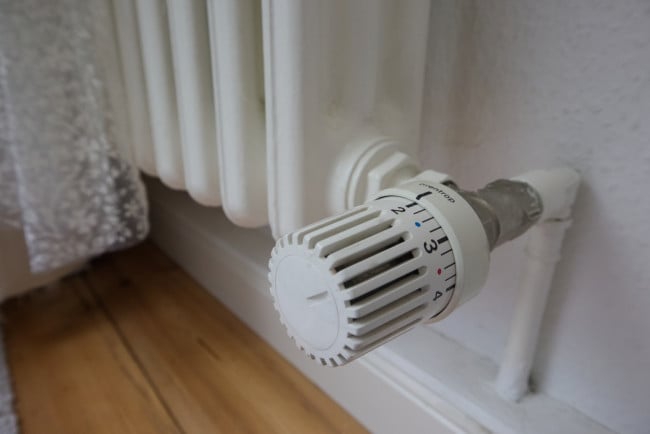
“There’s no way to say, ‘hey, no one has come to install the valve of my radiator that lets me control the temperature. Hey, there's still really big drafts in my windows. Hey, there's still an exposed steam pipe in my bathroom,” she said.
So far, tenants have shared complaints in the survey about sleep disruption from winter overheating, loud clanging at night, exposed pipes that burn them, and plants felled by temperature fluctuations. In one response Swernoff shared with Brick Underground, a tenant said that it’s difficult to dress their baby for sleeping because the temperature in their apartment swings between too cold and too hot.
Challenges of steam balancing
Balancing the heat across older buildings with steam systems can be “technically complex,” with big differences between sixth-floor apartments and a ground-floor unit even with a system working properly, said Dan Rudofsky, a director at property manager Bronstein Properties. Factors like pressure, weather, and leaks can all make a difference in how evenly a building is heated.
The practice of regulating temperature across a building's units to make it more even is called steam balancing. Although it’s hard to measure savings in older buildings that lack individual units’ temperature data, Rudofsky said he’s found steam balancing is worth pursuing to improve a heating system’s performance, reduce unnecessary energy waste and control heating costs.
And after changes are made, it can take a while for tenants to adjust to the new normal, Rudofsky said.
“In many buildings, residents have been accustomed to very high indoor temperatures, sometimes leaving windows open in winter. Rebalancing is a technical and behavioral adjustment, and it often takes a heating season or two for systems and expectations to align,” he said.
Paul Shay, owner of A Real Good Plumber, said buildings with one-pipe steam radiators should begin by implementing a process called master venting. Cold air is pushed throughout the whole system, allowing the heat to travel more efficiently without increasing the pressure. Insulating pipes also goes a long way in making sure heat travels efficiently.
“If you master vent your building, it's not cheap, but you get the money back in comfort, less complaints, and fuel in a matter of a year or two,” Shay said.
In buildings with two-pipe radiators, a slightly different system is used, with traps instead of vents used to get cold air out of the steam’s way. Shay said it's important to implement venting before adding more controls like thermostatic radiator valves that allow individual units to control the heat.
Jeff Carleton, CEO of temperature control startup Runwise, said older buildings typically run on a heat timer that turns the boiler off when outside temperatures hit a certain threshold. His company has put in heating controls in more than 1,000 buildings that allow owners to run the heat based on heat sensors that can convey the average temperature across a building, making sure the boiler is only running when it needs to be.
“The heating control on its own doesn’t fix the imbalance,” Carleton said. “You want to make sure all of your piping is insulated so you don't lose the heat the boiler is making and then you want to do the steam venting.” The goal is to get steam to all apartments within five to seven minutes of each other, he said.
You Might Also Like