
Fulltext search
FILTER RESULTS BY:
RECOMMENDED IN RENT
Moving to NYC after college? Here's how to find a rental apartment
RECOMMENDED IN BUY
How buying real estate in NYC is unlike anywhere else
RECOMMENDED IN SELL
A guide to using a no-fee renovation loan from a NYC real estate firm
RECOMMENDED IN IMPROVE
How to make your NYC renovation more pet-friendly
BEST REAL ESTATE WEBSITE!
National Association of Real Estate Editors
BEST REAL ESTATE WEBSITE! National Association of Real Estate Editors
Brick Underground
Social Links
follow:
  • Facebook
  • Twitter
  • Instagram
  • Flipboard
  • search
Brick Underground
☰ Brick Underground
Brick Underground
Brick Underground
☰
Brick Underground
  • Buy
    • Buy
    • The Market
    • Investing
    • New Construction + Condos
    • Affordable Housing
    • Co-ops
    • Negotiating + Financing
    • How to Buy in NYC Guide
    Fran in her Lenox Hill studio
    Buy
    Why I moved to NYC from Newport Beach, CA: To create a new semi-retired life
    Billionaires Row in Manhattan
    Sell
    Median price for Manhattan co-ops and condos stuck at $1.25 million in the third quarter
    Aerial View of Bedford-Stuyvesant
    Sell
    Brooklyn median sales price rose to $1.15 million on fewer deals in the third quarter
  • Rent
    • Rent
    • Affordable Housing
    • Roommates + Landlords
    • The Market
    • The Search
    • How to Rent in NYC Guide
    1832 Fulton St. in Bedford Stuyvesant.
    Affordable Housing
    Housing lottery launches for 65 rent-stabilized units in Bed-Stuy
    low-rise NYC residential buildings
    Rent
    Ask Altagracia: My landlord didn't send a lease renewal. Should I ask for it?
    Sponsored By Outerbridge Law P.C.
    Chelsea residential building
    Affordable Housing
    NYC’s rent freeze is still in place, at least for now
  • Sell
    • Sell
    • Staging + Open Houses
    • Negotiations + Closings
    • Getting Ready
    • How to Sell in NYC Guide
    Aerial View of Bedford-Stuyvesant
    Sell
    Brooklyn median sales price rose to $1.15 million on fewer deals in the third quarter
    Billionaires Row in Manhattan
    Sell
    Median price for Manhattan co-ops and condos stuck at $1.25 million in the third quarter
    Carroll Gardens townhouse
    Getting Ready
    I cleared out my elderly neighbor's townhouse to sell it. Here's how I dealt with mountains of stuff
  • Live
    • Live
    • Neighbors
    • Kids + Pets
    • Neighborhood Intel
    • Products + Test-drives
    • Troubleshooting
    FlatRate moving brick underground
    Live
    How to troubleshoot your move in advance
    Sponsored By flatrate
    237 East 79th Street
    Live
    237 East 79th St: An apartment building with the ‘modern improvements’ of 1878
    Apartment buildings in Lower Manhattan
    Renovation
    Which repairs are co-op and condo owners responsible for? What do buildings take care of?
  • Improve
    • Improve
    • Small Spaces
    • Small Projects + DIY
    • Renovations
    • Design + Architecture
    • Products + Services
    • How to Renovate in NYC Guide
    stacked washer/dryer condo in a bathroom
    Renovation
    Can I install a washer/dryer combo in my NYC co-op?
    Elevated view of busy New York City avenue
    Renovation
    What NYC co-op and condo boards can do about higher insurance premiums
    Apartment buildings in Lower Manhattan
    Renovation
    Which repairs are co-op and condo owners responsible for? What do buildings take care of?
  • Boards & Buildings
    • Boards & Buildings
    • Boards
    • Finance
    • Insurance
    • Legal
    • Property Management
    • Structure & Systems
    • Sustainability
  • Advertise
    • Advertise with us
    • Sponsored Content
    • Experts
    FlatRate moving brick underground
    Live
    How to troubleshoot your move in advance
    Sponsored By flatrate
    low-rise NYC residential buildings
    Rent
    Ask Altagracia: My landlord didn't send a lease renewal. Should I ask for it?
    Sponsored By Outerbridge Law P.C.
    Manhattan apartment towers
    Roommates + Landlords
    Ask Altagracia: My luxury building doesn't have the amenities it promised and the rent is going up by $500. Can we push back?
    Sponsored By Outerbridge Law P.C.
  • Brick Report
  • About Us
  • About Us
Email address
Fulltext search
FILTER RESULTS BY:
New Main menu
  • Buy
    • Buy
    • The Market
    • Investing
    • New Construction + Condos
    • Affordable Housing
    • Co-ops
    • Negotiating + Financing
    • How to Buy in NYC Guide
  • Rent
    • Rent
    • Affordable Housing
    • Roommates + Landlords
    • The Market
    • The Search
    • How to Rent in NYC Guide
  • Sell
    • Sell
    • Staging + Open Houses
    • Negotiations + Closings
    • Getting Ready
    • How to Sell in NYC Guide
  • Live
    • Live
    • Neighbors
    • Kids + Pets
    • Neighborhood Intel
    • Products + Test-drives
    • Troubleshooting
  • Improve
    • Improve
    • Small Spaces
    • Small Projects + DIY
    • Renovations
    • Design + Architecture
    • Products + Services
    • How to Renovate in NYC Guide
  • Boards & Buildings
    • Boards & Buildings
    • Boards
    • Finance
    • Insurance
    • Legal
    • Property Management
    • Structure & Systems
    • Sustainability
  • Advertise
    • Advertise with us
    • Sponsored Content
    • Experts
  • Brick Report
  • About Us
    • About Us
    • Advertise
  • About Us
SUBSCRIBE TO OUR NEWSLETTER →
Social Links Footer
  • Facebook
  • Twitter
  • Instagram
  • Search
Renovation [ SPONSORED ]

What factors most impact your NYC renovation costs?

  • Size, complexity, scope, and quality are the top four factors that drive costs
  • The average single-family NYC home that Bolster renovates is 3,200 square feet
  • Most owners renovate the full footprint, or 50 to 75 percent of total square footage.
By Bolster  | June 30, 2023 - 12:30PM
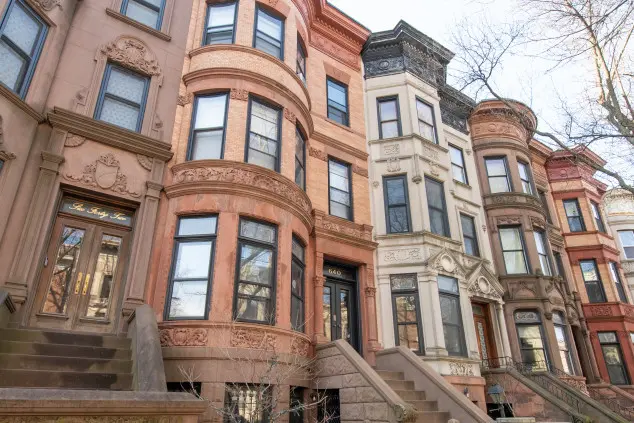
NYC brownstones

The average single-family home renovation is likely to cost $1.2 million or higher, according to Bolster.

Bolster

A major gut renovation can be a complex and expensive undertaking, and several factors can influence its scope and budget, but with careful planning your project can stay within a budget and achieve the desired outcome.

Bolster, a data-driven design-build firm in New York City, offers a unique model in which pricing is iterative throughout the design process, and only starts to build when pricing is locked in place, making it the only renovation firm in NYC to offer a fixed-price cost.

It’s helpful to understand the top four factors that impact renovation costs: Size, complexity, scope, and quality. These remain constant across all kinds of renovation projects. Read on for how these factors impact different types of renovation projects.

How to think about size in your renovation

When considering the scale of your project, it’s helpful to think in terms of how many square feet you are renovating, not how many square feet comprise your home’s total footprint. Put simply: more square footage = higher cost, as larger spaces will require more materials, labor, and time to complete.

Example: Single-family home (i.e. brownstone or townhouse) vs. apartment

The average single-family home in NYC that Bolster renovates is 3,200 total square feet, with most homeowners choosing to renovate the full footprint, or in some instances 50 to 75 percent of the total square footage. In a single-family home renovation, homeowners have the opportunity to renovate in phases (for example, by focusing on renovating the owner-occupied levels and leaving the garden rental for later; or choosing to focus on something specific like an extension or specific rooms—kitchens and bathrooms are common).

Meanwhile, most apartment renovations are on a much smaller scale. The average apartment in NYC that Bolster renovates is 1,500 square feet, and Bolster’s renovation data shows that apartment homeowners almost always choose to undertake the entire renovation at once.

With size in mind, it’s easy to see how a larger footprint equates to a higher cost: The average single-family home renovation is likely to cost $1.2 million or higher, and the average apartment renovation is likely to cost $700,000.

How to think about complexity in your renovation 

Bolster thinks of complexity in terms of the level of the specialized design, engineering, and intricacy that go into a project. If a project has simple design with direct replacement and no structural work, it’s likely low-complexity. If a project requires complicated engineering and logistics, it’s likely high-complexity and higher complexity = higher cost. The complexity of most projects can be broken down into four subcategories:

  • Cosmetic: Aesthetic update, fixture and finish replacement in place (e.g., tile, paint, wallpaper), no governing agency and/or building approval.
  • Wet: Kitchen and bathroom, waterproofing and building connection systems, limited governing agency and/or building approval.
  • Envelope: Mechanical and exterior (e.g., window, masonry, roof), full third-party package, and/or governing agency and/or building approval.
  • Structural: Combinations and expansions (e.g., additions and extensions).

Example: Low-complexity vs. high-complexity

For cosmetic projects with minimal design and largely superficial updates, the cost will be less than a project that is adding an extension.

Bolster Upper West Side renovation

For example, the owner of an Upper West Side project (above) is an architect that used Bolster’s Agile x Bolster service offering. That's because she simply needed another set of eyes to review her plans before filing with the Department of Buildings and starting construction.

Bolster Clinton Hill renovation

In contrast, Bolster did a Clinton Hill renovation (above) that involved extensive structural work to create a two-story extension off the back of the home.

One project had minimal design and build work, while the other involved complicated logistics, approvals, and specialized third parties, which drives up the overall cost.

How to think about scope in your renovation

Scope refers to the amount of work to be done. The scope of a project can range from partial, in which changes are made to select areas with limited layout changes; to a gut, in which all finishes and systems (such as electrical and plumbing) are replaced and the walls are brought “down to the studs” to an extension, in which part of the home is combined or expanded in a significant way.

Example: Partial renovation vs. gut renovation

Bolster has extensive experience working with projects of all scope levels. Defining the scope with homeowners is one of the most important parts of the process.

Bolster UWS renovation

In this Upper West Side apartment renovation (above), the work is defined as partial because changes were made to select areas with limited layout changes.

Bolster gut reno Astoria

For a renovation in Astoria (above), the homeowners prioritized energy-efficient and sustainable upgrades, which involved a full replacement of the plumbing and electrical systems as they transitioned from gas to electric, and made significant layout changes as the home was reconfigured from multi-family to single-family.

How to think about quality in your renovation

Not all budgets are the same: that’s why Bolster has categorized finishes ranging from mid (engineered materials, i.e. vinyl tile); to high (natural materials, i.e. hardwood floors and granite); to luxury (bespoke materials, i.e. marble and showroom retail like Wolf and Artistic Tile).

Example: Mid-range finishes vs. luxury finishes

Bolster Midtown luxury renovation

In this Midtown renovation by Bolster (above), the price per square foot was $750 per square foot due to the luxury and bespoke materials that the homeowner sourced from Italy.

Bolter Harlem renovation

Despite the overall higher cost of this Harlem brownstone renovation (above), the price per square foot was lower at $350 per square foot as the owners chose to prioritize their budget on necessary (and common) cost-drivers such as mechanical, electrical, and plumbing while selecting budget-friendly fixtures and finishes, like IKEA kitchen cabinets.

The Bolster Smart Renovation Zero-Risk Guarantee

How can a design-build firm guarantee a Zero-Risk renovation?

Bolster has pioneered Smart Renovation. We apply quantitative analysis along with our proprietary technology solution to identify and quantify the performance risk on every renovation project. The result is a personalized strategic approach to each renovation that allows us to absorb 100 percent of the homeowner’s risk. Your home will be beautifully designed, and delivered on-time and on-budget. That is our guarantee.

Smart Renovation & Zero-Risk means that Homeowners are now free to dream.

To start your major home renovation project visit bolster.us

The Bolster Promise video
You Might Also Like

A renovated NYC kitchen
Improve What you need to know about upgrading your electrical system when renovating
Park Slope brownstone
Renovation Have your eye on a NYC fixer-upper? Here’s how to estimate what a renovation will cost
Upper West Side co-op renovation by Bolster
Renovation Here’s how much it costs to gut renovate a dated Upper West Side co-op
Brick Underground articles occasionally include the expertise of, or information about, advertising partners when relevant to the story. We will never promote an advertiser's product without making the relationship clear to our readers.

topics:

bathroom brownstone electricity and wiring kitchen Renovation
SHARE
TWEET
BRICK’S PICKS
Apartment buildings in Lower Manhattan
Which repairs are co-op and condo owners responsible for? What do buildings take care of?
one-bedroom unit at 365 West 23rd St.
A pied-à-terre purchase checklist: What to consider if you're buying a part-time place in NYC
A kitchen with stainless steel appliances and counter tops and wood floor
11 things NYC landlords are required to provide, and 11 they’re not that might surprise you
716 Broadway, #2
What you need to know about buying a NYC condo or co-op with direct elevator access
Towers on Billionaire's Row
I received a pied-à-terre tax notice for my primary residence in NYC. How do I fight this?
Manhattan apartment towers
‘Central air or bust’: Many NYC luxury buyers will not consider listings without central AC
Follow Brick on Instagram
@brickunderground | #brickunderground
Brick UndergroundBRICK UNDERGROUNDREAL LIFE. REAL ESTATE. REAL NEW YORK.
Social Links Footer
  • Facebook
  • Twitter
  • Instagram
  • Search
Main menu footer
  • Buy
    • The Market
    • Investing
    • New Construction + Condos
    • Affordable Housing
    • Co-ops
    • Negotiating + Financing
    • How to Buy in NYC Guide
  • Rent
    • Affordable Housing
    • Roommates + Landlords
    • The Market
    • The Search
    • How to Rent in NYC Guide
  • Sell
    • Staging + Open Houses
    • Negotiations + Closings
    • Getting Ready
    • How to Sell in NYC Guide
  • Live
    • Neighbors
    • Kids + Pets
    • Neighborhood Intel
    • Products + Test-drives
    • Troubleshooting
  • Improve
    • Small Spaces
    • Small Projects + DIY
    • Renovations
    • Design + Architecture
    • Products + Services
    • How to Renovate in NYC Guide

Get more news you can actually use...

Email address

Delivered to your inbox weekly - for free.

*By signing up you agree to receive occasional emails on behalf of our sponsors

Footer Menu
  • About Us
  • Advertise

Copyright 2009-2024 by BND Ventures Inc | Privacy Policy | Terms of Service | Ad Choices | Login | Powered by Mortar CMS, the AI CMS