





10 steps for creating a stellar co-op or condo board application
- Preempt any questions or concerns about your finances by including all necessary details
- Provide talking points or sample letters to your personal and professional references

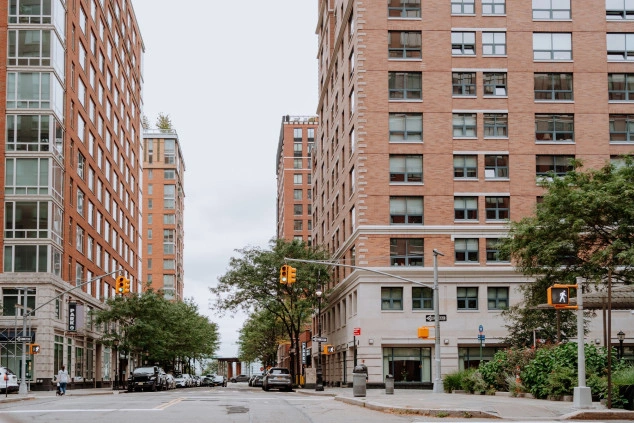
The board’s scrutiny is intended to ensure candidates can contribute to the building’s financial well-being.
iStock
If you’re considering buying an apartment in New York City, be prepared to overcome hurdles beyond making the down payment and securing a mortgage. You'll also need to navigate the board approval process, an essential prerequisite for purchasing in a co-op or condo building.
That process begins with the board package, designed to show the board that you are a qualified buyer. This rather invasive first step involves scrutinizing your tax returns, financial statements, and personal and professional recommendations.
But here's the thing—all that scrutiny is ultimately for your benefit. A co-op's ownership structure means you become a tenant-shareholder of a corporation, and the due diligence—which typically involves a board interview—is all part of screening candidates who will contribute to the building’s financial well-being. Increasingly, the application package for purchasing a condo requires similar documentation and, in some cases, an interview.
[Editor's note: A previous version of this post was published in February 2025. We are presenting it again with updated information for June 2026.]
That said, co-ops have much more discretion and can reject board packages without providing a reason. That option is off the table for condo boards, who are limited to exercising their right of first refusal, meaning they can buy a condo unit from a seller at the same price as the sales contract—a very rare occurrence.
So, unlike a co-op, a condo is not likely to turn you down because they don't like your cover letter.
With a condo application: "Fundamentally, you are checking off the boxes," said Kirsten Jordan, a broker at Corcoran. "I've sent letters back to co-op buyers and asked them to make fixes. That's never happened in a condo package."
Read on for tips on efficiently assembling your application package and putting your best foot forward to seal the deal.
1. Start prepping early
It’s your job to gather all the documentation, but a broker can help you file and ensure it is free of omissions.
Usually, there are one or two rounds of back-and-forths between the broker and the buyer, according to Ari Harkov, an agent at Brown Harris Stevens. But if you are well organized, you can reduce the time between the offer and closing.
“Most contracts require packages to be submitted within a certain time frame. Be sure to check your contract and consult with your attorney so you know what dates and deadlines you need to meet,” Harkov said.
Now that applications are primarily being prepared online, compiling and submitting board packages has become both simpler and more complicated.
“Digital packages help streamline the process and save paper, but they are also fraught with pitfalls and challenges," he said, pointing to software glitches or unfamiliarity with the system resulting in incomplete packages being accidentally submitted. It is also more difficult for boards to review them comprehensively.
2. Follow the checklist and don’t leave gaps
It's imperative to know what to include. A management company or brokerage will send you a guide outlining exactly what you need in your package, so start there. Your broker can also provide samples of application documents to help you get oriented, so you can request any necessary statements from financial institutions.
Once you know what you need, have your broker contact the seller’s agent to confirm how the board wants the package delivered, whether via email or a secure online platform, as well as the software being used and the named recipient. This way, you can get organized by scanning documents and having them ready to upload.
The bottom line: Include everything requested, but don't add more than you need. Photos are a big no-no. "We don't care what your house in the Hamptons looks like, and we don't really care what you look like," said one Upper East Side co-op board treasurer.
3. Obtain a commitment letter if financing
If you're taking out a mortgage, you'll need to secure a commitment letter from the lender—a formal promise to fund the loan, issued only after full underwriting and a property appraisal. This is not to be confused with a mortgage preapproval, which is merely a (nonbinding) preliminary assessment from your lender based on your financials.
“In today’s lending environment, many banks are taking at least 45 days to issue commitment letters,” Harkov said. And keep track of the letter’s expiry date—that kind of oversight could become a sticking point for a seller.
Beyond the commitment letter, many co-op boards require financial statements showing assets and income, such as tax returns and bank statements. "Those are the heart and soul of the package in broad strokes," Harkov said.
That usually means two years of tax returns along with your most recent bank statements and stock and retirement account reports, though requirements vary from building to building.
4. Include a cover letter and table of contents
These board package elements are more than just formalities; they create an important first impression (read: organized or not), and the TOC allows board members to easily find what they need.
"The cover letter should explain who you are, your income, what your post-closing assets are, and your debt-to-income ratio," Harkov said, adding that if a board member doesn't want to read the whole package, they can get everything they need from these two parts.
As for more granular advice, Jordan offered some important advice for cover letters:
- Start with a pleasant salutation and closing.
- Present your narrative in a well-written, digestible format.
- Introduce yourself or your family—this is who we are and how long we've been looking.
- Explain why you love the building and the neighborhood, and how excited you are to be part of the community.
- Offer other details that signal you're a good neighbor, such as serving as president of the board of your previous co-op.
As for tone, steer clear of politics and religion—boards are diverse, and you don't want to inadvertently alienate anyone. Instead, focus on your professional and charitable impacts.
5. Don't leave any blanks
Be thorough. The longer it takes for a board to approve you, the longer it will take to close on your apartment. What's more, co-op board members are volunteers (often with jobs and families) who don't relish having to seek additional information.
The goal is to preempt any questions—take cash buyers, for example: One common mistake is failing to show you have adequate funds on the financial statement, which can leave the board wondering where the money is coming from.
The same applies if you are recently divorced; be prepared to provide detailed information about alimony payments, whether you paid or received them.
Similarly, Jordan advised going beyond the basics when your finances are complex.
"The revenue/financial statement is a great place to start, but if your situation is more complicated because of carried interest or debt, there's nothing wrong with making a schedule that breaks things down further," she said. "It's even worth going into detail about why you've made certain financial decisions—like not paying down educational loans because the interest rate is so low and you view it as smart debt, or you have assets with valuations that you'd like to include."
6. Choose references wisely
According to Jordan, boards care most about whether you can afford it and who you are—and the reference letters answer the second question.
A Yorkville co-op board member put it this way: "What separates one applicant from the next is the personal aspect—specifically, the recommendation letters. Because, when it comes down to it, once we agree that the applicants have the financial capacity to make the purchase, we just want to see if they will be good neighbors. Who are they asking to recommend them? Do the letters read like boilerplate, or do they tell me thoughtful information?"
Harkov explained that these reference letters fall into several categories. The first is an employee letter written on company letterhead verifying your compensation.
Likewise, a business letter from a superior, colleague, or major client (if you are an independent contractor) can offer substantive feedback on you in the workplace, including details on your level of responsibility.
The third is a letter from your current management company confirming that you pay rent or monthlies on time.
Finally, be sure to include a personal letter that speaks to your character as a neighbor can carry more weight than anything else in the package.
8. Aim for sincerity and specificity
So, who should write those personal reference letters?
“The idea is to use someone who gets how important it is to have good neighbors and can vouch for the fact that you would make one," Harkov said. It's even better if you know someone who’s a board member in a NYC co-op or already lives in the building.
Jordan emphasized the need to know your audience, whether it's an exclusive Park Avenue co-op, a storied building on the Upper West Side, or a smaller building elsewhere. "Take guidance from your broker or the seller's agent on what vibe you should aim for," she said.
She also advises her clients to be prepared to get creative.
"The best letters are the ones that are genuine and actually written by someone else, but sometimes people need inspiration," she said.
Providing your references with sample letters can be a helpful. Or you could remind them of relevant details, such as when you planned a charity event together or took a weekend trip with the families in tow. "Not many people think about doing this to help their references get started," she added.
Harkov agreed that specificity is key. "You want your recommendations to include details like, 'She helped me when my kids were sick,'" he explained.
A couple who bought a co-op in Forest Hills, Queens, told us they were certain their “Disney-style” letters of recommendation were what clinched the deal for them.
Read: "Here are 8 real co-op board reference letters from successful buyers" for more tips and takeaways.
9. Double and triple-check the package
"Multiple qualified eyeballs are always a good thing," Harkov said.
The buyer's broker pulls the package together, but the seller's broker, the managing agent, and the lawyer should review it as well—each brings a different perspective. Your broker knows what boards in that building typically respond to; the managing agent knows the specific requirements; and your lawyer can flag anything that might raise legal or financial questions.
Beyond typos, check that financial figures are consistent across all documents, signatures are in place, and nothing is outdated—an expired commitment letter, for example, could delay your closing at the worst possible moment. Make sure every item on the checklist is accounted for and that nothing was omitted.
Digital submission has added another layer of vigilance. As Harkov noted, software glitches and unfamiliarity with online platforms can result in incomplete packages being accidentally submitted—so confirm that every document has been uploaded correctly before hitting send. It's worth having one person do a final end-to-end review of the submitted package, not just the individual documents.
The bottom line: A small error that could have been caught in five minutes shouldn't be what stands between you and your new apartment.
10. Bring your A-game to the interview
Dress appropriately, be respectful, and keep it friendly. If you’ve spent time preparing the application, you should know your package inside and out so you won’t get tripped up during the interview, whether it is in-person or via video.
Jordan emphasized that this is an opportunity for board members to ask you questions, not for you to ask them about the building, which you should have known from doing your due diligence.
"This is also not a good time to go into any elaborate details about the massive amount of work you plan to do in the apartment," she says. You shouldn't lie if asked outright, but there's no need to freely offer statements conveying your eagerness to embark on a two-year construction project.
Ultimately, a well-prepared board package is less about jumping through hoops and more about demonstrating that you've done the work—financially, personally, and practically. Boards aren't looking for perfection; they're looking for someone they can trust. If you've followed the steps above, you've already shown them that.
Earlier versions of this article contained reporting and writing by Lucy Cohen Blatter and Emily Myers.
You Might Also Like