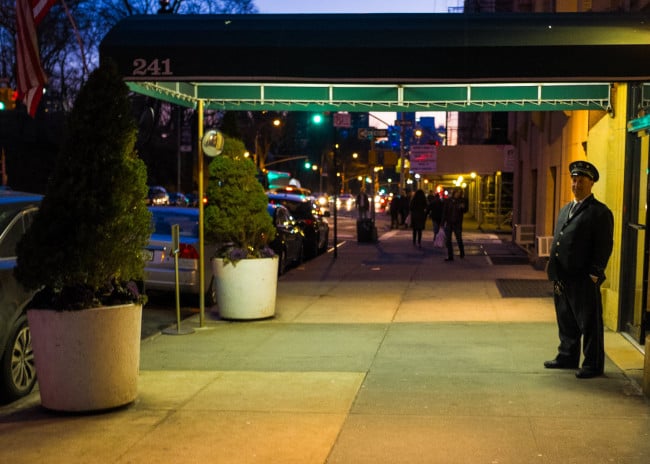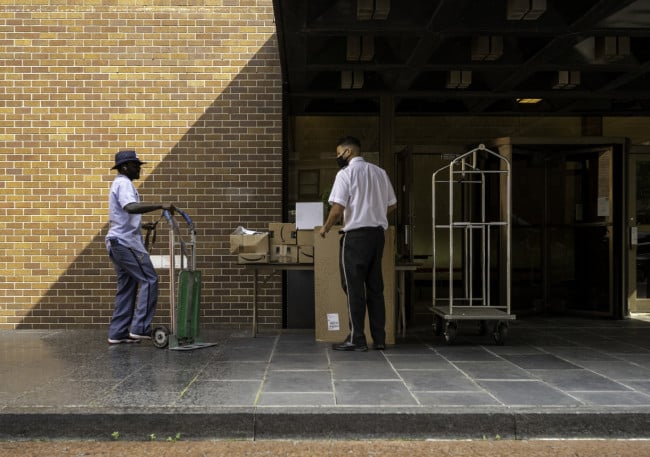





If you live in a doorman building, a strike means you may have to pitch in
- 32BJ SEIU workers could go on strike next week if contract talks fail
- The last doorman strike happened back in 1991 and lasted 12 days
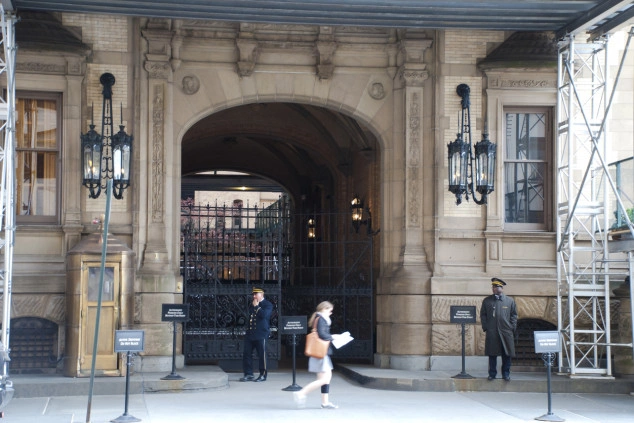
This year, members of 32BJ SEIU are pushing for higher wages to keep pace with the city’s rising cost of living, according to 32BJ SEIU president Manny Pastretich.
iStock
Door staff and other residential building workers could go on strike next week, meaning some New York City building residents may have to step up to do tasks like taking out the trash and sorting mail.
Workers at the 32BJ local of the Services Employees International Union voted April 15th to authorize a strike if building owners and the union can’t agree on a deal by midnight on April 20th. That’s when a contract for 34,000 door staff, handymen, porters, and concierges in 3,000 buildings across Manhattan, Brooklyn, Queens, and Staten Island expires.
[UPDATE: On April 17th, The Realty Advisory Board on Labor Relations announced that it has reached a tentative labor agreement with 32BJ SEIU. The agreement includes wage and pension benefit increases.]
What’s happening with the contract?
Every four years, residential building workers at 32BJ SEIU negotiate their contract with the building owners and co-op and condo boards that employ them. The last strike was in 1991—and lasted for 12 days.
This year, members of 32BJ SEIU are pushing for higher wages to keep pace with the city’s rising cost of living, according to 32BJ SEIU president Manny Pastretich.
“The relationships people have with 32BJ workers are often very deep. It’s the first person you see in the morning, the last person you see at night,” Pastretich said. Residents who want to support their building’s workers in negotiations can do so in writing to their board or property manager.
“If you live in a 32BJ building right now you’ll probably have a sign-up list about doing the kind of job our members do every day,” he said, including taking out the trash, keeping hallways clean, and greeting residents.
The Realty Advisory Board on Labor Relations, which represents building owners and negotiates with 32BJ SEIU, has proposed sharing the cost of healthcare premiums with workers and implementing a tiered wage system that would lower pay for newer workers. The union opposes making these changes.
The industry group says that if the Rent Guidelines Board votes to freeze rents for rent-stabilized apartments then owners would struggle to provide wage increases to employees.
“We have a long history of successful collaboration with 32BJ. To keep the industry strong going forward, we must continue to work together to negotiate a fair contract that ensures its long-term sustainability,” said Howard Rothschild, president of the Realty Advisory Board on Labor Relations, in a news release.
“Residents shouldn't expect that everything gets shut down but they should prepare reduced services,” said Michael Wolfe, president of Wolfe Realty Services, a co-chair of the RAB”s residential negotiating committee. “People shouldn’t panic but I think they need to be prepared.”
Your building management will communicate with you about procedures in the event of a strike, but there are a few ways you can be prepared for the most common disruptions.
Security and door access
Security and building access are the main areas where most residents will experience the effects of a residential worker strike.
“How do you get people in and out of the building safely and how do you keep the building safe and secure during a strike? That’s what people want to know,” said Daniel Wollman, chief executive officer of Gumley Haft, a NYC property manager.
Some buildings will circulate volunteer lists to recruit residents to help monitor the door. Others will hire building security guards who aren’t subject to the 32BJ contract to guard building lobbies. Wollman said the co-op and condo buildings that Gumley Haft manages will be pairing a volunteer with a hired security guard to better identify residents coming inside.
“In the olden days we had these little yellow cards,” Wollman said, which prove that someone trying to gain entry is a resident. Now many buildings are disseminating QR codes to provide residents with front door access. Residents may be asked to show ID, or be limited to certain entrances.
Some residents at buildings with doorpersons may be unused to carrying keys or a key fob, so it’s important to make sure you have a working key ahead of a strike.
“The last thing you want to do is come home and no one’s at the door,” Wolfe said. If you’re retired or work flexible hours, consider signing up for a shift working the door or doing other tasks, he suggested.
Repairs or moving
If you live in a larger building, your super will remain on the job for now. For buildings with six or more employees, the contract with building superintendents doesn’t expire until June. Wolfe said that’s by design, to make sure residents in large buildings aren’t left without any staff at all.
However, non-emergency renovations and service appointments may not happen in the event of a strike, so residents should aim to schedule those projects before April 20th if possible.
Your building management should maintain your heat and hot water and be able to respond to emergencies, but don’t expect non-essential repairs to get done.
In some buildings, elevator access might be limited, so don’t plan on moving into or out of an apartment during the strike. That’s especially true if your elevator requires an operator.
Cleaning and trash
Residents should prepare a place to keep trash, recyclables, or composting materials within their apartment, if necessary, Wolfe said.
That’s in case NYC's Department of Sanitation Services workers opt not to cross the strikers’ picket line and no emergency is declared. Your building may also tell you where you can take trash to the curb or another designated area yourself.
In their strike guide, the RAB recommends that buildings deal with cleaning needs with resident volunteers, contracted staff or by closing off some facilities..
Packages and mail
Workers at package delivery services like UPS, DHL, and FedEx may not want to cross a picket line, which could affect package delivery, Wolfe said. If you or a relative depend on medications or other essential items to be delivered, plan ahead.
Management at 77 Bleecker St. advised residents to keep deliveries to a minimum, meet any delivery personnel at the front door, and told residents that deliveries of furniture and appliances wouldn’t be allowed during a strike.
For buildings with manual mail sorting, the mail might be another task for resident volunteers.
You Might Also Like