




Is a ‘mommune’ right for you? Why two single NYC moms say combining households beats struggling alone
- The two adults and three kids share a $4,500 three bedroom in West Harlem
- 'Don’t limit yourself to thinking family can only be created with romance'
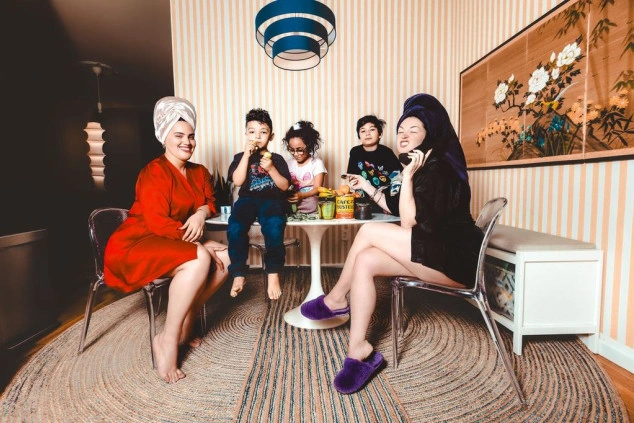
Friends Bernie Sinclaire and Anabelle Gonzalez live together with Gonzalez’ daughter Sophia and Sinclaire’s sons Marcos and Nico.
Finding an apartment big enough for kids in New York City isn’t an easy feat. Being able to afford that apartment as a single mom is even harder.
To counter this issue, friends Bernie Sinclaire, 38, and Anabelle Gonzalez, 39, decided to move in together to split the workload of parenting and rent. Now they live together in a three-bedroom in Hamilton Hills with Gonzalez’s daughter Sophia, 7, and Sinclaire’s sons Marcos, 9, and Nico, 4.
The two single moms—who are also teachers—highly recommend this strategy, which they call their “mommune," as in a commune of moms.
Who does this make sense for? “This is absolutely right for women who are struggling to make rent, first of all, and find themselves in a position where the only way they see getting financial relief is by winning the lottery or meeting a guy,” Sinclaire said.
Read on to find out if this could be the housing solution for you and check out their mommune website for more about their communal living experience.

Why consider a ‘mommune’?
In 2023, more than a third of single moms with kids in NYC lived in poverty, according to census data. Even for those with slightly more stability, affordability is tough.
Single mothers with young children face an 86 percent risk of falling below what the Fund for the City of New York calls “the true cost of living.” The nonprofit’s brief defines that benchmark as “the income needed by working-age households to meet basic needs for a given family type in a specific place, without public or private assistance.
Sinclaire’s interest in living with another mom goes back many years and has more personal roots.
“I’m the daughter of a single mother of six, and I watched my mom frequently have to choose to have a partner in order to financially navigate the housing restrictions as a single mother,” she said. “I never want to be in that position.”
Rental application: Denied
Even though Sinclaire knew she wanted to live with another mom, it still took her years and one failed attempt to make her women-centric housing dream a reality.
During her first attempt to apply for an apartment with a different single mom, the two women were denied. That other mother, also a teacher, didn’t have good credit or someone who could serve as a guarantor. Back then, Sinclaire herself wasn’t making as much money as she is now.
When she first pitched the idea to Gonzalez, her friend from graduate school, Gonzalez declined. “Then I cried,” Gonzalez said. (Sinclaire did too).
When Sinclaire asked a second time, Gonzalez was single and living in New Jersey, desperate to move back to the city. That time, she said yes. “It just so happened to be the right moment,” Gonzalez said. She grew up in Williamsburg, but most of her family has since moved to New Jersey.
“I don't want to not be a mom. I want to afford my city and live in it. I want to be a mom and enjoy being a mother and have a child who enjoys living in it as well,” Gonzalez said. “Everybody deserves that.”
First, Gonzalez and her daughter moved into Sinclaire’s 700-square-foot two bedroom in Washington Heights with her two sons. There, the two planned to “squirrel away some cash” for a three-bedroom apartment.
Finding an apartment for five
Sinclaire and Gonzalez knew they wanted a large living area in their apartment. Specifically, they wanted a kitchen big enough for five-person dinners and a living area where they could squeeze their family onto a couch for movie nights.
“We wanted to operate as a family unit and have the tradition of sitting down for dinner,” Sinclaire said, and they cook frequently.
Since both of them work in the Bronx as schoolteachers, the two wanted to limit their commute and find a good school district for their kids to attend, making upper Manhattan a logical area.
They looked for places with a separate kitchen and living room, with the adults willing to settle for “matchbox bedrooms.” They quickly learned that a Manhattan prewar apartment would best fit their specifications: a three bedroom with large enough co-living areas, instead of the larger bedrooms and smaller shared spaces common in many newer builds.
Overall, there’s a shortage of three-bedroom apartments in NYC, since building them offers a lower value per square foot and people who find them tend to stay for longer. Only about 3 percent of apartments built over the last decade with any NYC subsidies had three bedrooms or more, according to The New York Times.
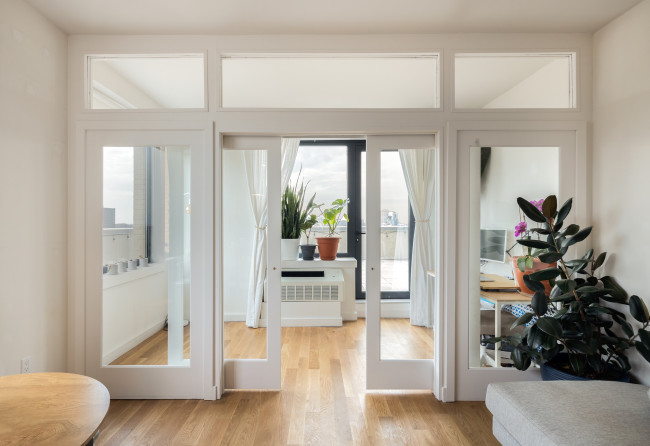
Gonzalez and Sinclaire, however, found what they were looking for quickly: A 1,200-square-foot, three-bedroom, two-bathroom apartment in West Harlem for $4,500 in a building with a gym, laundry room, and kids playroom. That’s about $600 more than they paid when living separately in smaller apartments, but it came with a significant “life upgrade,” Sinclaire said.
“Once we were ready to get out of there, we didn’t even look for a month. It was like two weeks,” Sinclaire said. They found their current apartment in the dead of winter, when rental demand is lower and rents can be cheaper.
Because the shared living spaces were so important, the two women split the rent down the middle, reasoning that they are paying not for the absolute number of people but for the shared spaces.
Talk about finances and routines
Moms with younger children might have to find a mom with older kids to live with, Sinclaire said. “If my children were younger, would I be able to financially qualify for an apartment, knowing that I have to pay rent and over $1,200 a month for childcare?” she asked. All three of the mommune’s kids are in elementary school now.
Having a strong relationship and similar parenting styles to your fellow mom is important. You need someone compatible with your lifestyle and your routine—and someone you won’t get sick of.
“You need to build a relationship with that person, not unlike you would in dating, minus the romantic part,” Sinclaire said. For her and Gonzalez, that meant going on playdates (no boyfriends allowed!), making dinner together, and going on a short trip out of town with their children to Woodstock to make sure they were a good fit.
Talking about finances ahead of time is another thing Sinclaire and Gonzalez said is absolutely necessary. “You have to go through those uncomfortable conversations about multiple things, finances, other things, routines,” said Gonzalez.
For them, the financial advantages have been obvious. Since moving in together, the two were able to afford to split a part-time nanny. Sinclaire had the time and mental energy to get a paid fellowship for the summer and a work promotion.
New kind of family
Another piece of advice they offer is to make sure your kids and any co-parents are on-board. The mommune kids call themselves a “kidsune,” and the two youngest treat it like one big sleepover, Sinclaire said.
There’s a risk that your extended families or co-parents may not understand the choices you’re making.
“We’re pretty sure that our co-parents still think we’re just gay,” Sinclaire said. They’re not, but they do joke that they are each other's Bert and Ernie of Sesame Street, or Morticia and Gomez Addams of the Addams Family.
Both mothers say creating a “mommune” is about more than just having a roommate. It’s about creating a shared life in which women can help support each other emotionally, without requiring them to rely on romantic relationships for housing stability.
“Don’t limit yourself to thinking family can only be created with romance. Romance can still have a place in your life. It just doesn't need to be a part of your family,” Sinclaire said.