




George Fred Pelham's 332 West 51st St: A young architect’s likely first commission
- A pair of Romanesque Revival-style buildings were designed by a 23-year-old architect

An April 1893 advertisement offered rooms for $45, a pricey rent at that time for an address on the eastern edge of Hell's Kitchen.
Have you ever passed by an interesting residential building in New York City and wanted to know more about its history? In this series, Brick Underground teams up with Tom Miller, creator of Daytonian in Manhattan, a blog about Manhattan buildings and other historic architecture. Each week, we will run an excerpt from the Daytonian’s archives with a link to the full article.
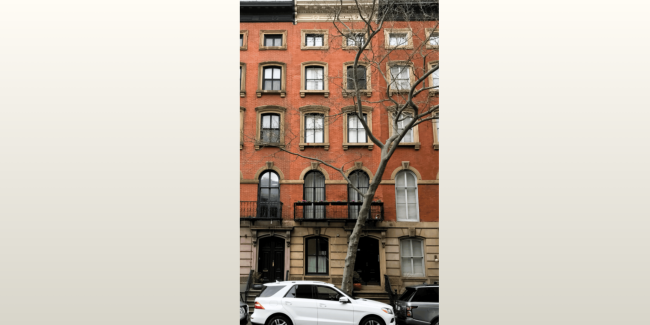
In 1890, real estate developer William Ramsey purchased three, three-story brick houses at 330-334 West 51st St. and commissioned George Frederick Pelham to replace them with two buildings.
The 23-year-old architect had just opened his office that year and was the son of architect George Brown Pelham. Ramsey's commission was among the earliest, if not the first, he received.
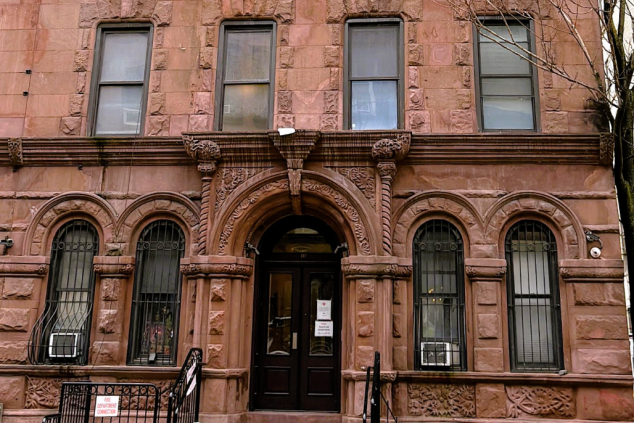
Construction on the identical, Romanesque Revival-style buildings was completed in 1891.
Described as "double flats," the buildings had two apartments per floor. An advertisement for both buildings in April 1893 offered, "Elegantly decorated apartments of 7 rooms and bath, all light; steam heat, &c.; rent $45 and upward." For an address on the eastern edge of Hell's Kitchen, the rent was somewhat pricey.

Among the initial residents of 332 West 51st St. were Dr. William S. McMurdy and his wife, Fannie. William was an 1881 graduate of Princeton University and earned his medical degree at the College of Physicians and Surgeons. Like almost all doctors, he was called upon day and night.
Although the residents of 332 West 51st St. were middle class, they were affluent enough to afford domestic help. Albert Hartog and his wife employed a maid, Mable Lewis, in 1905. On September 5, the New York Herald reported, "she disappeared after she had been at work a few days, taking a watch and pin worth $240." (About $8,800 in today’s dollars.)
As it turned out, this was not Mabel's first offense. Young women often practiced what police called the "service game," taking domestic jobs just to steal valuables.
Another one-time resident was a celebrity of sorts, Alvin A. Kelly, known nationwide as Shipwreck Kelly. A World War I Navy veteran, he became famous for his stay on top of a flagpole on the Steel Pier at Atlantic City for 1,177 hours, or more than 49 days, in the summer of 1930.
For more on the many other colorful residents who passed through 332 West 51st St., check out the full article.
You Might Also Like