





The home loan that lets first-time buyers put as little as 3 percent down
- SONYMA helps qualified renters buy units priced below the median for NYC
- The loan allows 3 percent down for houses and condos, 5 percent for co-ops

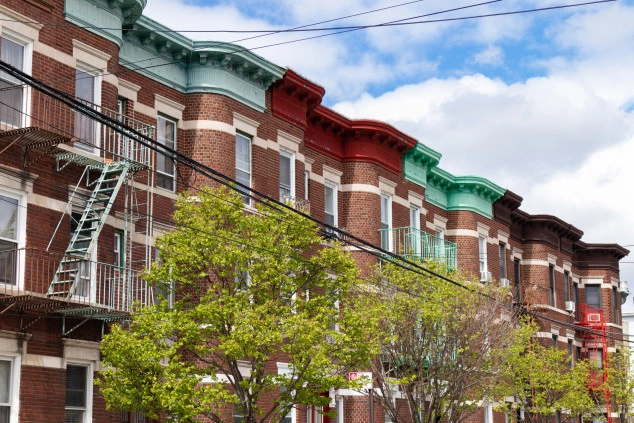
If you are having difficulty coming up with the funds for a down payment, a SONYMA loan might be the answer.
iStock
In New York City, banks often require you to put at least 20 percent of an apartment's purchase price towards the down payment. Financing a deal like that—when the median sales price for Manhattan co-ops and condos is $1.2 million—can feel like an impossible goal for many.
However, some programs allow qualified first-time buyers to put down far less—as little as 3 percent. For buyers with incomes at or below a certain level, the State of New York Mortgage Agency (SONYMA) offers loans to help them buy units at or below the city's median sales price.
[Editor's note: A previous version of this post was published in April 2025. We are presenting it again with updated information for June 2026.]
SONYMA has primary mortgage programs as well as optional down payment assistance and other grants and subsidies. In addition to the Low Interest Rate Program and Achieving the Dream, there are programs for veterans and active military personnel, as well as those willing to purchase units that require repairs. (If you buy a vacant house, you can apply for up to $20,000 to make improvements, though you'll need inspections and—being realistic—you may need to combine this with other loans.)
Only certain lenders offer SONYMA loans, which require additional paperwork. If you're using a mortgage broker—one who works with many lenders to arrange a loan for a client—you won't hear about SONYMA loans because the agency only works directly with lenders. And many buildings in NYC, especially co-ops, limit financing beyond the bank's requirements, making SONYMA loans more challenging to secure.
That said, if you're finding it difficult to pull together the funds for a down payment, a SONYMA loan could be the answer.
What are the available down payments?
According to Patrick Lavell, originating branch manager at CrossCountry Mortgage, SONYMA loans allow a 3 percent down payment for single-family houses and condos and a 5 percent down payment for co-ops. Of those amounts, buyers must make a minimum cash contribution of 3 percent for a co-op and 1 percent for other property types.
Who is considered a first-time buyer?
As long as you haven't owned a primary residence in the last three years, you qualify as a first-time buyer—even if you sold a place four years ago.
There are also income limits: In NYC, you can earn up to $186,360 per year for a one- or two-person household and $217,420 if there are three or more in your household, Lavell said.
You will also need to demonstrate that you receive an income sufficient to cover the costs of ownership and have funds for the down payment and closing costs from a verifiable source as defined by the agency. (More on the paperwork involved below.)
The upsides of getting a SONYMA mortgage
No false advertising: While traditional banks advertise teaser rates available only to less risky borrowers, SONYMA's rates apply to everyone. The rate you see advertised on SONYMA's website is the rate you will receive, provided you qualify according to the underwriting guidelines.
Interest rates are currently lower than those offered by conventional lenders, and you can receive a 3 percent down payment assistance grant up to $15,000.
So-so credit score? That may be fine: "Credit score has nothing to do with the [rate], which is also a big advantage," said Peter Lucia, senior vice president at CrossCountry Mortgage. SONYMA requires three creditors, such as student loans, car loans, and credit cards, with no blemishes in the last 12 months, he added.
If you don't have a lengthy credit history, you can use 12 months' worth of alternative credit—rent or utility bills—to establish that you're a worthy borrower. This workaround is part of the Give Us Credit program, an initiative designed to address racial disparities in mortgage qualification. Under this program, you're also allowed to take a loan from a family member (rather than use a gift).
Help with closing costs: If you're still struggling to put down 3 percent and also cover closing costs, you can take advantage of SONYMA's Down Payment Assistance Loans (DPALs).
"The DPAL comes with two options. The first is a 3 percent loan up to $15,000 that will be forgiven after 10 years. The second is a 5 percent, no-limits loan that is not forgivable, with the entire amount due once you sell, pay off the mortgage, or refinance. Either DAP can be used toward the down payment, closing cost, or buying out the purchase mortgage insurance," Lucia said.
He notes that although the DPAL does not require monthly payments, under the first option, you will have to pay a portion back if you sell within the first 10 years. "The loan self-amortizes by month. For example, if you sell in year seven, you have to pay 30 percent of the DPAL back," he said.
Advantages over FHA: You may have heard of loans from the Federal Housing Administration, a national program that also helps buyers who cannot come up with a 20 percent down payment. Though FHA loans don't have income or first-time buyer restrictions, they do come with higher mortgage insurance costs, and you have to put down at least 3.5 percent, versus 3 percent under SONYMA. Plus: "FHA does not finance co-op apartments," Lavell pointed out.
Buyer privacy: In the past, sellers may have deemed a buyer who must borrow that much money as a less-than-ideal financial prospect. Recent changes mean "the seller doesn't have to find out. In the past, there was a purchase affidavit, but that no longer needs to be signed by the seller prior to the application," Lucia said.
The downsides of SONYMA loans
Income and purchase price limits: One of the most apparent disadvantages of the program is that "home prices in and around NYC are so high," Lavell said. "Because of the income limits and purchase price limits associated with the program, it doesn't work well for a lot of properties."
The Achieving the Dream program caps annual income at $155,520 for a one- or two-person household and up to $181,440 for a household of three or more.
In NYC, the program caps purchase prices at $1,255,920 for a one-family unit. This minimum price increases for two-, three-, and four-family buildings, up to a cap of $2,952,500. These price caps create a situation in which the program is rarely used in expensive Manhattan areas and, increasingly, in many prime Brooklyn locations. In certain economically distressed target areas, different limits apply. For example, you can spend $1,535,010 for a one-family and up to $2,952,500 for a four-family building in a target area.
The need for a savvy lender: For the fastest turnaround, you'll want to find a lender who handles volumes of SONYMA loans. The easiest way to do that is to look up the list of participating lenders on the agency's website. Next, call up a few of those loan officers and ask them to explain the process to you. This will give you a sense of how familiar they are with it.
"If you are using a lender who knows the system, the turn times are similar to a conventional or FHA loan," Lucia said.
Peter Kwak, a home lending officer at Citibank, said SONYMA loans typically take 2 to 3 months to close.
Some standard rules apply: Even if you're purchasing with a SONYMA loan, you'll still have to meet many of the same requirements as a buyer getting a traditional mortgage. For example, most co-ops require at least 20 percent down, so if you can only come up with 5 percent, you won't be able to buy in these buildings. Likewise, the lender will still want to ensure that the building has strong financials, such as funds in reserve for major repairs, and, if it's a new development, that at least a certain percentage of the apartments have been sold.
You'll need mortgage insurance: Just like with any loan where you put less than 20 percent down, you'll have to take out private mortgage insurance, or PMI. The amount you pay each month depends on the loan amount, your credit score, and the down payment.
The property must be owner-occupied. If you want to move out, you must pay off the loan before you can sell your property. "The same applies if someone gets relocated or just wants a bigger space because they've outgrown it; a conventional loan wouldn't necessarily have to be paid off, whereas SONYMA requires it," Lavell said.
Additional restrictions for a SONYMA loan
You can only use a SONYMA loan on a primary residence, and no commercial activity is allowed—that means no renting it out if you decide to move. Co-op and condo units must be at least 500 square feet, though exceptions can be made.
With many co-ops requiring minimal down payments, you may not be able to take advantage of the low down payment. Condos, however, typically do not have financing limits—the loan amount is determined between the lender and the buyer. As long as the buyer is approved for financing and can close, a SONYMA mortgage can be used to buy a condo.
"It's important to note that SONYMA requires a minimum of 10 units in a co-op or condominium project, and the building must be professionally managed by a third party," Lavell said.
How to get pre-qualified
Before you even begin the hunt, speak with a lender to get prequalified. That way, you'll know you fit the SONYMA requirements and won't have to scramble (or worse, find out you can't get a loan) when you're ready to make a deal. A pre-qualification will also give you an idea of how much home you can afford.
You should also use the Mortgage Affordability Calculator provided by SONYA to determine your borrowing power.
At a minimum, SONYMA will need information about your work history, bank account balances, credit card and other debt information, and details about your landlord and rental arrangement. You will need to provide pay stubs, bank statements, income tax returns, and the names, addresses, and rental amounts of previous apartments.
The time it takes to get approved will depend on the lender. Just like with any mortgage process, you'll want to start amassing a paper trail months before you apply. For example, if you sell your car while apartment-hunting, keep the bill of sale to explain the large deposit in your account. Likewise, if a relative gives you a gift for the down payment, which is allowed, keep a copy of the check.
What determines whether you qualify
When obtaining approval, the lender you're working with sends your file to SONYMA, which then works through an outside underwriter to determine whether you qualify.
Just like with a traditional mortgage, they will assess the loan-to-value and debt-to-income ratios, the strength of the building's financials, and (in the case of a condo), the percentage of the building that has sold, among other factors. If a co-op restricts how much you can finance, you'll need to come up with a bigger down payment, though you can still use a SONYMA loan.
Once the lender approves you based on the above criteria, SONYMA will verify that you meet the program's requirements, including the income limits. After that, the file goes back to the lender to finalize the loan, and you're all set.
Previous versions of this article included writing and reporting by Leah Kamping-Carder and Emily Myers.
You Might Also Like

The Agency's Off-Market Advantage
Discover off-market properties in your dream neighborhood that perfectly suit your needs and budget. Meet and deal with sellers before their apartment hits the market.

Let The Agency's off-market team give you exclusive access to apartments in your price range and desired neighborhood that no one else has seen. More options, less competition, no bidding wars.


