





The Mary Hodson Francklyn House at 118 East 95th St: A Queen Anne-style rowhouse with personality
- Three keystones in the arched openings of the parlor floor feature grotesque masks
- The address was the onetime home of a wealthy socialite who outlived two husbands

The tympana above the front door had colorful stained-glass with the street address incorporated into the design.
Have you ever passed by an interesting residential building in New York City and wanted to know more about its history? In this series, Brick Underground teams up with Tom Miller, creator of Daytonian in Manhattan, a blog about Manhattan buildings and other historic architecture. Each week, we run an excerpt from the Daytonian’s archives with a link to the full article.
By the late 1880's, development on the Upper East Side had reached as far north as Goat Hill--presumably named because its steep slope made it unworkable for planting, but satisfactory to grazing goats. It was also satisfactory to developers William J. and John P. C. Walsh, who in 1888 nearly filled the southern blockfront of East 95th Street between Park and Lexington avenues.
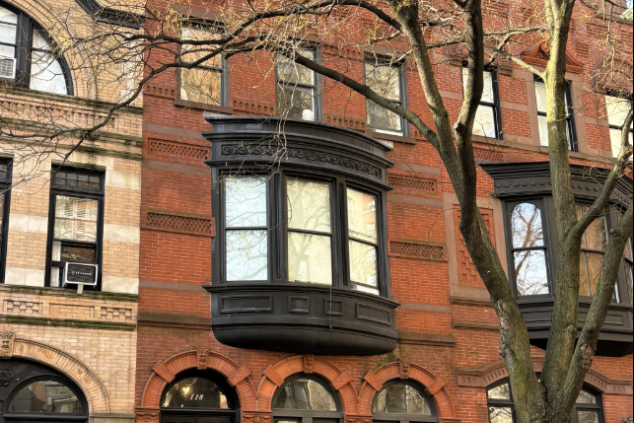
Designed in 1887 by Charles Abbott French & Co., the 12 rowhouses drew mostly from the popular Queen Anne style. The architects gave each home its own personality—some fronts were red brick and ruddy terra cotta, and others cream colored brick and sandstone.

Among the former was 118 East 95th St. Its undressed brownstone basement supported three floors of red brick. The three fully arched openings of the parlor floor wore brick-like terra cotta voussoirs, each with three keystones; the center of which were grotesque masks. The tympana (decorative space above the door) were filled with colorful stained-glass with the street address incorporated into the design.
On December 21st, 1889, the Record & Guide reported that William Methven Leslie had purchased three of the houses, including 118 East 95th St. The millionaire importer rented out the house into the first years of the 20th century, describing it as a "three-story and basement private house; 11 rooms, two baths." Renters paid $1,200 per year.
Shortly after Leslie's death in March 1910, Marion Leslie and her daughter Mary Leslie Hodson, also a widow, moved into 118 East 95th St. They were both wealthy socialites involved in philanthropic and charitable causes.
Marion Leslie died in the East 95th Street house on June 8th, 1920. Somewhat surprisingly, six months later (only half-way through her requisite mourning period), Mary married Cyril Alfred Percy Francklyn. Her aristocratic groom was 72 years old.
The house was up for sale in April 2021 for $7.5 million. The exterior is greatly intact, although, striking stained glass of the parlor floor has been removed. Most likely at the same time, the Queen Anne sashes of the upper floors were replaced with plate glass.
For more on this building and its inhabitants—which included renowned artist Mark Rothko and his family, check out the full article.


