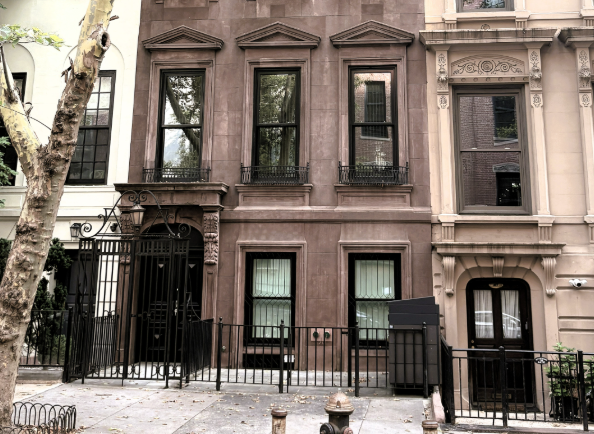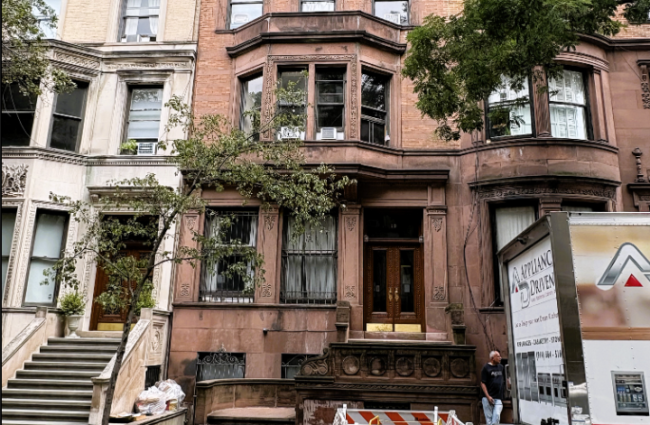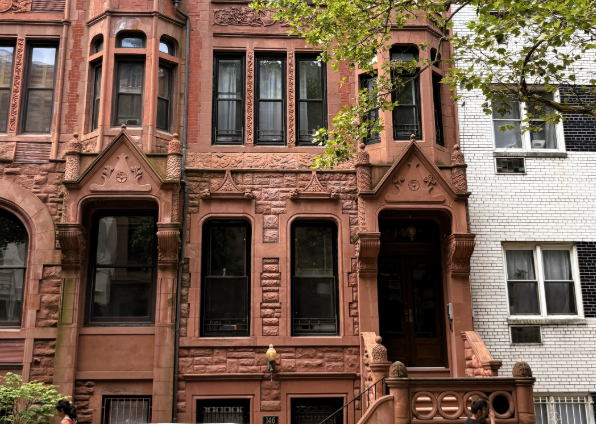





237 East 79th St: An apartment building with the ‘modern improvements’ of 1878
- Access to Yorkville improved when the IRT Third Avenue subway line opened in 1878
- The four-story building had two apartments per floor with running hot and cold water

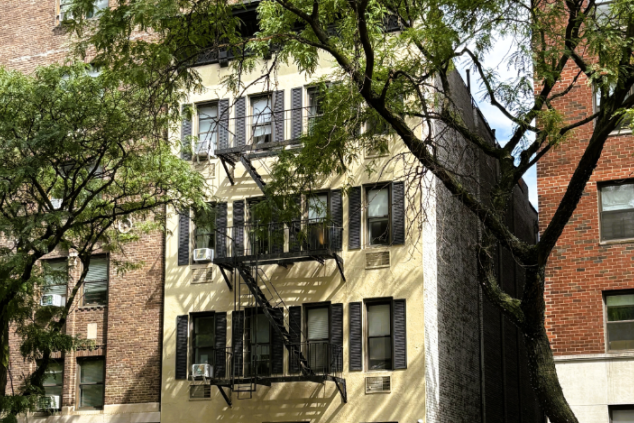
A renovation in 1970 cut the apartments in half—making four per floor—and the 1878 neo-Grec exterior elements were removed.
Have you ever passed by an interesting residential building in New York City and wanted to know more about its history? In this series, Brick Underground teams up with Tom Miller, creator of Daytonian in Manhattan, a blog about Manhattan buildings and other historic architecture. Each week, we run an excerpt from the Daytonian’s archives with a link to the full article.
Following the end of the Civil War, development crept northward into the Yorkville district. Access to the neighborhood was greatly enhanced when the IRT Third Avenue subway line opened in 1878. That year, a four-story double flat (two apartments per floor) was erected at 237 East 79th St.
Faced in brownstone, the neo-Grec design included a rusticated first floor above a short stoop. The centered entrance was crowned with a triangular pediment. At the upper floors, French windows were framed by elaborate architraves that sat upon bracketed sills. Scalloped lintels with incised decorations upheld prominent molded cornices. An ornate pressed metal cornice completed the design.
An advertisement described, "six light rooms and bath, modern improvements." Among those improvements would have been running hot and cold water.
The eight families in the building were middle class and affluent enough to afford at least one servant. An advertisement in The New York Herald on December 30th 1879, for instance, that read: "Wanted—A girl for housework; two in family; wages, $7 per month." (The wages were not overly generous. They would equal $233 in 2026.)
Amos K. Hadley, a former New York State Attorney General, and his family occupied an apartment here. Early in October 1880, Hadley notified the landlord, J. P. Huyerman, that he would be moving out. The New York Evening Telegram reported, "He, however, was indebted to Mr. Huyerman for a small balance of rent and Mr. Huyerman refused to allow him to move until the amount due was paid." Hadley told him he had was "about to collect some bills" and he would pay the outstanding money when he received the necessary cash.
On moving day, October 18th, Hadley went downtown. When he returned home, he found his family and a guest of his wife imprisoned in the apartment. Huyerman had locked the doors and refused to allow them to leave until the balance of rent was paid. Hadley rushed to a police station and had Huyerman arrested for disorderly conduct.
The landlord's obsessive behavior over the outstanding rent cost him. Justice Smith fined him $10 (about $325 today) and "required him to furnish $500 bail for his good behavior for six months" or serve three months in the Workhouse. The judge announced, "it was about time that landlords learned that they do not own their tenants, body and soul." According to the article, as Huyerman was led out of the courtroom he muttered, "We'll see about that."
In 1936 the building was updated, however the exterior was left almost entirely untouched. A renovation in 1970 cut the apartments in half—now four per floor—and the 1878 neo-Grec exterior elements were removed. The brownstone was slathered with stucco, eliminating almost every hint of the original design other than the cornice.
For more on the property and the interesting people that lived here, check out the full article.