




The 1889 Brosnan House at 146 West 74th St: An upscale family hurt by a series of calamities
- Original owner John Brosnan was a well-known saloon owner and wine importer
- A fire badly damaged the upper two floors of the home and led to Brosnan's death

Have you ever passed by an interesting residential building in New York City and wanted to know more about its history? In this series, Brick Underground teams up with Tom Miller, creator of Daytonian in Manhattan, a blog about Manhattan buildings and other historic architecture. Each week, we run an excerpt from the Daytonian’s archives with a link to the full article.
Real estate was one of the few businesses in which women would thrive in the 19th century. In 1888, Mary J. Coar hired architect Edward L. Angell to design five upscale rowhouses on West 74th Street between Eighth and Ninth avenues (renamed Columbus and Amsterdam in 1890). Mary Coar was not only the owner and developer of the project, but she was listed as the contractor as well.
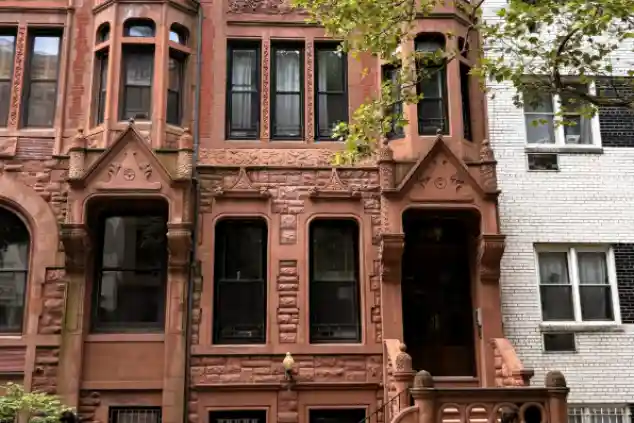
Angell's plans, filed in March, described five, four-story "brick, brown stone trimmed" dwellings. Each would cost $25,000 to construct, or about $902,000 in 2026. Designed in the popular Queen Anne Style, they were completed in 1889. Like the other four houses, the basement and parlor levels of 146 West 74th St. were clad in rough-cut brownstone and the upper floors in red brick. A dog-legged box stoop rose to the double-doored entrance, protected by a stone hood decorated with foliate designs and turret-like finials.
A charming three-sided bay above the entrance supported a small balcony to the third floor. The transoms at the first through third floors were filled with colorful stained glass, while the upper sashes of the top floor were divided into multiple panes, typical of the Queen Anne style.
The house was purchased by John and Catharine Brosnan. The couple had five children, John Jr., Loretto G., Mary T., Angela M., and Francis Xavier. Born in Ireland, John Brosnan listed his profession as "grocer," however his business at 157 Fulton St. was more accurately described as a saloon and wine importer.
An ardent Roman Catholic, he did not operate a rowdy, disreputable establishment. The New York Times would later say that he was "well known among wine traders throughout the United States" and that he "made a specialty of importing Spanish, Portuguese, and other wines not only into this country...but also to various countries of Europe." He also supplied altar wine to many Roman Catholic churches.
A fire during a severe snowstorm on the evening of February 13th, 1899, badly damaged the upper two floors of the house. The New York Times reported the damages at $8,000 to the structure and $10,000 in furnishings. The total loss would translate to about $721,000 today.
There was more significant collateral damage. On March 7, 1899, the New York Herald wrote that John Brosnan died after a two-week illness. His death was attributed to "shock and exposure to the cold" on the night of the fire.
Like Mary J. Coar, who erected the Brosnan house, Mary and Angela Brosnan engaged in real estate operations. They bought and rented properties singly or together throughout the first decades of the 20th century. Their sister, Loretto G. Brosnan, died on March 1st, 1909.
In October 1919, Congress passed the Volstead Act, which would usher in Prohibition. It meant the end of Brosnan's on Fulton Street. The Brosnan siblings sold their lease and newspapers throughout the city lamented the barroom's closing.
By 1943, 146 West 74th St. was operated as a rooming house. A renovation in 1972 resulted in duplex and triplex apartments. Another remodeling in 1988, added a penthouse level, unseen from the sidewalk. Despite the unfortunate loss of the stained-glass transoms and the Queen Anne upper floor sashes, the Brosnan house survives remarkably intact.
For more on the property and the interesting people that lived here, check out the full article.
You Might Also Like