

Fulltext search
FILTER RESULTS BY:
RECOMMENDED IN RENT
Moving to NYC after college? Here's how to find a rental apartment
RECOMMENDED IN BUY
How buying real estate in NYC is unlike anywhere else
RECOMMENDED IN SELL
A guide to using a no-fee renovation loan from a NYC real estate firm
RECOMMENDED IN IMPROVE
How to make your NYC renovation more pet-friendly
BEST REAL ESTATE WEBSITE!
National Association of Real Estate Editors
BEST REAL ESTATE WEBSITE! National Association of Real Estate Editors
Brick Underground
Social Links
follow:
  • Facebook
  • Twitter
  • Instagram
  • Flipboard
  • search
Brick Underground
☰ Brick Underground
Brick Underground
Brick Underground
☰
Brick Underground
  • Buy
    • Buy
    • The Market
    • Investing
    • New Construction + Condos
    • Affordable Housing
    • Co-ops
    • Negotiating + Financing
    • How to Buy in NYC Guide
    First Avenue in Manhattan
    Sell
    After a 20 percent maintenance hike, an Upper East Side condop renegotiated its ground lease. Here’s how they did it
    716 Broadway, #2
    New Construction + Condos
    What you need to know about buying a NYC condo or co-op with direct elevator access
    Manhattan apartment towers
    Sell
    Manhattan and Brooklyn sales listings trend in opposite directions
  • Rent
    • Rent
    • Affordable Housing
    • Roommates + Landlords
    • The Market
    • The Search
    • How to Rent in NYC Guide
    Blair on the roof of AtlanticBK
    Rent
    From Williamsburg to Bed-Stuy: I was tired of the tourists and wanted to live somewhere less hectic
    Brick apartment buildings in NYC
    Rent
    Ask Altagracia: I’m breaking my lease, and the landlord listed the apartment for a higher rent. Does this protect me from being sued?
    Sponsored By Outerbridge Law P.C.
    Brooklyn townhouses
    Roommates + Landlords
    We're new owners and friends are going to be our tenants. How can we preserve our friendship?
  • Sell
    • Sell
    • Staging + Open Houses
    • Negotiations + Closings
    • Getting Ready
    • How to Sell in NYC Guide
    First Avenue in Manhattan
    Sell
    After a 20 percent maintenance hike, an Upper East Side condop renegotiated its ground lease. Here’s how they did it
    Manhattan apartment towers
    Sell
    Manhattan and Brooklyn sales listings trend in opposite directions
    Manhattan apartment towers
    Sell
    ‘Central air or bust’: Many NYC luxury buyers will not consider listings without central AC
  • Live
    • Live
    • Neighbors
    • Kids + Pets
    • Neighborhood Intel
    • Products + Test-drives
    • Troubleshooting
    FlatRate moving brick underground
    Live
    How to troubleshoot your move in advance
    Sponsored By flatrate
    117 East 78th St.
    Live
    The 1871 Philip Minis House at 117 East 78th St: An Italianate built in the wake of the Civil War
    The 1893 Henry A. Caesar House at 19 West 76th Street
    Live
    The 1893 Henry A. Caesar House at 19 West 76th St: A single-family home that became 14 apartments
  • Improve
    • Improve
    • Small Spaces
    • Small Projects + DIY
    • Renovations
    • Design + Architecture
    • Products + Services
    • How to Renovate in NYC Guide
    88 Central Park West
    Renovation
    How to navigate window replacement at a landmark building on Central Park West
    Sponsored By Window & Door Pro
    NYC building with scaffolding
    Renovation
    Ask Altagracia: My rental building is going condo and the renovation is making my life miserable. What are my rights?
    Sponsored By Outerbridge Law P.C.
    Gallery KBNY apartment combination
    Renovation
    Combining two NYC apartments: Why a pre-purchase assessment is the key to success
    Sponsored By Gallery KBNY
  • Boards & Buildings
    • Boards & Buildings
    • Boards
    • Finance
    • Insurance
    • Legal
    • Property Management
    • Structure & Systems
    • Sustainability
  • Advertise
    • Advertise with us
    • Sponsored Content
    • Experts
    FlatRate moving brick underground
    Live
    How to troubleshoot your move in advance
    Sponsored By flatrate
    Brick apartment buildings in NYC
    Rent
    Ask Altagracia: I’m breaking my lease, and the landlord listed the apartment for a higher rent. Does this protect me from being sued?
    Sponsored By Outerbridge Law P.C.
    White-glove movers wrapping a large item in protective film before transport.
    Rent
    Best Luxury Moving Companies in NYC 2026: A Guide Based on Performance, Services, and Building Expertise
    Sponsored By Advertiser
  • Brick Report
  • About Us
  • About Us
Email address
Fulltext search
FILTER RESULTS BY:
New Main menu
  • Buy
    • Buy
    • The Market
    • Investing
    • New Construction + Condos
    • Affordable Housing
    • Co-ops
    • Negotiating + Financing
    • How to Buy in NYC Guide
  • Rent
    • Rent
    • Affordable Housing
    • Roommates + Landlords
    • The Market
    • The Search
    • How to Rent in NYC Guide
  • Sell
    • Sell
    • Staging + Open Houses
    • Negotiations + Closings
    • Getting Ready
    • How to Sell in NYC Guide
  • Live
    • Live
    • Neighbors
    • Kids + Pets
    • Neighborhood Intel
    • Products + Test-drives
    • Troubleshooting
  • Improve
    • Improve
    • Small Spaces
    • Small Projects + DIY
    • Renovations
    • Design + Architecture
    • Products + Services
    • How to Renovate in NYC Guide
  • Boards & Buildings
    • Boards & Buildings
    • Boards
    • Finance
    • Insurance
    • Legal
    • Property Management
    • Structure & Systems
    • Sustainability
  • Advertise
    • Advertise with us
    • Sponsored Content
    • Experts
  • Brick Report
  • About Us
    • About Us
    • Advertise
  • About Us
SUBSCRIBE TO OUR NEWSLETTER →
Social Links Footer
  • Facebook
  • Twitter
  • Instagram
  • Search
Ask a Co-op & Condo Lawyer [ SPONSORED ]

Our co-op bylaws haven’t been updated in decades. What amendments should we change or add?

By Adam Leitman Bailey, P.C.  | March 1, 2022 - 12:30PM
image

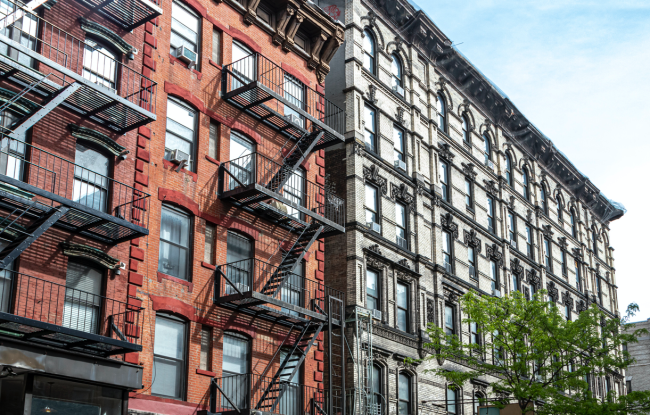
Updating bylaws provides clarity on issues like voting procedures, board member qualification and indemnity, as well as fines and fees.

iStock

Our co-op bylaws haven’t been updated in decades. What amendments should we consider?

“The co-op bylaws relate to the authority of the board so it’s important they are reviewed and amended to reflect changes in the law as well as protect the co-op from unwanted litigation,” says Niki Khindri, a real estate attorney at Adam Leitman Bailey, P.C. with experience representing co-ops and condos in New York City. 

You need to look at the governing documents, including the certificate of incorporation, the proprietary lease and the bylaws themselves, to find out the procedure for changing the bylaws. Typically the co-op can make amendments with a majority of directors or with the agreement of two-thirds of shareholders. 

“In many cases the bylaws haven't changed since the original creation of the co-op so updating them can bring them in line with changes in the law and also provide clarity to shareholders and board members alike on issues like voting procedures, board member qualification and indemnity, as well as fines and fees,” Khindri says.  

Making these amendments also provides an opportunity to make sure the bylaws are fully incorporated and up to date. When amendments are passed piecemeal it can create confusion, Khindri says, and in some cases it’s not clear whether amendments have been fully incorporated via resolution. 

1. Qualifications of board members

A situation that’s not uncommon is that a board member sells their apartment or no longer lives in the co-op as their primary residence and there’s a question over whether they can remain on the board. “We can add amendments that will clarify eligibility requirements,” Khindri says. 

In some cases the bylaws are silent on this issue but an important amendment would be to spell out the required qualifications for a director or officer of the board. “Sometimes the bylaws will specify that directors need to have primary residence in the co-op and be shareholders or spouses of shareholders,” Khindri says. 

The bylaws may have a vacancy provision addressing what happens when a shareholder leaves the board but when there’s a change in the status of a board member, it makes sense to have provisions in place for what happens if they no longer meet the qualifications.

“This might be automatic resignation of the board member followed by the procedure for filling the vacancy, whether that’s appointing a successor, electing a new director, or waiting to replace the director at the next election,” Khindri says.  

Another eligibility requirement would be to prohibit anyone from running for a seat on the board if they are in default of maintenance.

2. Proxy votes and other election procedures

The bylaws determine the governance of the board and should address the use of proxy votes. 

“We’ve seen cases where elections are questioned and overturned based on the use of proxies,” says Khindri. The bylaws can be amended to clarify rules about how proxies can be submitted, how far in advance they must be returned ahead of a vote, the length of time the proxies may be used, who may sign the proxies if a trust or more than one person owns the apartment and who may be appointed as a proxy holder.

“It’s important to ensure the integrity of elections,” Khindri says.

Khindri recently amended the bylaws of one co-op to establish advance nomination procedures. This came about because a shareholder had decided to put himself forward as a candidate on the night of the election, complicating the election process. 

Amendments might impose conditions on how directors can be elected as well as cut off-dates for shareholders who want to be considered as candidates ahead of an election. “These are the steps you can take to prevent these types of situations from occurring,” Khindri says. A co-op may want to consider amending its by-laws to establish an elections committee, which will be given authority to implement rules and procedures for nomination and election of directors. 

A related issue concerns virtual shareholder meetings. These have become standard procedure over the past few years and you may want to allow for them in the bylaws going forward. 

3. Board member indemnification

Serving on a co-op board is done on a voluntary basis and the by-laws can be amended to amplify the rights of indemnification otherwise afforded to board members under the Business Corporation Law. “Board members can be open to substantial liabilities and the bylaws should be updated to reflect changes in the law,” Khindri says. 

If there’s an inconsistency between the law and the bylaws, the board could be open to unwanted lawsuits. “Co-ops need board members who are present and engaged and the liability protections are there to encourage involvement by protecting members from potential damages, legal fees and other liabilities,” she says. 

If board members didn’t have these protections, it would be more difficult to find people willing to do the work. 

4. Allowing a flip tax when apartments sell

If a co-op has a flip tax, the bylaws should contain enabling language authorizing the board to impose the fee and if possible, allow the board to increase the fee at their sole discretion. The bylaws can only refer to a flip tax if it is authorized by the proprietary lease.

Amending the governing documents, including the bylaws, to address the implementation of a flip tax is a sensible option for a co-op. The flip tax can be a flat fee based on share ownership or a percentage of the sale price and is an important income source for the building’s reserves. 

Amending the bylaws to correspond to the flip tax policy stated in the proprietary lease is important because without it, the flip tax could be challenged and struck down by a court. Khindri explains that typically the transfer provisions of the bylaws will allow the co-op to charge “reasonable” fees in connection with any transfer.

“A flip tax equal to a percentage of the sales price could very well be deemed beyond the scope of what is typically permitted under these transfer provisions,” she says. 

“You want to take a close look at the language and if necessary amend the bylaws to either incorporate the flip tax language from the proprietary lease or state that the board can impose fees at their discretion, so long as this is consistent with the proprietary lease,” Khindri says. 

She points out that if it was ever challenged in court, it could come down to a reading of that particular language. 

5. Imposing fines for violating house rules

Whereas bylaws deal with building operations, house rules will address how the community lives together without conflict and includes rules on pet policies and bike storage, for example.  The bylaws should include a provision enabling the board to impose monetary fines for violations of house rules. Khindri says this gives added protections for the co-op. For most co-ops, fines can be added to monthly maintenance as “additional rent,” she says. 

For example, if a shareholder is violating the house rules and also hasn’t paid maintenance, the co-op could only be able to recover the maintenance in court.

“If the board is not authorized to impose fees, that part of the claim could be thrown out,” Khindri says. 

Niki Khindri is a real estate attorney at Adam Leitman Bailey P.C. She has experience representing co-ops and condos as well as individual owners and shareholders. To submit a question for this column, click here. To ask about a legal consultation, send Niki an email.

You Might Also Like
image
Troubleshooting A shareholder in our co-op hasn’t paid maintenance in over a year. What can we do?
image
Sell Our co-op board wants to change the flip tax to increase the building's reserve funds. What do we need to consider?
image
Co-ops A co-op buyer wants to use a trust. Should our board approve this?


Brick Underground articles occasionally include the expertise of, or information about, advertising partners when relevant to the story. We will never promote an advertiser's product without making the relationship clear to our readers.

topics:

Ask a Co-op & Condo Lawyer boards co-op board Co-ops
SHARE
TWEET
BRICK’S PICKS
Towers on Billionaire's Row
I received a pied-à-terre tax notice for my primary residence in NYC. How do I fight this?
Manhattan apartment towers
‘Central air or bust’: Many NYC luxury buyers will not consider listings without central AC
Roommates seated on a couch having an argument
How to kick a roommate out of your NYC apartment
Residential towers in Manhattan
What do changes in the Climate Leadership and Community Protection Act mean for NYC co-op and condo buildings?
Governor Kathy Hochul signs new budget
Hochul signs $269 billion budget with new pied-à-terre tax for NYC
New residential buildings in Long Island City, Queens
Changes to lending rules from Fannie Mae and Freddie Mac alarm NYC condo buildings
Follow Brick on Instagram
@brickunderground | #brickunderground
Brick UndergroundBRICK UNDERGROUNDREAL LIFE. REAL ESTATE. REAL NEW YORK.
Social Links Footer
  • Facebook
  • Twitter
  • Instagram
  • Search
Main menu footer
  • Buy
    • The Market
    • Investing
    • New Construction + Condos
    • Affordable Housing
    • Co-ops
    • Negotiating + Financing
    • How to Buy in NYC Guide
  • Rent
    • Affordable Housing
    • Roommates + Landlords
    • The Market
    • The Search
    • How to Rent in NYC Guide
  • Sell
    • Staging + Open Houses
    • Negotiations + Closings
    • Getting Ready
    • How to Sell in NYC Guide
  • Live
    • Neighbors
    • Kids + Pets
    • Neighborhood Intel
    • Products + Test-drives
    • Troubleshooting
  • Improve
    • Small Spaces
    • Small Projects + DIY
    • Renovations
    • Design + Architecture
    • Products + Services
    • How to Renovate in NYC Guide

Get more news you can actually use...

Email address

Delivered to your inbox weekly - for free.

*By signing up you agree to receive occasional emails on behalf of our sponsors

Footer Menu
  • About Us
  • Advertise

Copyright 2009-2024 by BND Ventures Inc | Privacy Policy | Terms of Service | Ad Choices | Login | Powered by Mortar CMS, the AI CMS