




New York just extended the J-51 tax abatement. Here are five key details condo and co-op boards need to know
- The abatement has been extended for 10 years, covering eligible improvements through June 29th, 2036
- Projects already underway may qualify under new rules; final approval is needed by the City Council

This is much longer than the four-year extensions of the past and should give buildings more time to take advantage of the program.
iStock
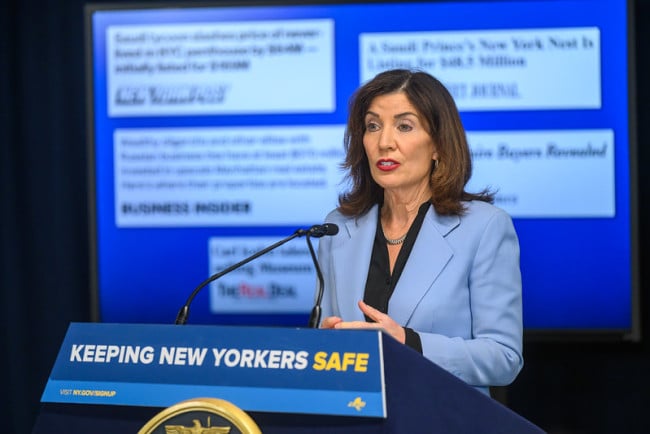
Governor Kathy Hochul’s $269 billion state budget revived a crucial tax break aimed at helping co-op and condo buildings complete essential capital improvements. The J-51 tax abatement, which was set to expire at the end of the month, is now back with expanded eligibility and bigger benefits. “We hit a three run triple,” said attorney Bruce Cholst, a partner at Herrick, Feinstein who was involved in lobbying for the legislation.
The abatement has been extended for 10 years, covering eligible improvements through June 29th, 2036. This is much longer than the four-year extensions of the past and should give buildings more time to take advantage of the program.
Through the J-51 program, co-op and condo boards can recoup the cost of major infrastructure upgrades as a property tax abatement. The abatement is delivered annually and can be no more than 8.3 percent of the costs, over a maximum of 20 years.
Here are five key details about the J-51 extension.
1) More buildings now qualify for J-51 benefits
Eligible buildings are those where the average assessed value of apartments is up to $60,000, which roughly equates to a sales-based market value of about $550,000. This is a slightly higher threshold than the previous average assessed value cap of $45,000. It means hundreds of additional co-ops and condos will be eligible to apply for the benefits.
Another key factor of the threshold is that it will be adjusted annually to reflect increases in the consumer price index.
“The escalation is a very big victory because it preserves the benefit,” Cholst said. It means fewer buildings will cycle out of the program as the average assessed value increases annually.
To confirm your eligibility, first find your building's BBL (borough, block, lot) number through DOB NOW. Then use the BBL to look up the property on the NYC Department of Finance website where you’ll find the assessed value. Calculate the average assessed value by dividing the building’s assessed value by the building’s total number of apartments.
2) Projects already underway may still qualify
The average assessed value is measured on the start date of construction. This means you could have work already underway and if it is an eligible upgrade such as a facade repair, elevator replacement, or energy efficiency improvement, and your building is under the new average assessed value limit, you may be able to access the abatement.
“The new program is applicable to construction that completes after June 29th, 2026,” said Benjamin Williams, head of the property tax department at Rosenberg & Estis.
Even if you are under the average assessed value you’ll need to check whether the work is covered—cosmetic improvements and adding luxury amenities are not. One unchanged detail is that the cost of the work must be at least $1,500 per apartment so less extensive projects may not qualify.
3) Application fees are lower
There’s a new fee structure for the program and although the fees are non-refundable, they can be included in the costs for the work. The new application fee is $75 per dwelling unit for buildings with more than six apartments and it is capped at $20,000. A $1,000 base fee per application has been shelved and although the cap will increase annually with inflation, it can be included as part of the abatement.
“If your application is successful you will get your fee back,” Williams said.
In the past, the fees were not capped and could not be included in your infrastructure costs, which made the program prohibitively expensive, particularly for the large, campus-style co-op buildings that would have paid hundreds of thousands of dollars in administrative fees.
4) Boards can recover a larger share of project costs
The abatement may be as much as 100 percent of a project’s Certified Reasonable Cost or the fair cost of an upgrade. In the past the program could offset up to 70 percent of the capital improvement costs. “You are going to get more of a benefit for the work done,” Cholst said. NYC Housing Preservation and Development prepares the list of the types of improvements eligible as well as a reasonable cost schedule—that is, the reasonable cost for a specific type of project.
5) One final legislative hurdle remains
NYC legislation and rule-making are still required to enact the program. In most cases laws and amendments included in the executive budget do not need ratification by the city. However, in this case, the city does need to pass legislation before it moves forward. “It’s a complication,” Cholst said.
There’s no suggestion the rule making won’t happen, but in the past the process has taken several months and that introduces an element of uncertainty to the program. For eligible co-op and condo boards that complete work in July, patience will be key.
“They will have to sit on their hands and wait for the City Council to act,” Williams said.
You Might Also Like