




‘Central air or bust’: Many NYC luxury buyers will not consider listings without central AC
- Hotter summers and desire to control temperature settings make buyers unwilling to compromise
- Co-ops increasingly allow shareholders to install ducted heat pumps that also provide cooling


Don’t try to sell a place above $5 million without central air, said Lisa Lippman of Brown Harris Stevens.
iStock
You usually can’t get everything you want on your wish list when you buy New York City real estate, even when you’re buying a luxury property. But as a result of NYC’s longer and hotter summers and the increasing availability of apartments cooled by quieter, electric central AC, buyers are unwilling to compromise on comfort.
Central air—the term applies to a few types of systems—is now considered a must-have in the NYC luxury market. A growing awareness of the importance of indoor air quality and a desire to control temperature settings at the touch of button are also fueling this demand.
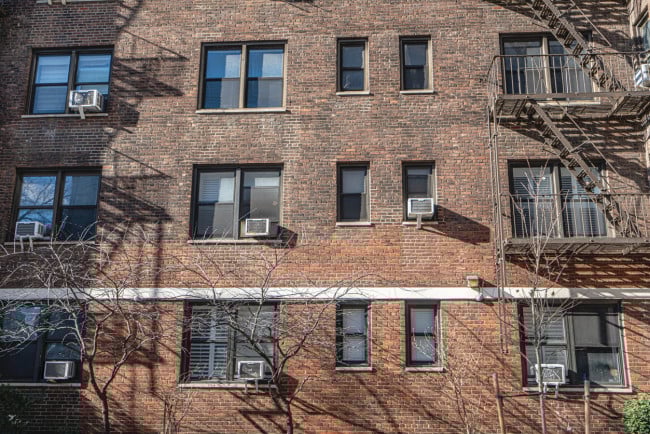
Many buyers will not consider listings without central air, brokers told Brick.
“Don’t try to sell a place above $5 million without it,” said Lisa K. Lippman, a broker at Brown Harris Stevens. Buyers hunting in the $2 million-$3 million-plus range also lean toward some form of central air, like wall-mounted mini-split systems.
Lippman said that central air substantially boosts a property's value, making it worthwhile for anyone selling a property that lacks central air to explore whether installation is feasible. Sellers don’t need to do the actual installation but should confirm it is permitted with the board or management company and get a few estimates from AC installation companies, she said.
Case in point: She is selling a 2,400-square-foot apartment on Central Park West for $3.5 million and the cost to install central AC would run $150,000 to $200,000.
Co-ops get on board
In the recent past, buyers who wanted all the “bells and whistles”—like an in-unit washer/dryer, garbage disposal, and central air—had to look at new development, where the per-square-foot cost is higher and the square footage is lower. Older co-ops offered more space and lower monthlies, but you had to do your laundry in the basement because they had few amenities. When prewars added central AC, it was often a noisy, gas-fired, building-wide system.
But co-op buildings have been adjusting in order to compete with condos. They are allowing owners to install their own ducted electric heat pumps, which are quieter, more environmentally friendly, and have mechanicals that take up less space. (And don’t be fooled by the name—these provide heating and cooling.) Plus heat pumps can be part of a building's Local Law 97 electrification strategy.
Instead of requiring valuable roof or rear yard space—the outside component for modern systems can be hung on the side of a building.
“In my career of 29 years, there has been more progress on central air than anything else,” Lippman said. “When I first went into real estate, people accepted that even nice places had window units. In the last five years, it’s been ‘central air or bust,’” she said.
Vickey Barron, a broker at Compass, said at a certain price point, NYC buyers expect amenities, especially if they’re coming from another state where $1.5 million gets you a house with multiple bedrooms.
If co-op buildings “can figure out how to allow people in-unit washer/dryers and not have them schlep to the basement, they can figure out how to let them control the temperature year around,” Barron said.
Plus, global warming is leading to more extreme temperatures, including longer, hotter NYC summers, making central air a matter of more than just comfort. “Maybe in the future we’ll need AC in February,” Barron mused.
Some installations are tricky, like when an owner lives in a historic building where the façade cannot be altered. In that case, it’s hard to find space to house the external component for a heat pump.
Barron previously represented a seller at 51 Fifth Ave. in Manhattan, a 1929 co-op building. The seller was allowed to put in central AC, “the only one in the building,” Barron said. “A huge win,” she added.
A faster deal
Central air likely adds about 5 percent to the value of the property, said Jonathan Miller, president and CEO of appraisal firm Miller Samuel. It also makes a property more marketable, translating into a faster sale, he said.
“It really enhances the quality of life relative to a window unit,” Miller said. The noise, seasonal installation and removal, plus the loss of light make window units much less desirable, he added.
Less expensive mini split units are a compromise—sometimes it’s not possible to install a ducted system—but still preferred over unattractive window units, Miller said.
Barron is a big fan of using mini splits for very large properties. “This way you only cool off the rooms you are using,” she said. She also finds the units quieter and easier to keep clean than a ducted system.
A word of caution
With central air becoming more ubiquitous, if you’re a buyer, you also need to be aware of where condenser units for neighboring units are positioned outdoors relative to your future bedroom. For example, are they hung on the wall close to your window or on a roof level with your unit?
It can be easy to overlook if you’re apartment hunting in the cooler months. Barron pointed out they’re silent in February. “But come July you will hear them,” she said.
The leading amenity?
Has central air become the number one amenity in NYC? Only temporarily, Miller said.
“When you have this conversation in the middle of July in a heat wave with Canadian wildfire smoke drifting over the area, yes, it is the number one amenity. But in other parts of the year, private outdoor space is still the number one amenity,” he said.
Questions to ask as a buyer
It comes down to convenience and wellness, said Kayla Lee, a broker at SERHANT. In addition to square footage and views, “buyers want an effortless lifestyle.” That means using their phone to control the temperature instantly—especially if they enjoy this amenity at their current property.
Sellers are adding central air when they renovate to respond to this demand.
“If you don’t have it, you’re not competitive with the market,” Lee said. For some buyers, “a window unit or PTAC unit will kill a deal.”
Lee represents Paragon, a new condo development in Long Island City where prices start at $655,000 for a studio. When buyers tour listings there, they ask her to turn on the central air to see how loud it is. (It’s very quiet, she said.)
Buyers are very savvy about this amenity, Lee added: “They know the lingo and jargon and ask informed questions about maintenance—for example, what type of filter the system uses, how often it should be changed, when the HVAC system was last serviced, whether the equipment is still under warranty, and what routine upkeep is recommended to keep it running efficiently.”
There’s more of a focus on wellness for today’s buyer and “indoor air quality is a part of that,” she said.
A sense of control
Tali Berzak, a broker at Compass, is seeing a trend toward multi-zone ducted heat pump systems that allow individual rooms to have separate temperature controls.
“We’re moving toward individual comfort” instead of larger, zoned areas, she said.
Berzak represents townhouse sellers in Central Brooklyn. “Everyone is renovating and putting in ducted AC,” she said. Some owners will put in ducted AC in the owner’s unit and mini splits in the rentals.
However, she has a Bed-Stuy townhouse listing that lacks central AC. The owner can’t put it in because there’s a tenant in place and it would be too disruptive.
As a result, “we’re looking at a $100,000 price point” difference with comparable listings, Berzak said.
You Might Also Like