



What to know about NYC’s new Fast Track districts for affordable housing
- Affordable housing projects in 12 community districts will bypass City Council members
- The Fast Track program shortens the approval process from seven months to 90 days
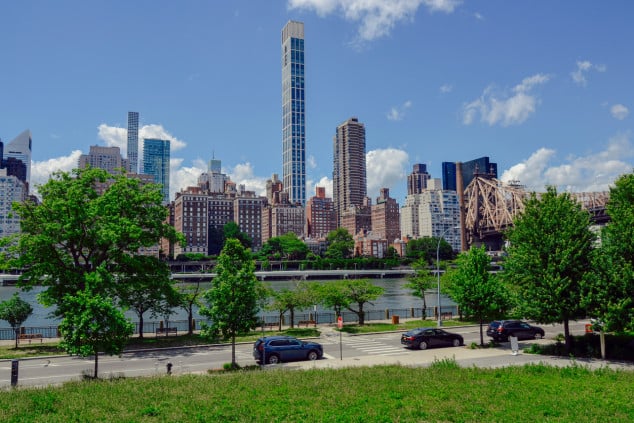
Affordable housing proposed for 12 neighborhoods like Roosevelt Island, foreground, will skip the step of getting approval from their City Council representative.
iStock
If you live in one of a dozen community districts in New York City that have been slow to build housing, you could see some housing projects speeding through the approval process starting next year.
Earlier this month, the Mamdani administration made public a list of 12 neighborhoods that have been the slowest in the city to add housing, a list some are calling the affordable housing “naughty list” or “dirty dozen.”
As a result, starting on January 1st, new affordable housing proposed in those neighborhoods will skip the step of getting approval from their local City Council representative.
“New York’s housing crisis is not going to be solved by asking the same neighborhoods to do all the building,” Mayor Zohran Mamdani said in a statement. “Every New Yorker deserves a home they can afford, and every neighborhood must be part of delivering it. The Affordable Housing Fast Track gives us a new tool to cut through red tape and make sure our housing growth is shared more fairly across all five boroughs.”
Voters approved this change through a charter amendment that passed last November.

Where is affordable housing being ‘fast tracked’?
The city planning commission picked these 12 community districts in Manhattan, Brooklyn, Queens, and Staten Island by dividing the number of new affordable units in the district by the total number of housing units. For this cycle, they looked at the five-year period between 2021 and 2026. According to the city, these districts created only 1 percent of the city’s new affordable housing over the past five years, or just 724 new homes.
Here are the districts:
- In Brooklyn: Community District 10 (Bay Ridge, Dyker Heights), 12 (Borough Park, Kensington) and 18 (Canarsie, Flatlands)
- Manhattan: Community District 7 (Upper West Side) and 8 (Upper East Side, Roosevelt Island)
- Queens: Community District 4 (Corona, Elmhurst), 5 (Ridgewood, Maspeth, and Middle Village), 10 (South Ozone Park, Howard Beach), 11 (Auburndale, Bayside, and Douglaston), and 13 (Queens Village, Bellerose, and Rosedale)
- Staten Island: Community District 2 (Mid-Island) and 3 (South Shore)
How fast is ‘fast’?
The Fast Track process aims to shorten the Uniform Land Use Review Process for qualifying projects, which can take seven months. Instead, projects in these districts will go through a
streamlined 90-day public review process. Projects still need to go through the community board and borough president and get the approval of the City Planning Commission.
What’s changing in these districts and why?
This status shortens the procedure that affordable housing developers go through to get permission for a zoning change. It doesn’t alter landmark or environmental requirements.
Communities can still have a say in land use decisions during a 60-day period when the borough president and community board concurrently review them. Then, instead of heading to their council member, the projects go right to the City Planning Commission for approval.
Some parts of the city have seen virtually no new affordable housing built because of the opposition of those areas’ elected officials, said Howard Slatkin, executive director of Citizens Housing and Planning Council, a non-profit housing research organization.
That dynamic is amplified by “member deference,” an unofficial City Council policy in which other members follow the lead of the City Council in zoning or development votes. If a council member votes no on a project, their fellow members also vote no.
“It has kind of this nasty side effect of enabling these people who don't want to see any housing built say ‘no,’” Slatkin said.
As a result, developers looking to build housing don’t waste time and money proposing projects in an area if the council member there is likely to oppose zoning changes.
“People don’t even bother bringing the application if they don’t think it's going to be successful,” Slatkin said.
What housing qualifies?
To qualify as affordable housing subject to the Fast Track, a housing project generally must set aside 20-30 percent of the residential floor space permanently affordable, according to the city planning website.
Affordability in this case doesn’t mean cheap apartments. “It’s a particular kind of regulated affordability that restricts the rent that can be charged and the incomes of the tenants,” Slatkin said.
This is a broad definition because of how housing is built in the city.
“We have caps and zoning incentives around new housing that require affordability, so virtually any rental housing that's going to be built in the city of New York is going to have an affordable housing requirement with it,” said Rachel Fee, executive director of New York Housing Conference.
Will this actually work?
Some advocates say yes, it will ensure more housing gets built in these areas. But they caution that it takes more than one policy fix to solve NYC’s housing problems.
“It will definitely help create more housing,” Slatkin said. But residents of these areas won't see the results immediately. “Be patient. It takes some time.”
The Fast Track list may function as much as a stick for legislators than as a carrot for developers.
“I don't think the benefit of this change is so much that they’re on a fast track,” Fee said. “It's to motivate those communities not to be on the fast track, not to be on the bottom 12.”
It’s not difficult for these communities to improve their ranking, Fee said. Approving one or two more affordable housing projects can be enough to change a district’s position on the list.
“So many people are stuck in the housing situation they’re in, their family might grow and they have no options to change it,” Fee said. “For some communities to try to preserve what they have frozen in time feels really unfair in a changing and dynamic city.”
“We need more housing,” she said. “Thats the only way we’re going to bring rents down.”
A call for community-centered planning
A coalition of community groups called the Thriving Communities Coalition penned an open letter to the mayor urging the city to create a comprehensive plan—with community input—to guide housing development with an eye towards investments in neighborhood infrastructure and services like transit.
The coalition’s letter addressed the mayor’s Block by Block housing plan but also named the Fast Track program.
“The coalition supports bringing more affordable housing to neighborhoods that have historically produced too little, but argues that faster approvals must be accompanied by meaningful opportunities for residents to shape development priorities,” the coalition said in a statement.
Slatkin said the need for planning that the coalition raises is a different conversation entirely, unrelated to the Fast Track. “This is very specifically about the manner in which land use actions are going to get reviewed—a procedural thing. It doesn't say how much should go where,” he said.
Where do I learn more?
To learn more, you can attend a virtual public information session on December 3rd hosted by the Department of City Planning.
You Might Also Like