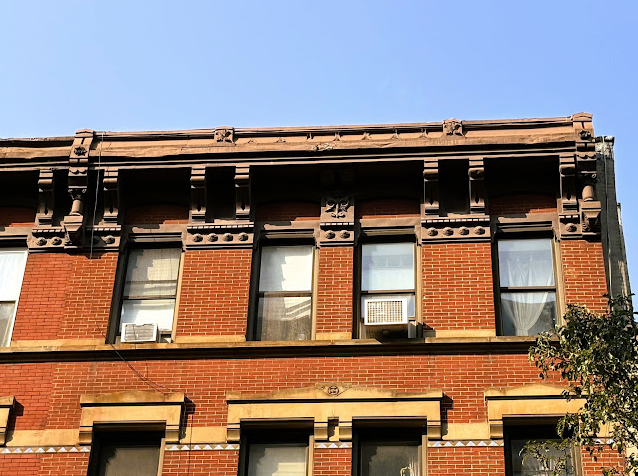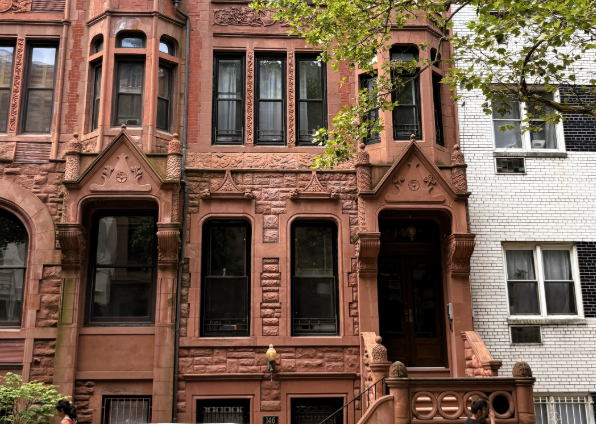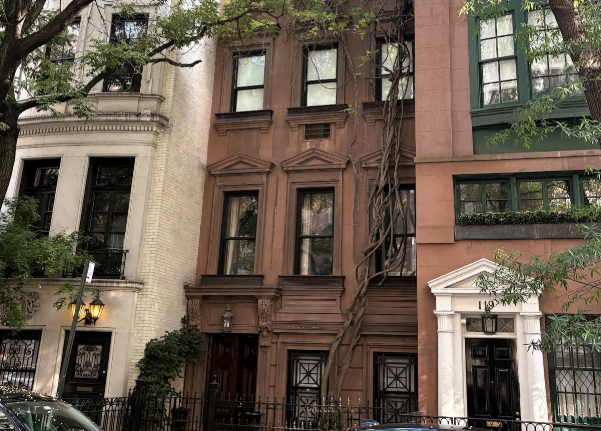





The 1893 Wertheim House at 19 West 76th St: A Renaissance Revival-style façade nearly unchanged after 135 years
- Jacob Wertheim started working at 14 and by 1893 had founded several cigar companies
- The property was not converted to apartments until 1974, when it was renovated into 14 units

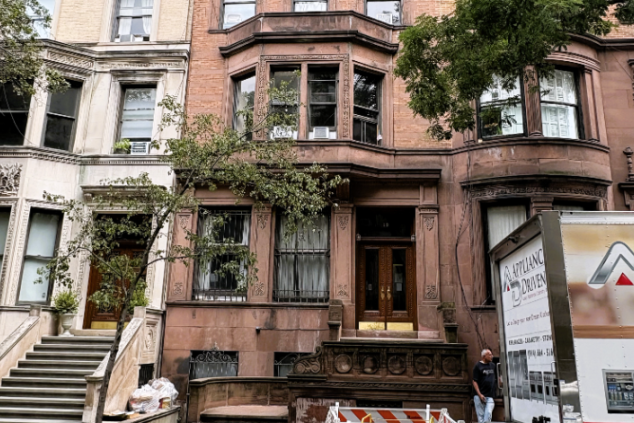
A handsome dog-legged box stoop, decorated with swirling volutes and rosettes, fronts the brownstone-fronted parlor level.
Have you ever passed by an interesting residential building in New York City and wanted to know more about its history? In this series, Brick Underground teams up with Tom Miller, creator of Daytonian in Manhattan, a blog about Manhattan buildings and other historic architecture. Each week, we run an excerpt from the Daytonian’s archives with a link to the full article.
Born in Hartford in 1858, Jacob Wertheim came to New York City with his parents as a boy. He started working at the age of 14 and by 1893 had founded several cigar companies. That year, he and his wife, the former Emma Stern, purchased the newly built residence at 19 West 76th St.
Real estate developer Cornelius W. Luyster had broken ground for this and two other upscale homes a year earlier. Designed in the Renaissance Revival style by esteemed architect John H. Duncan, 19 West 76th St. was 25 feet wide and rose four stories above a high English basement. A handsome dog-legged box stoop, decorated with swirling volutes and rosettes, fronted the brownstone-fronted parlor level where shallow pilasters were carved with anthemions.
The Wertheims were generous with their wealth. Calling Jacob "one of the most prominent Jews in this city," The Brooklyn Eagle noted that he was highly involved in the Federation for the Support of Jewish Philanthropic Societies and the Joint Distributing Committee.
The family's residency was relatively short lived and the house changed hands several times in the next few years. It was resold in March 1902 to Henry A. Caesar and his wife, the former Laura F. Unger, who made extensive alterations. Those alterations most likely included installing updated plumbing and electricity.
Henry A. Caesar established the banking firm of H. A. Caesar & Company in 1886 and was a director of the Germania Life Insurance Company and of the Chemical Bank and Trust Company. Laura was his second wife. His first was Mathilde M. Muller, with whom he had two sons, Paul N. and Harry I. He married Laura in 1894 and they had a son, Charles U., born in 1897.
Henry and Laura Caesar sold 19 West 76th St. to Solomon Marcuse Stroock in April 1917 for $70,000. The son of German immigrants, Solomon Stroock as born in NYC in 1873. He received his law degree from Columbia Law School in 1894. In 1907, he was appointed a justice on the New York Supreme Court. He was also a partner with his brother Moses in the law firm Stroock & Stroock.
On September 17, 1924, The New York Times reported that the Stroocks had sold 19 West 76th St. The house became The Liberta School, a private co-educational progressive school.
Among the students here was nine-year-old Mary Elizabeth Steele, who lived with her mother. The prodigy was an accomplished pianist who gave a private concert for President Calvin Coolidge and the First Lady in the White House
In March 1926, just one year after moving into 19 West 76th St., The Liberta School sold the house to Carl and Hulda Steen. The Steens leased the property in 1939, and sold it in 1942. The house avoided being converting to apartments until 1974, when it was renovated into a total of 14 units. The exterior, however, is nearly unchanged after nearly 135 years.
For more on the property and the interesting people that lived here, check out the full article.
You Might Also Like