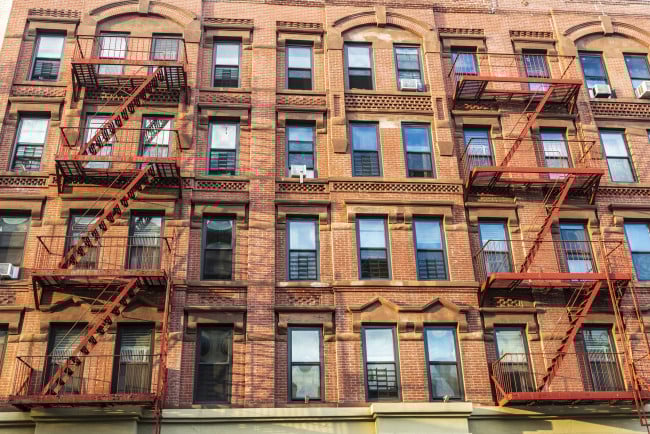





How to deal with an ant infestation in your NYC apartment
- Ant colonies can range from a 100,000 to over a million and be anywhere within 100 yards of activity
- Under the warranty of habitability, a landlord must make sure your apartment is free of pests
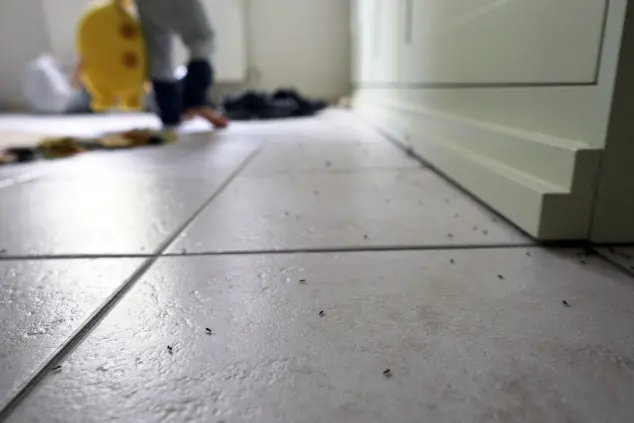
Even though your landlord is required to take action, it’s a good idea to do what you can to prevent ants from getting into your apartment.
iStock
Are ants marching across your apartment's kitchen counters? It’s a not-so-pleasant sign of spring in New York City.
Warming temperatures make ants more active as they come out from hibernation and look for food and water sources or establish new colonies, said John Downey, vice president of New York City-based Pest Pro.
“During the warmer months, ant reproduction occurs. An increase in rain, fluctuating temperatures, and moisture in the soil from melting snow are all factors that contribute to an increase in activity,” Downey said.
Ant colonies can be big—really big: “What customers often don’t realize is that colony size can range from a 100,000 to over a million and the colony can be anywhere within 100 yards” from where you see any activity, he added.
Yikes! But NYC renters do have one advantage over ants: It’s a landlord's responsibility to make sure your apartment is free of pests. The warranty of habitability ensures you shouldn't have to put up with unlivable conditions—and that includes infestations of rats, mice, roaches, and insects.
Even though your landlord is required to take action, it’s a good idea to do what you can to prevent ants from getting inside your apartment. See more advice below.
[Editor's note: A previous version of this article was published in May 2023. We are presenting it again with updated information for April 2026.]
Where are the ants coming from?
Most ants build colonies in the ground, establishing them in front and backyards of buildings. Gil Bloom, president of Standard Pest Management, recommended that owners reduce leaves and other organic matter and remove any trash on the ground outside. Trash cans should be stored off the ground, and the area should be cleaned regularly.
Bloom said ants may come inside when landscaping work disturbs nests. Another factor can be rain. If a deluge floods a nest, ants will be looking for a suitable place to relocate. In spring, however, they are looking for food.
"They are very much in foraging and food establishing mode," Bloom said. Most of the colony are back in the nest but forager ants are out looking for food and water, searching "aimlessly," as Bloom put it. Once they find a food source—such as pet food that’s always available or a wet sponge by the kitchen sink—that's when they establish linear routes (against the wall, along the edge of the countertop) to and from the nest.
What's the best control treatment?
There are more than a dozen types of indoor ants. If you can collect one for identification, that can help a pest management company determine the best control treatment.
It's tempting to disrupt the path of the ants with a spray but Bloom said that isn't always an effective remedy. "If they are in the area, they are going to forage or reestablish the path. By removing the ant trail you haven’t removed the ants," he said.
A spray could also backfire by multiplying the nests when groups of ants break off and create new colonies.
It's better to use bait that's toxic and will be taken back to the colony to be consumed. Be sure to put it around the building’s exterior to create a perimeter defense, Bloom said. Using toxic bait can take a week or two to have real effect and you may need to do at least two treatments. The active ingredient in most bait formulations is boric acid.
In addition, you (or your landlord) should close and seal exterior gaps around low windows, pipes, and other access points with a weather-proof sealant. Bloom also recommended trimming trees and pruning foliage, so they do not create access to your unit for foraging ants.
In the meantime, you need to remove food sources and eliminate standing water and leaks that provide water sources for ants and other pests. This can be the most difficult part of the puzzle.
"There are so many opportunities for food—that's why insects are so successful," Bloom said.
Another effective solution is to set up a monthly pest control service throughout the summer months.
—Earlier versions of this article contained reporting and writing by Emily Myers. It was updated for April 2026 by Jennifer White Karp.
You Might Also Like