




How to Get a Deal on Your Move: 5 Inside Tips from a Moving Sales Rep
- "Guaranteed Quotes" are usually just a contract to show up and perform the move. It doesn't guarantee the price
- Make sure that the mover does a physical or virtual walk through before agreeing to a price
- Be wary of last minute charges for stairs, extra closets, and other gotchas
iStock
Hiring a mover seems simple at first glance. You call them up or fill out a form on their website, they give you a quote, and then you schedule the move. But how can you be confident that the price on your screen is what ends up on the bill on moving day?
Matt Ockers, Senior Moving Consultant at FlatRate Moving, has seen every version of this play out. Here are five details worth paying attention to before you sign anything, whether you are leaving a high-rise in Midtown, a walk-up in Brooklyn, or a prewar apartment full of antiques.
1. Guaranteed Quote vs Guaranteed Contract
If you receive a Guaranteed Quote from a moving company, it is likely that it is actually a Guaranteed Contract. The moving company is guaranteeing that they will be present to execute the move on the scheduled date, but the contract is contingent on the contents of the quote.
If anything is not covered within the quote and contract, even small items such as a plant or yoga mat could result in an extra charge on moving day. The details matter, so make sure you have written proof that all items are included in the final price.
2. Why Walkthroughs Matter
The representative on the phone is incentivized to close as many contracts as possible, and an in-person or digital walkthrough takes more time. Every moving company would ideally see every move they perform before arrival, but the sales representative may be trying to get you to a signed contract as quickly as possible.
Some companies will push you toward a pre-move walkthrough that happens on moving day. This is more efficient for them because they do not need to send a separate person out, but when they conduct the walkthrough, they could renegotiate the price based on what they see, and you would not have time to find an alternative.
Work with a company that completes a walkthrough before the quote and contract is signed, or ensure you receive a guaranteed fixed price no matter what the movers see when they arrive.
3. Hidden Spaces and Storage
It is not uncommon to start wondering about what is covered after the contract is signed. The storage unit in the basement. The bicycle parked in a different part of the building.
Be aware that it is not the client's responsibility to think of all of these questions. It is the moving company's responsibility to ask the right questions ahead of time, since they are the experts and should know everything that could affect the final price.
If they did not ask you, this is sometimes a sales tactic: offer a lower price upfront, then increase it on moving day while pressuring you to feel like the oversight was yours.
4. What the Quote Actually Covers
Be wary when moving companies itemize the materials they include. The list may sound thorough, but it establishes a baseline the mover can point to when adding charges on moving day.
Confirm ahead of time whether these items are included in the final price: plastic wrap for mattresses, protective crating for fine art or antiques, TV packing, COI coordination, and parking ticket coverage. If any of these are not explicitly covered, get it in writing before you sign.
5. Stairs, Elevators, and Building Logistics
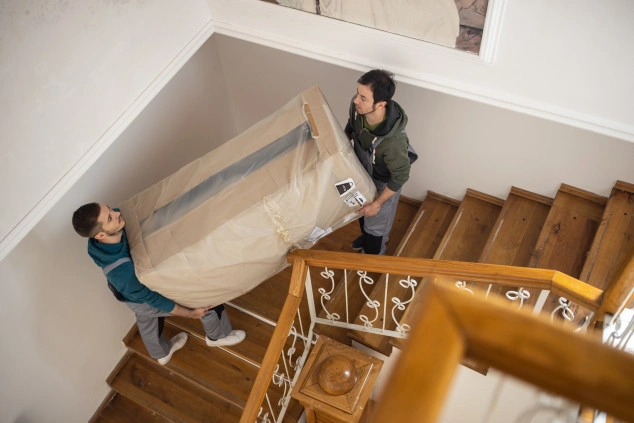
Whether it is a fourth-floor walk-up that the mover conveniently did not ask about, or a few steps between the elevator landing and your unit in a high-rise, stairs can become an extra fee if you do not have it addressed in writing ahead of time.
The same applies to elevator reservations, building management requirements, and COI filings. Every detail that is not in the contract is a potential add-on on moving day.
The Easy Solution: FlatRate Moving
FlatRate Moving has handled more than 500,000 moves in New York City since 1991, built on a single principle: the price quoted is the price paid.
Every FlatRate consultation begins with a complete, room-by-room inventory assessment, conducted virtually or in-person before anything is booked. Fine art, antiques, and high-value items are documented as part of the standard intake process. Every contract reflects the full scope of the move. Packing materials, COI coordination, elevator reservations, parking, and building management requirements are addressed before moving day arrives.
The guaranteed price covers the move as it actually exists, not as it was summarized over a phone call. When everything is handled before you arrive, moving day is exactly what it should be.
Frequently Asked Questions
Can a moving company raise the price on moving day?
Yes, if the original quote was not a true fixed-price contract. Many movers issue binding estimates that are contingent on the inventory and services listed at the time of booking. If anything was left out of the original quote, the mover may add charges on moving day. The only way to prevent this is to ensure every item and service is explicitly covered in writing before you sign.
Guaranteed quote vs guaranteed contract: what is the difference?
A guaranteed quote typically means the company commits to showing up on the scheduled date. A guaranteed contract locks in the price for the full scope of work described in the agreement. If something is missing from the contract, it may not be covered, even if you discussed it on the phone. Always read the contract carefully and confirm in writing that every item and service is included.
Do I need to tell my mover about stairs?
You should, but it is also the mover's responsibility to ask. A reputable company will request a complete picture of your building, including walk-up floors, elevator access, distance from the elevator landing to your unit, and any building regulations, before quoting your move. If a mover does not ask these questions during the estimate, treat it as a warning sign.
What should I tell my mover before moving day?
Tell them everything: every room, every storage space, every item that requires special handling. Fine art, antiques, oversized furniture, and fragile pieces should all be on the record before the contract is signed. The more complete the inventory, the more reliable the price, and the smoother the move.


