




How to navigate window replacement at a landmark building on Central Park West
- Custom mahogany millwork was required to create near replicas of the original historic window design
- Similar projects can take eight to 12 months and require approval of Landmarks Preservation Commission
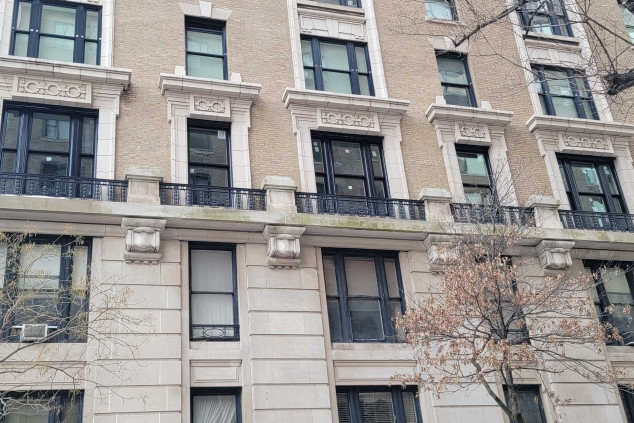
Window & Door Pro installed these Parrett Magnum double-hung windows in mahogany, at 88 Central Park West.
Built in 1928, a limestone co-op building at 88 Central Park West has the kind of architectural pedigree that means its windows matter to the building's identity, its board, and the Landmarks Preservation Commission. So when one homeowner decided to replace their windows as part of a renovation, the decision set off a chain reaction involving the LPC, architects, manufacturers, and a construction timeline befitting of its history.
Chris Amplo, founder of Window & Door Pro and the lead on the windows portion of the project, shared what it took to get new windows into one of the coveted residential units at 88 Central Park West, and what he's learned about landmark window replacement that most owners—and even some contractors—may not know.
Choosing the right windows for the project
"This is a real premier building on Central Park West with a lot of history," Amplo said. "The windows in particular are very special. They're super custom, and both the building and Landmarks Preservation Commission require any replacements to be essentially identical recreations of the original wood windows."
Creating historically exact wood recreation instead of cheaper aluminum-clad alternatives meant real constraints. Instead of choosing from a catalog, owners need custom millwork that has to pass approval.
That's where Parrett Windows & Doors, a Wisconsin-based, built-to-order manufacturer of custom wood and aluminum-clad wood windows, came in. "We've done quite a few projects of similar complexity and have more coming forward with Parrett," Amplo explained. "We consider them great business partners who offer a really good blend of quality, price, and flexibility in the customization required."
In this case, they specified mahogany—quality wood that can last 80 to 100 years if it is maintained.
Planning the timeline
Projects like this aren't a simple weekend job. In fact, they can take eight to 12 months from start to finish. That includes initial conversations, building and LPC review, consultation with the architect and design team, fabrication, shipping, and installation.
"You need to go in with the understanding that it's not going to happen overnight," Amplo said. "Since we're not picking something that is a menu or off-the-shelf item, it will take some back and forth."
That back-and-forth is the cost of getting approval, manufacturing, and executing properly. In this case, the work also coordinated with larger renovation happening in the unit—including trim work and wall repair—which created access for the window installation.
This coordination is critical in prewar buildings, where scheduling the window installation around concurrent projects often determines whether the work goes smoothly or gets delayed.
Budgeting for windows
One of the biggest surprises New York City owners can experience is the cost of new windows. "Sometimes people understate how much windows affect the overall project budget," Amplo noted. "Given the range of styles, materials, and buildings we're working in, it's really hard to lock down what percentage that would be," he said.
That's why Amplo recommended having a conversation with your architect early in the process.
"Many active and experienced architects have a pretty good handle on what to expect in terms of pricing," Amplo said. For Window & Door Pro’s regular building clients, the process is easier because the floor plans and windows are standardized, and the buildings have already communicated requirements. When starting fresh or dealing with a one-off building, getting an architect involved early is necessary in order to establish realistic numbers before getting too deep into the planning phase.
Being brought in early—especially when doing full renovation—means professionals like Window & Door Pro can establish budgets alongside general contractors during the bidding process. That consistency matters when trying to control costs across multiple trades.
Early involvement also locks in fabrication lead times and ensures LPC documentation happens concurrently with other approvals, rather than sequentially. In custom window projects, fabrication timelines often dictate the critical path for the entire renovation—miss your window order window, and you're adding months to the project.
What's changing in window upgrades
Amplo said he is seeing shifts in what buildings want from window upgrades. Laminated glass for solar control and UV protection is coming up more often. But the bigger story is performance requirements themselves.
"We're seeing a move towards stricter requirements that have increased air and water performance, in response to more extreme weather," he said. "We're seeing more intense storms, and buildings are also becoming tighter with modern construction techniques. The pressures and stresses being put on windows and doors from both inside and outside are changing."
That means manufacturers have fewer options now—the products have to perform at higher levels. Location matters, too: A landmark building on Central Park West faces different stresses than a townhouse on a tree-lined block. Understanding these performance classes requires experience; a contractor who can navigate LPC requirements but hasn't worked with the engineering specs demanded by newer codes will miss critical details that can affect approval or create callbacks after installation.

Meeting an owner’s expectations
In this case, Amplo didn't work directly with the homeowner, instead partnering with the general contractor and architectural team. But the goal was clear: preserve the traditional historic appearance of the windows, inside and out.
There was one strategic upgrade: Laminated glass in key areas where sun damage to flooring, rugs, and furniture was a concern.
The takeaway
Landmark window replacement is challenging because it's addressing history, performance, approval, custom manufacturing, and installation access all at once.
Window & Door Pro is up for the challenge.
"We really enjoyed the product, the project, and the complexity of it," Amplo said about 88 Central Park West. "I think it came out phenomenal."
Great professionals often have numerous projects filling up their calendar. If you are considering a project, reach out to Window & Door Pro today or call (718) 618-5787.


