




Over 35 and living with roommates? It’s a growing trend in NYC
- The share of roommate renters over 35 is rising while the portion under 35 is falling as per SpareRoom
- Housing costs drive this trend: 'There’s an affordability crisis and for many, it’s just not possible to buy'


Renters ages 55-64 and 65-plus seeking roommates, while still representing small slivers of the total market, showed large percentage gains.
iStock
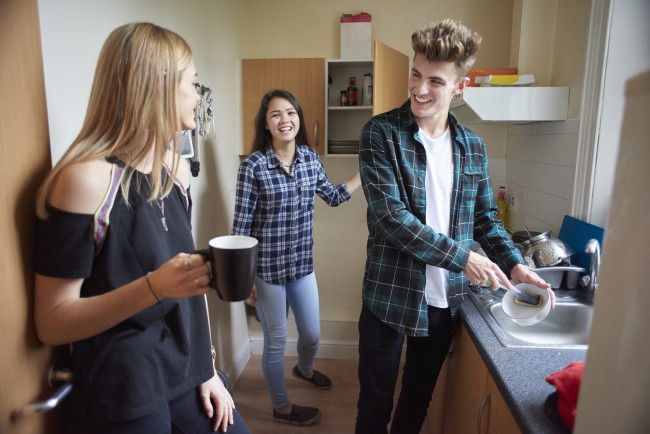
Renting with roommates is not just for 20-somethings. New York City’s nosebleed rents mean many renters can’t afford to live alone and as a result, more renters are living with roommates far into adulthood—even as seniors.
In fact, the share of older renters is growing faster than younger renters. New data from SpareRoom, a roommate-matching platform, finds that the proportion of NYC roommate renters under 35 in decline, while the percentage of renters over 35 is rising.
From 2015 to 2025, the number of NYC renters age 35-44 with a room-wanted or room available listing on SpareRoom increased 45.2 percent. Renters age 55-64 and 65-plus seeking roommates, while still representing small slivers of the total market, showed large percentage gains.
Renters seeking roommates ages 18-24 and 25-34 were down 13.6 and 5 percent, respectively.
‘An affordability crisis’
Cost is a main driver behind the decision to rent, said Matt Hutchinson, director of SpareRoom, but "every individual has their own story, needs, and reasons for sharing an apartment."
He acknowledged a societal bias against older renters.
“Some think if you’re renting beyond a certain point in your life you’ve failed,” Hutchinson said. It’s easy to judge others or feel judgement. “But it is the system that is failing. There’s an affordability crisis and for many, it’s just not possible to buy. That shouldn’t define who you are as person,” he added.
NYC median rents have been marching higher nearly every month on an annual basis for over a year. In February, Manhattan median rent for new leases hit $5,000, a new all-time high and increase of 6 percent annually, according to the Corcoran Group.
Mayor Zohran Mamdani’s 2025 campaign pledge to freeze rent increases for NYC’s one million rent-stabilized units resonated with voters who swept him into office. The Rent Guidelines Board, which determines how much rents rise for stabilized units, is now dominated by his appointees and will likely approve a pause in rent increases when it votes this summer.
Mirroring U.S. trends
Roughly three-quarters of NYC apartments are rentals, the inverse ratio of owners to renters in the U.S. Even so, elder renters across the U.S. make up the fastest growing population, according to SpareRoom.
Elders are now the fastest-growing population facing housing insecurity in the U.S., the site said, as younger Americans are living at home longer. For many older adults, renting with roommates has become the only way to afford housing.
Matching 35+ roommate renters
Sarah Hill, CEO and founder of Perfect Strangers, a NYC apartment and roommate matching site, said her company is seeing a growing number of roommate applications from renters aged 35+ looking to make living in New York more affordable.
"Many of these clients prioritize saving money, traveling, and investing in experiences rather than allocating a larger portion of their income toward living alone," she said. This age group often has more established lifestyles and specific preferences.
Hill said that larger bedrooms are often a top priority, as are separate bathrooms. "We also take care to ask whether clients have children, how often they may visit, and where they would stay. Being transparent about these details is essential to ensure all potential roommates feel comfortable," she added.
Then there's the issue of more stuff.
"Many clients 35+ have accumulated more personal belongings over time, particularly for shared living spaces. We discuss this upfront and, when needed, suggest solutions such as limiting shared items or using storage," she said.
Roommate agreements
Priorities typically change as you get older and if you live with other people, a roommate agreement is critical for establishing boundaries that protect your peace. For a help setting up a roommate agreement, you can use Brick’s guidelines.
If you want a ready-made template, check out Loio’s roommate agreement, which you can customize to clarify each roommates share of rent, utilities, and the security deposit.
“Living with roommates tends to go more smoothly when the financial side is clearly documented from the start,” said Kateryna Adkham, content manager at Loio. “A roommate agreement can cover rent, utilities, deposits, move-out notice, and what happens if someone misses a payment or causes damage. It will not replace the lease, but it can still help create a clear record of what each person agreed to.”
Hutchinson encourages renters of all ages to create roommate agreements.
“Most roommate problems are a result of a mismatch in expectations and its best to iron them out first by discussing how you want to live together,” he said.
Being older does come with an advantage when you’re renting with others.
“One of the joys of being a renter when you’re a bit older is that you know yourself better. You know what you’re looking for and what kind of roommate you are,” Hutchinson said. That kind of perspective can help you create a more realistic contract with your roommates.
Liable for the entire lease
When you share an apartment, you are “jointly and severally” responsible for the rent. That bit of legalese means if your roommate moves out before the lease term has ended, you’re responsible for the rent in full, not just your portion.
If you’re sharing an apartment, it’s very likely that you can’t afford the full rent on your own, Hutchinson said. “It can come as a complete shock that you are fully responsible for the rent,” he added.
If this happens, you’ll likely feel a lot of pressure to replace the roommate fast, but Hutchinson advised taking a beat and approaching your roommate search carefully to avoid winding up with a mismatch.
You Might Also Like