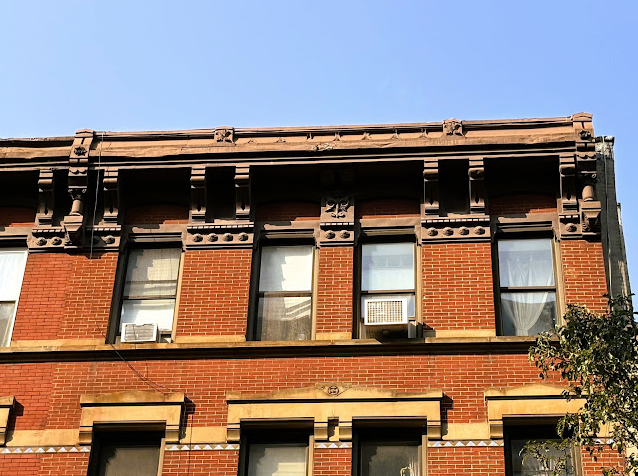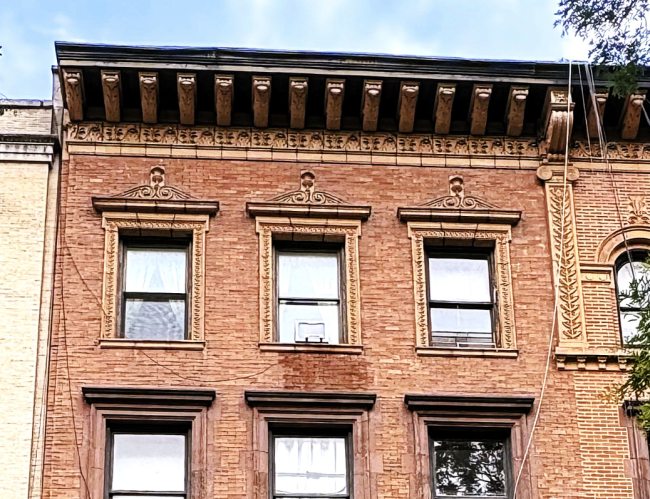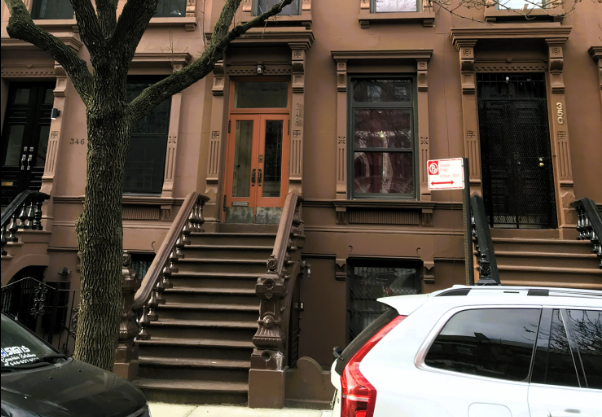





The 1871 Philip Minis House at 117 East 78th St: An Italianate built in the wake of the Civil War
- As laborers returned to NYC after the war, construction resumed and spread Uptown
- Onetime owner Philip Minis was born in Savannah in 1843 and fought for the Confederacy

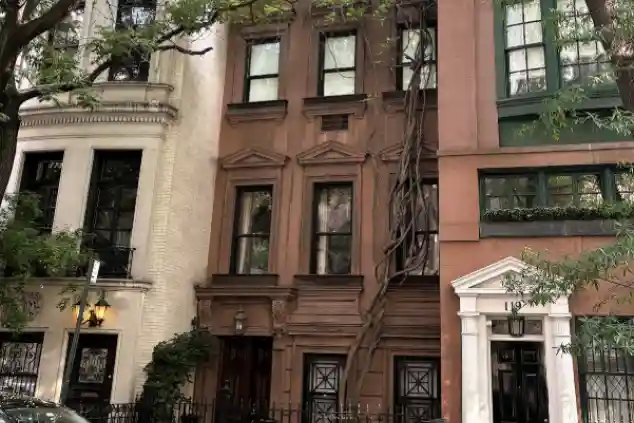
Like its neighbors, 117 East 78th St. was just under 19 feet wide and rose three stories above a high English basement.
Daytonian in Manhattan
Have you ever passed by an interesting residential building in New York City and wanted to know more about its history? In this series, Brick Underground teams up with Tom Miller, creator of Daytonian in Manhattan, a blog about Manhattan buildings and other historic architecture. Each week, we run an excerpt from the Daytonian’s archives with a link to the full article.
As laborers returned to New York City following the end of the Civil War, construction resumed and development spread to the Upper East and West sides of Manhattan. Around 1871, Nicholas McCool erected a dozen high-stooped brownstones at 103 through 125 East 78th St., between Lexington and Park avenues.
Like its neighbors, 117 East 78th St. was just under 19 feet wide and rose three stories above a high English basement. The Italianate design included an arched entrance below a classical pediment supported by foliate-carved corbels.
It appears that McCool originally leased the house to a series of tenants.
In 1881, George Frederick Seward and his wife, the former Kate Sherman, moved in. The couple were married in 1870 and had four children. Born in 1840, George Seward was the president of the Fidelity and Casualty Co. and a director in several other firms.
George's uncle, William H. Seward, had served as Abraham Lincoln's Secretary of State. It may have been his influence that landed George's appointment as United States consul to Shanghai in 1861. When he and Kate moved into 117 East 78th St., they had just returned to New York from Washington D.C. where he was the American Minister to China. He had held that post from 1876 until 1880.
Around 1883, Martin Freeman and his wife, the former Henrietta Wise, purchased 117 East 78th St. Freeman worked in the clothing and men's furnishings business of Henry Wise & Co. and had married the owner's daughter. Martin's brother, Joseph Freeman, also got a job with the firm and married one of Henry Wise's daughters. Upon the death of Henry Wise, the firm was renamed Freeman Bros.
Martin Freeman suffered from heart disease. On the evening of May 26th, 1902, he died from a heart attack. He was 58.
On May 2nd, 1905, Henrietta Wise Freeman sold 117 East 78th St. to Philip H. Minis for $28,250, just over $1 million in 2026 terms.
Before the Minis family moved in, they hired architect Henry Brooks Price and Hunt & Howells to make what the Real Estate Record & Builders' Guide described as "extensive alterations." The residence was enlarged by the addition of a fourth floor. It was likely during these renovations that iron stoop railings in a Classical Roman crosshatch design were installed. The remodeling cost the Minis family the equivalent of $554,000 today.
Philip Minis was born in Savannah in 1843 and fought for the Confederacy during the Civil War. He came to New York City in 1871 and founded the brokerage firm P. H. Minis & Co. Among his most visible clients was William K. Vanderbilt.
He and his wife, the former Roberta Dudley, had one son, Robert B. Minis. According to the New York Herald, Minis was a founder of the Metropolitan Club and (ironically) a member of the Union Club. By the time he purchased 117 East 78th St., he was a partner in the brokerage firm of Minis & Davis.
In October 1911, Philip H. Minis fell ill. His condition worsened to pneumonia and he died in the house on October 22nd, 1911 at the age of 68. In reporting his death, the New York Herald described him as "one of the oldest members of the New York Stock Exchange."
For more on the property and the interesting people that lived here, check out the full article.
You Might Also Like