




After a 20 percent maintenance hike, an Upper East Side condop renegotiated its ground lease. Here’s how they did it
- Uncertainty over a looming 2030 reset for the ground rent had led some shareholders to sell at a loss
- Negotiations took three years and achieved a ground lease running to 2082 with fixed annual increases

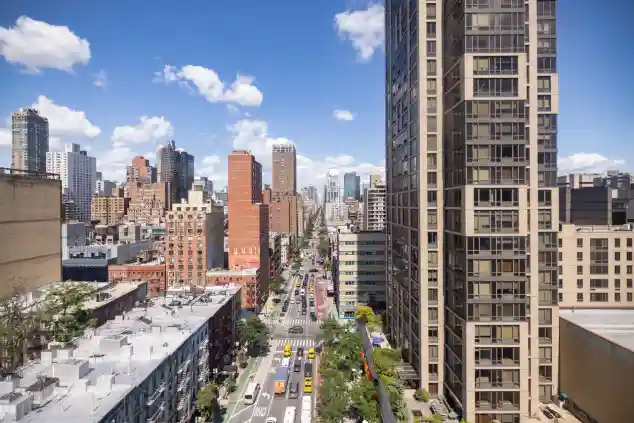
In a land-lease building, the underlying land is owned by a landlord and leased to the building, with the ground rent passed on to shareholders or unit owners through their monthly maintenance or common charges.
iStock
When an increasingly pricey ground lease at their Upper East Side condop began to raise monthly costs and undermine property prices, shareholders at The Azure decided to renegotiate it. The 105-unit building is one of a relatively small number of New York City co-ops and condos built on leased land.
In a land-lease building, the underlying land is owned by a landlord and leased to the building, with the ground rent passed on to shareholders or unit owners through their monthly maintenance or common charges. The lease sets the terms, including the length of the agreement and the rent increases over time.
When Max Strongin bought his $3.4 million four-bedroom apartment at The Azure in 2012, he knew the building sat on land owned by the New York City Educational Construction Fund (ECF), a public benefit corporation created to help fund new schools in mixed-use buildings. Because of the social mission tied to The Azure’s development, Strongin saw the city’s involvement in the building as a form of protection against massive price increases.
“I understood what I was getting into,” he said. He is now president of the board and has friends in Battery Park City, where many of the buildings sit on land owned and leased by the Battery Park City Authority.
20 percent increase in maintenance
What he didn’t anticipate was that maintenance would increase by 20 percent in one year as a tax perk expired, while uncertainty over a looming 2030 reset for the ground rent would affect sale prices of units in the building.
“We think the building was underperforming by around 32 percent in terms of price per square foot,” said Alexander Boriskin, an agent at Douglas Elliman who has done deals in the building.
The pandemic added to the building’s woes. According to Strongin, some shareholders sold at a loss because they could not afford the monthly payments. “It began to look pretty dire,” he said.
This prompted the board to investigate whether the ground lease could be renegotiated—something that doesn't happen often.
“It’s pretty rare,” said Matthew Eiben, an attorney at law firm Rosenberg & Estis, who has experience with land leases but was not involved in the lease renegotiation at The Azure.
Are you considering renting or buying in a building like The Azure at 333 East 91st Street in New York? Be sure to pull a free Brick Report on the building before you commit. We can share known building violations, nearby construction work, pest problems, and many more data points to help you make your decision.
It matters who owns the land
Land leases can run for a period of 50 to 99 years. In 2024, a change in state law gave land-lease co-ops more flexibility to renew their ground leases before the end of the term. This prevents shareholders from being in limbo in the last 30 years of the lease, unable to sell because of uncertainty over the building’s future in the next few decades. That’s because when a ground lease ends, questions arise about whether it can be renewed or whether the building reverts to being a rental building.
“There needs to be reliability and people need to know what they are buying into,” Eiben said.
Co-ops on city, state, or federal land—like The Azure—are exempt from this law and that is largely because a government entity has different objectives from a private landlord. “They are not looking for litigation and maximizing profits,” Eiben said.
That’s a very different setup from buildings such as Carnegie House, where lawsuits have been filed because the ground lease was acquired by private investors who wanted to hike the annual ground rent by 450 percent to $25 million. Earlier this month, the Appellate Division of the New York State Supreme Court overturned that rent increase on appeal, citing an arbitrator’s communications with the landlord’s attorney and finding an appearance of partiality.
Convincing the owner of a shared interest
ECF’s mission is to build schools, not maximize profits. The board used that distinction to make its case for renegotiating the lease. The lease term was not due to expire, but the 2030 market reset on rent was a sticking point.
“It could have been 30 percent or 40 percent—but even if it was five percent, the point was, no one knew,” Strongin said.
Ground leases typically give landlords significant leverage. “Even if they are not going to exert that control to the maximum amount permitted by the law they still want it as an option,” Eiben said. ECF wasn’t initially receptive to the board’s requests but negotiations finally started moving when the condop retained an attorney.
The board's strategy was to show ECF that uncertainty was as bad for the landlord as it was for shareholders. If apartments became harder to sell, shareholders could default and the building's financial position could deteriorate.
“We were able to convince ECF that this wasn’t just an issue for us but for them as well,” Strongin said. “Just like we want to maintain fair value for our units, the last thing they want is people going into default and the building to have a financial crisis.”
Reaching a deal with a predictable payment schedule
Negotiations with ECF took three years and the end result is a ground lease running to 2082 where payments increase at a fixed rate. Shareholders at The Azure don’t pay traditional property taxes and instead make Payments in Lieu of Taxes (PILOTs) to the city. With the renegotiated lease, the combined ground rent and PILOTs now appreciate annually at 3.7 percent.
“It is super simplified with no uncertainty,” Strongin said.
At the end of the lease shareholders have an option to purchase the land or renew the lease for another 50 years. The agreement also provides some tax efficiency, with around 50 percent of the monthly payments being tax deductible.
Waiting for the payoff
The co-op spent $100,000 on legal fees, and while the board considers the renegotiation a success, it has yet to see an impact on sales prices. “There’s a ton of value for a buyer in this building and at the same time sellers should be getting more money for these apartments,” Boriskin said.
Strongin bought in The Azure because he loved the apartment and was willing to roll the dice on a land-lease building. He also knew he’d be paying far more for a comparable condo. “We were happy to take it as it was,” he said. “I don’t think any of us thought the market reaction would be so negative.”
A land-lease buyer’s checklist
His experience offers a checklist for buyers considering a land-lease building. First, find out who owns the land and understand their objectives. A government entity, nonprofit or private investor may have very different reasons for owning the ground lease.
Next, look at when the lease expires and how rent is calculated. A market reset can create a very different risk from a lease with predictable annual increases. When a land lease comes to an end there may be questions about what happens to the building. Finding out whether the lease can be renewed or renegotiated before expiration is also important, and whether the building has an option to purchase the land.
Also consider how the lease could affect financing and resale. If a building has only 10 or 20 years left on its land lease, buyers may be harder to find and lenders may be reluctant to finance the purchase.
“Either purchasers might not be interested or, if they are, they may not be able to get a loan,” Eiben said.
You Might Also Like