




Hochul signs $269 billion budget with new pied-à-terre tax for NYC
- The new budget also includes stiffer penalties for landlords that harass tenants
- Income limit for senior and disability rent increase exemptions rises to $75,000


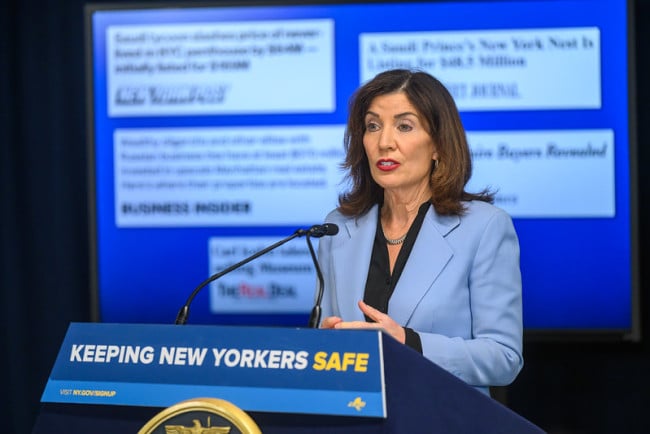
Hochul said the goal of the new pied-à-terre tax is to make non-residents who own high-end properties here contribute towards essential services.
Mike Groll/Office of Governor Kathy Hochul
Governor Kathy Hochul last week signed a nearly $269 billion budget that was two months overdue, a delay caused by extended negotiations over major policy issues.
Hochul, who is running for reelection this fall, said her budget will “lower costs for hardworking families.”
"While Washington continues to make life more difficult for New Yorkers, I’m doing everything in my power to make real, tangible progress on the issues New Yorkers are facing and I will always fight for the people who call this great state home,” she said in a statement.
Here are five significant elements in the new budget that relate to NYC housing and real estate.
Pied-à-terre tax
The budget includes a new pied-à-terre tax, which will apply to luxury second homes in NYC. The goal, Hochul said, is to make non-residents who own high-end properties here contribute towards essential services like policing and parks.
Hochul has estimated that the surcharge would generate at least $500 million a year in recurring revenue for NYC. However in April, Comptroller Mark Levine said the amount raised could be more like $340-$380 million as a result of exclusions for rentals and other factors.
The tax will be implemented in two phases; in the next two fiscal years, taxes on condos and co-ops will be based on “market value,” which is generally far less than what properties sell for. Then in 2028, the surcharge will be based on comparable sales prices.
New income limits for rent increase exemptions
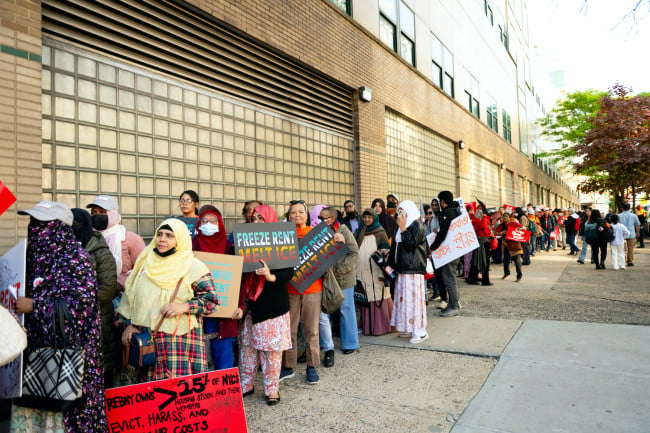
For seniors and New Yorkers with disabilities who are living in rent-regulated housing and Mitchell-Lama affordable housing, Governor Hochul’s budget increases income eligibility limits for both the Senior Citizen Rent Increase Exemption and Disability Rent Increase Exemption from $50,000 to $75,000.
The budget also raises the eligibility for the Senior Citizen Homeowners’ Exemption and Disabled Homeowner’s Exemption from $50,000 to $75,000.
J-51 tax abatement extension
The budget renewed for 10 years the J-51 tax abatements for apartment repairs. The program incentivizes building owners to make improvements, including upgrades to comply with NYC emissions law, in buildings that are at least 50 percent affordable.
Stiffer penalties for landlords that harass tenants
The new budget includes language that clarifies the law against harassment of tenants by landlords and stiffens criminal penalties for landlords guilty of systemic harassment of rent-regulated tenants in multiple buildings or who are repeat serious offenders of existing anti-harassment laws.
SEQRA gets scaled back
The new budget changes the requirement known as the State Environmental Quality Review Act, or SEQRA, for developers of most new housing to submit detailed plans of how their properties would impact their neighborhoods. Governor Hochul said the state law duplicated what is in effect on the local level. However, buildings larger than 500 apartments in NYC would still need to comply with SEQRA.
Reaction to the budget
The change to SEQRA “is a major step toward making it easier to build the housing and infrastructure New Yorkers urgently need,” said Tom Wright, president and CEO of the Regional Plan Association. He said that outdated environmental review processes and fragmented planning systems have delayed critical projects, worsened the housing shortage, and increased costs.
“These ‘Let Them Build’ reforms will help modernize the state’s approach to growth while streamlining development,” Wright said.
Housing advocates said the budget does not include enough funding to preserve affordable housing.
The Association for Neighborhood & Housing Development (ANHD) released a statement that noted the governor devoted $250 million in new capital resources to build new housing, but provided only $20 million for the preservation of existing subsidized housing.
“This is despite a clear message from across the affordable housing community that we are facing a preservation crisis that puts low-income tenants, community-based organizations, and buildings statewide at risk. And despite the ongoing homelessness crisis and dire threats to federal vouchers, the governor refused to expand the Housing Access Voucher Program beyond the small pilot program won last year,” the statement said.
Changing SEQRA and extending J-51 are “important steps toward boosting housing production, preserving existing housing stock, and addressing affordability” said James Whelan, president of the Real Estate Board of New York.
But Whelan questioned the budget’s economic impact.
“The tax on second homes will dampen market activity, reduce property values, hurt new development, and weaken the city’s economy. It is a relief that state leaders rejected the numerous other tax increases that have been suggested during this process,” he said.
You Might Also Like